
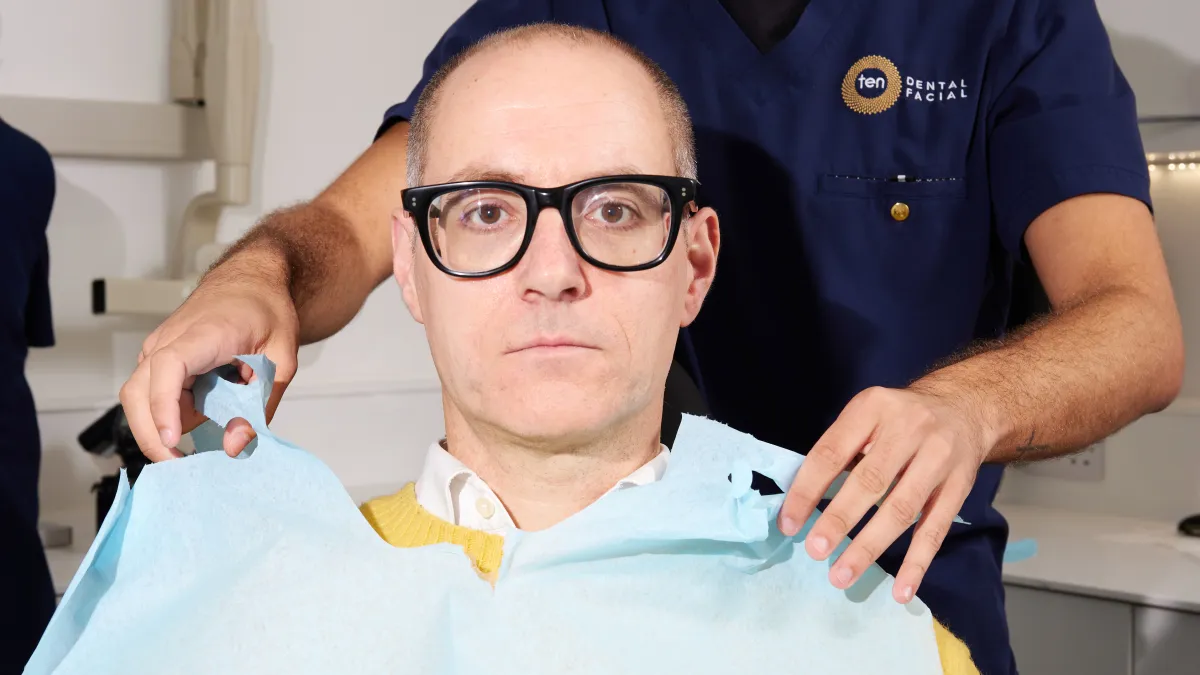
My teeth cause me a lot of pain — mostly financial but sometimes physical too. I am in the process of having my second implant in as many years, a procedure that involves not just pulling out the molar that was causing me an acute ache but also drilling a hole in my jaw, placing a socket in that hole, screwing a fake tooth into the socket and capping that tooth with a crown and a large bill. I am being charged £4,134 for this torment. With the exception of a car and a house, I have never spent so much money on a single object. This week Christie’s Paris is auctioning off a lot of Matisse’s works, and estimates suggest I could buy not just one but three beautiful signed works for the price of a new tooth, a fact I find distressing.
After decades filling-free, why have my teeth started to fail? I brush regularly, don’t eat that much sugar, actively avoid fizzy drinks — I’ve even been known to floss. Could there be a simple test that could get to the bottom of my oral catastrophe? And what if the test was no more than spitting in a small test tube?
This is the idea behind Oralis 1. It tests your oral microbiome, which “holds the key to unlocking better health”, according to its bold marketing slogan. The test has only been available for a year and just a handful of private dentists have started to offer it — mostly to patients who have gum disease, unexplained cavities or bad breath. But a co-founder of the test believes our oral microbiomes could be the secret to a wide range of health issues, not just dental ones.
The gut microbiome has become an increasingly fashionable area of study, attracting both serious scientists and quack TikTokkers. Everything from diabetes and cardiovascular conditions to anxiety and depression have been linked to the thousands of microbes swimming around in your gut. Could the bacteria, fungi, viruses and yeasts in our mouths be just as rich an area of study?
“We are starting to understand the connection between the mouth and the rest of the body,” says Dr Victoria Sampson, a co-founder of the Health Society dental practice and the founder of THS Labs, which developed the Oralis 1 test. The information stored in our saliva, she says, may be useful for interpreting not only the state of our oral health but also our health in general. She says that certain oral bacteria release enzymes that, when elevated, “increase your risk of Alzheimer’s, Parkinson’s, infertility and heart disease”.
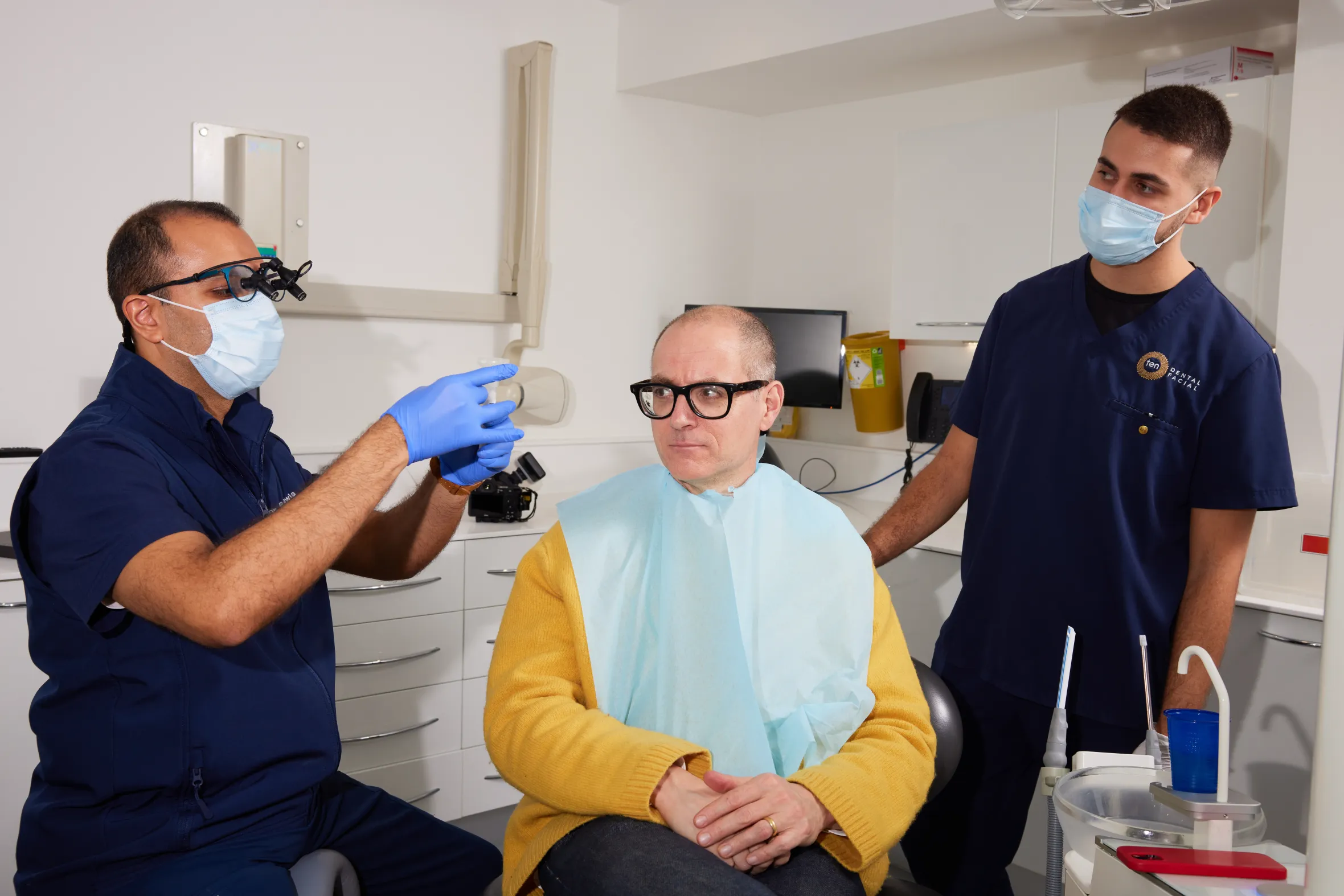 The test analyses information obtained from your saliva Circe Hamilton for The Times
This is possibly very exciting — a simple spit test could flag that you have a high risk of serious medical conditions. Last year the University of Exeter published a study showing that certain oral bacteria were associated with better memory and attention, while others were linked to an increased risk of Alzheimer’s disease. The researchers suggested that dentists on the high street — rather than GPs — could be recruited to spot early signs of cognitive decline. Even better, the testing would be done by taking a pain-free saliva sample rather than a blood test.
“Everyone is getting very excited by this,” Sampson says. “It’s a very new world. Many old-school dentists don’t fully understand that this could radically change how we treat patients. Someone needs to do all the data and the research, but the dream is that one day — and it might take us a while — we can say, actually, all patients who had heart disease also had these biomarkers present in their saliva. And we can start to zoom into that a little bit more.”
This is for the future. For now the Oralis test is purely for dental issues. I have mine undertaken by Dr Shravan Chawla, a dentist at Ten Dental in Clapham, south London, which charges £95 for the examination, on top of the £350 that the Health Society charges to analyse my saliva. It’s not a cheap process; then again, nothing in private dentistry is.
Chawla starts by explaining that 700 species of bacteria live in our mouths. “There’s a very fine balance between the healthy and the unhealthy. In some individuals, where the scales are tipped towards the unhealthy organisms, we see gum disease, bleeding gums, dryness in the mouth.” He also explains that one particular bacteria, Streptococcus mutans, is a key factor behind a lot of tooth decay.
But before the saliva test he asks me questions about my diet, my alcohol intake and my lifestyle. “The concept is that your oral cavity is the gateway to your body. If you look at all the orifices in your body that are open to the outside, what do you put stuff in the most?”
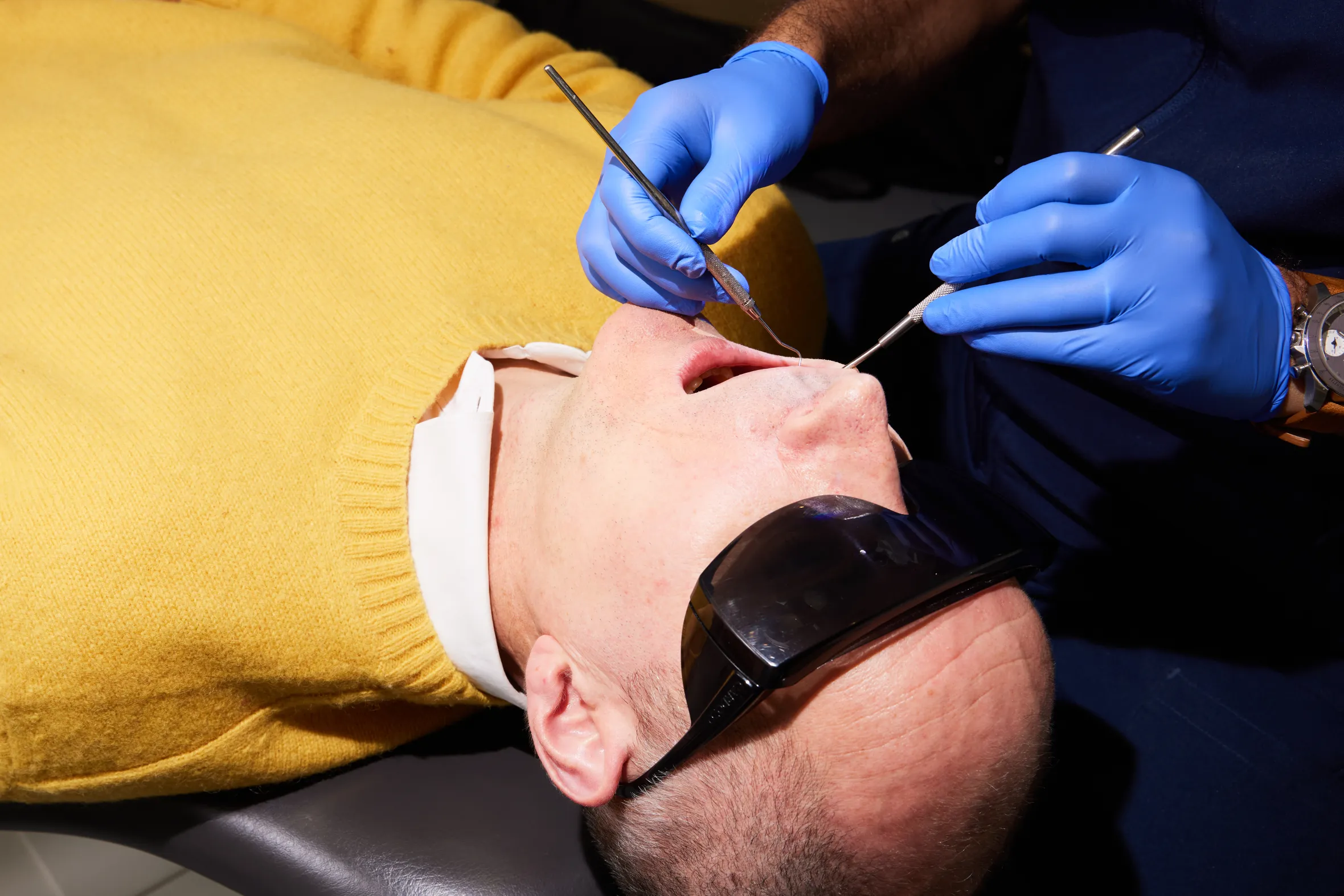
When I decide to be honest and tell him that, when drunk, I might have a cigarette at a party — averaging about one a fortnight — he insists on prodding my jaw muscles and tells me he needs to inspect my soft tissues “because you are a smoker”.
Finally I spit into a small tube repeatedly until I reach the 5ml line — enough for a decent sample to be analysed.
 Circe Hamilton Commissioned by The Times
Three weeks later I return to pick up my 12-page report, which informs me that I have “very low levels of good bacteria and high levels of a few bad bacteria that are associated with inflammation and acidic saliva”.
The average person’s oral microbiome has 24 per cent good, or commensal, bacteria — mine has 7 per cent. I also have very high levels of a particular family of bad bacteria called Prevotella, “which suggests local and general inflammation”. I also have a bacterium called Streptococcus sobrinus, something most people do not have. This is potentially a problem because it raises the acidity levels in my mouth; Sampson says this could be a cause of my tooth decay. “Your saliva is already acidic, and so if you were to have a little bit of sugar, that causes a cavity or demineralisation much quicker than another person,” she says.
To boost the levels of good bacteria I am advised to take a dental probiotic once a day, along with a xylitol dental supplement — a fancy mint — to neutralise acids after meals. I am also told that there’s a mouthwash aimed at promoting good bacteria.
I do worry that the report, which details every bad bacterium detected, and the subsequent long list of recommended specialised toothpastes, mouthwashes and pills are new ways for the private dental industry to lighten my wallet. Is this test catering to the worried well?
Sampson says: “Dentistry, for decades and centuries, has been a drill and fill. It’s been a reactive industry — that’s how we make money from you. But with these tests we’re really trying to pivot, to make it a preventative procedure.” She adds that her goal is to get the £350 test down to under £100.
Chawla agrees that the price needs to come down before saliva testing becomes mainstream. He also says that saliva testing is still in its early days: “This is a test for gum disease now. There are not enough science-backed references for us to routinely prescribe something like this to diagnose diabetes. We need long-term studies.” He reckons it will be another decade before saliva testing becomes routinely used as an alternative to blood tests.
For now the report shines some light on the terrible state of my teeth and offers some useful solutions beyond the usual advice to floss more. The biggest cause, however, is something that cannot be ascertained from my oral microbiome — I suffer from bruxism, or teeth grinding, which has put pressure on fillings and worn the surface of my teeth. “But we are looking to develop a test to understand that,” Sampson says.
As for me, I would gladly spit into a tube regularly if it meant that I no longer had to fork out thousands of pounds to replace my teeth.