
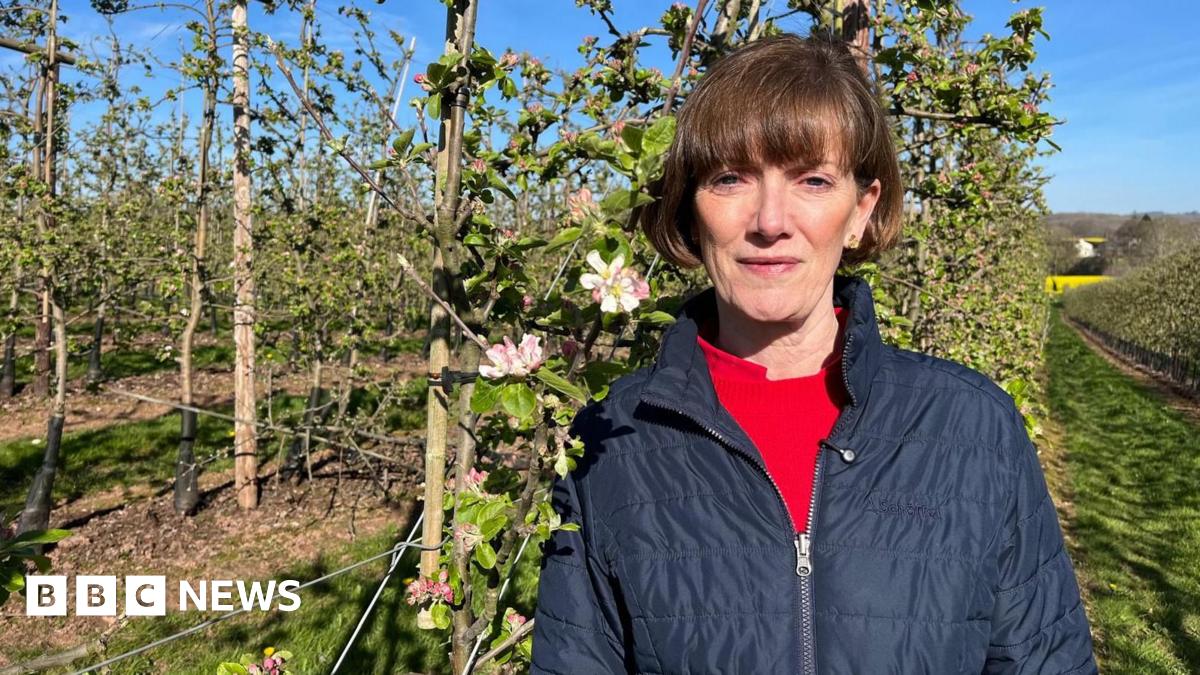
On her farm in Suckley, Worcestershire, Ali says her fertiliser costs have gone up by 40%, red diesel she uses for her tractors has gone up 100% and transport costs are up by about 20%.
A third of the world’s fertiliser usually passes through the Strait of Hormuz, which has been effectively blocked during the conflict and consequently prices have shot up in recent weeks.
Red diesel, a fuel used by farmers in off-road vehicles, machinery and heating has seen its price pushed up by the soaring cost of brent crude – the global benchmark for oil prices.
This all feeds into the cost of food production. Even if the conflict ends within the next two weeks, the Food and Drink Federation expects UK food inflation to reach at least 9% before the end of the year.
Ali is also anticipating rises in the cost of plant protection products and packaging.
“We will have to pass this on,” she says, adding it was up to the supermarkets she sells to how much they put prices up to customers.
She says the apple and pear sector was already hit by a 30% increase in the cost of production across 2022 and 2023, after Russia’s full scale invasion of Ukraine.
“It was really brutal and, I have to say, when I woke up to the news that it had started again, in Iran, I did feel quite sick,” she says.
She recalls how many farmers went out of business, or became loss-making, during the Ukraine-Russia conflict.
“We can’t go there again. There’s no flex in the system.”