
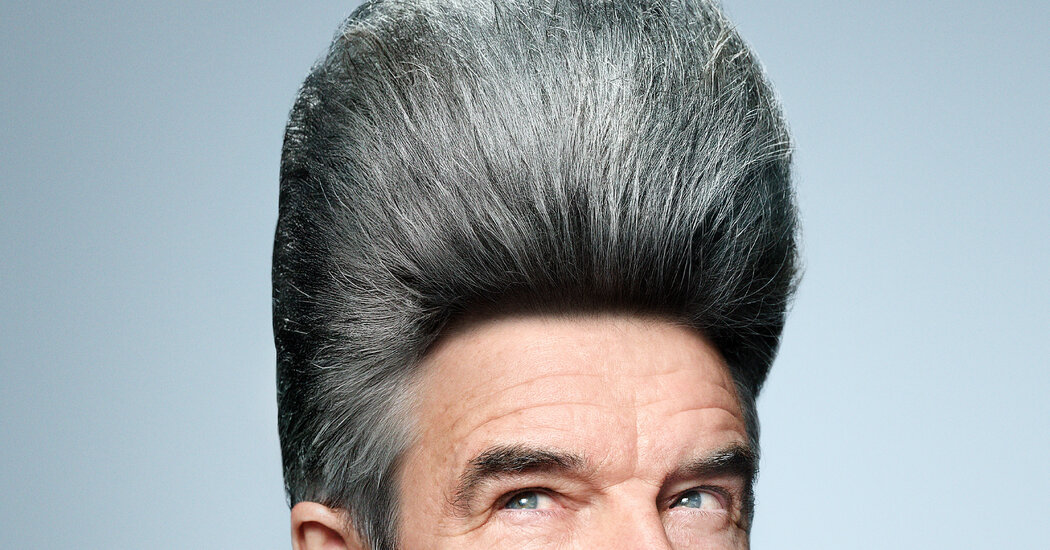
First brought to market for hair loss by Merck as Propecia in 1997, the pill became available in generic form in 2013. By the time the pandemic hit and telemedicine took off, it was already cheap; now men could access it privately, in some states, simply by uploading a few photos and answering a few questions online. Also available at big-box-store pharmacies for as little as $5 a month — less than the cost of a single day’s latte fix — the drug is nonetheless a lifelong commitment, at least for men who continue to care about their hairlines. When men go off the drug, their hair loss resumes in about six months.
Finasteride, many dermatologists think, is one of the great cosmetic cures of the 20th century. And yet there is a catch: As many as one in 20 men who take the drug orally will experience a side effect — erectile dysfunction, low libido or, occasionally, low sperm count or depression. A vast majority of the time, those symptoms resolve in a few weeks after men go off finasteride (and sometimes even when they stay on it), according to studies of the drug. But in rare instances, men have reported debilitating symptoms that continue even after they stop taking the drug. In addition to erectile dysfunction, low libido and depression, some men have also reported symptoms such as genital numbness, cognitive difficulties, a shrinking of the penis and even suicidal ideation. Having one or more of these ongoing symptoms is known among some researchers and patients as post-finasteride syndrome, which is poorly understood and a topic of considerable debate in the field.
Well-conducted research from a randomized controlled study published in 2021 found that using finasteride topically — applying a spray or a gel on the head — reduces the likelihood of serious side effects and is almost as effective as the oral version. And new drugs, including one that stimulates hair follicles’ mitochondria, are expected to come on the market in the next few years and reportedly have no side effects. But for now, most dermatologists still prescribe oral finasteride, which has been studied the longest. Topical versions, which are still not approved by the F.D.A., typically cost more and have to come from a compounding pharmacy. Many men also grow frustrated with regularly applying serums or gels because the products mat their hair during the day or leave their pillow greasy at night. Doctors worry about finasteride coming into close contact with women who are pregnant (or may become pregnant), given that DHT plays a significant role in a developing male fetus. And although finasteride itself won’t cause hair growth on, say, a girlfriend’s cheek, it’s often compounded with minoxidil, which might.
“I, for one, would never take the medication,” said Jonathan Clavell, a urologist in Houston. “Because if I were one of the unlucky few who turns out to get the syndrome, I know I’d regret it.” While the dermatologists I spoke with said they’ve never seen a patient who suffered from ongoing symptoms, Clavell is one of five urologists I interviewed who said they had. He even suspects that the number of people reporting those serious problems could be artificially low, because so many men secretly suffer in shame with erectile dysfunction and never seek a diagnosis or help. And men suffering from depression or brain fog might not make the connection — Clavell has seen some patients who have no idea, until he asks them for a list of the drugs they’ve taken, that finasteride might be associated with those symptoms.
Clavell has tremendous sympathy for his patients — earlier in his 40s, he himself was a quickly balding man who was tempted to do anything he could to keep his hair (for years he relied on minoxidil, which eventually stopped working). “I believe there’s a very big misconception that only women care about their appearance,” he said. “And it’s not true. Men just don’t talk about it with our friends. But secretly, behind closed doors, we are trying to keep our younger selves for as long as we can.” Maybe it is some kind of machismo, he mused, that makes men so likely to compare their own hair with others’. “When you watch TV and movies and all these actors,” Clavell said, “they have beautiful, long hair. You’re like, ‘Man, how are they able to keep all that volume?’”