
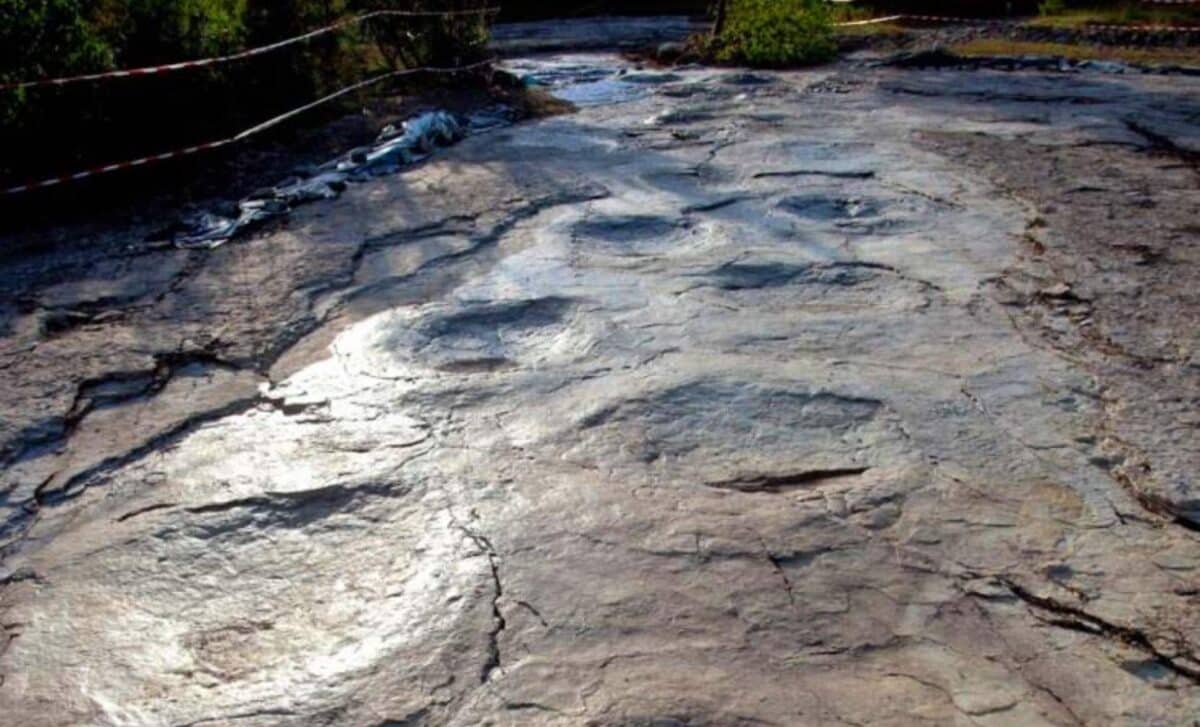
A 508-foot trail of fossilized dinosaur footprints discovered in the Jura Mountains has been identified as the longest known sauropod trackway in the world. The site, located near the village of Plagne, gives the scientists a rare and continuous record of a giant herbivore’s movement dating back 150 million years.
The discovery was first made in 2009 by members of the Société des Naturalistes d’Oyonnax, a group of amateur geologists specializing in Jurassic formations. Their finding was later examined and confirmed by paleontologists from Claude Bernard Lyon 1 University, who established the exceptional length and preservation of the trackway.
This site stands out not only for its size but also for the level of detail preserved in each footprint. It contributes to a broader network of dinosaur tracksites across France and Switzerland, shedding light on how these massive animals moved across prehistoric landscapes.
A Record-Breaking Trail In The Heart Of The Jura
Stretching over 155 meters (508 feet), the Plagne trackway surpasses the well-known sauropod tracks of Galinha in Portugal. According to researchers, this makes it the longest sauropod trackway currently identified.
“The trackway of a huge sauropod, and the longest sauropod trackway currently known, reaching 155 m in length, has been excavated in Eastern France, alongside a shorter theropod trackway,” the authors said.
The tracksite lies less than one kilometer west of Plagne, in the Ain department. The trackway includes 110 successive footprints, forming a continuous path that provides an unusually complete record of movement.
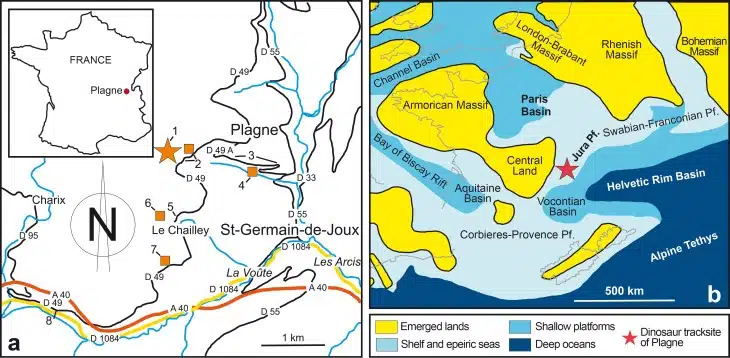 Map highlighting the Plagne tracksite in eastern France and its paleogeographic setting during the Late Jurassic. Credit: Geobios
Footprints That Reveal How It Moved
The preservation of the footprints allows scientists to observe fine anatomical details. As explained by the study published in Geobios, the hind footprints display five elliptical toe marks, while the forelimb impressions show five circular digits arranged in an arc.
The size of these prints is striking, ranging from 1 to 3 meters (3.3 to 10 feet) in diameter. Biometric analysis suggests the dinosaur measured at least 35 meters (115 feet) in length and weighed between 35 and 40 tons. Its average stride reached 2.8 meters, indicating a steady walking speed of about 4 km/h (2.5 mph).
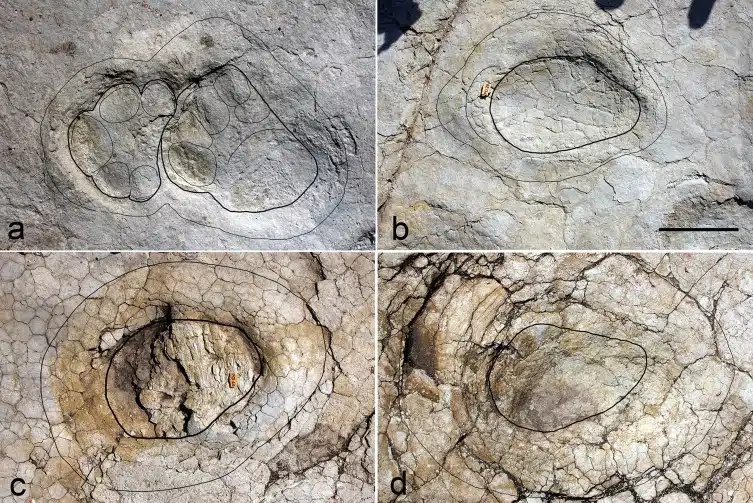 Detailed dinosaur footprints from Plagne, revealing anatomy and motion. Credit: Geobios
A Moment Frozen in a Shifting Ancient Landscape
The trackway dates back to the Tithonian stage of the Late Jurassic, around 150 million years ago. At that time, Western Europe consisted of a series of islands rather than a continuous landmass. Based on paleogeographic reconstructions cited by the researchers, these islands were intermittently connected during periods of lower sea levels.
Such conditions likely enabled dinosaur populations to move between regions. The Plagne trackway captures one of these movements, preserving a moment when a massive sauropod crossed this fragmented terrain. the research team reported:
“This new trackway site, alongside other Early Jurassic Swiss and French tracksites yielding thousands of sauropod and theropod tracks, can be considered as being the largest dinosaur megatracksite in Europe.”
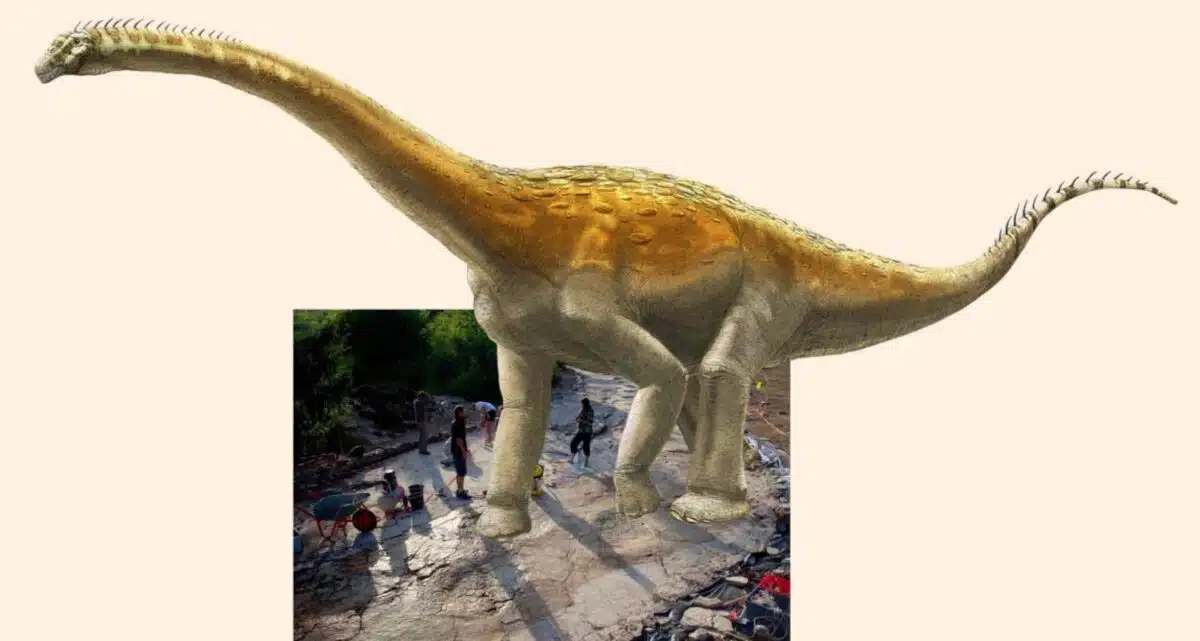 Reconstruction of the sauropod that left the massive footprints at Plagne. Credit: A. Bénéteau / Dinojura.