
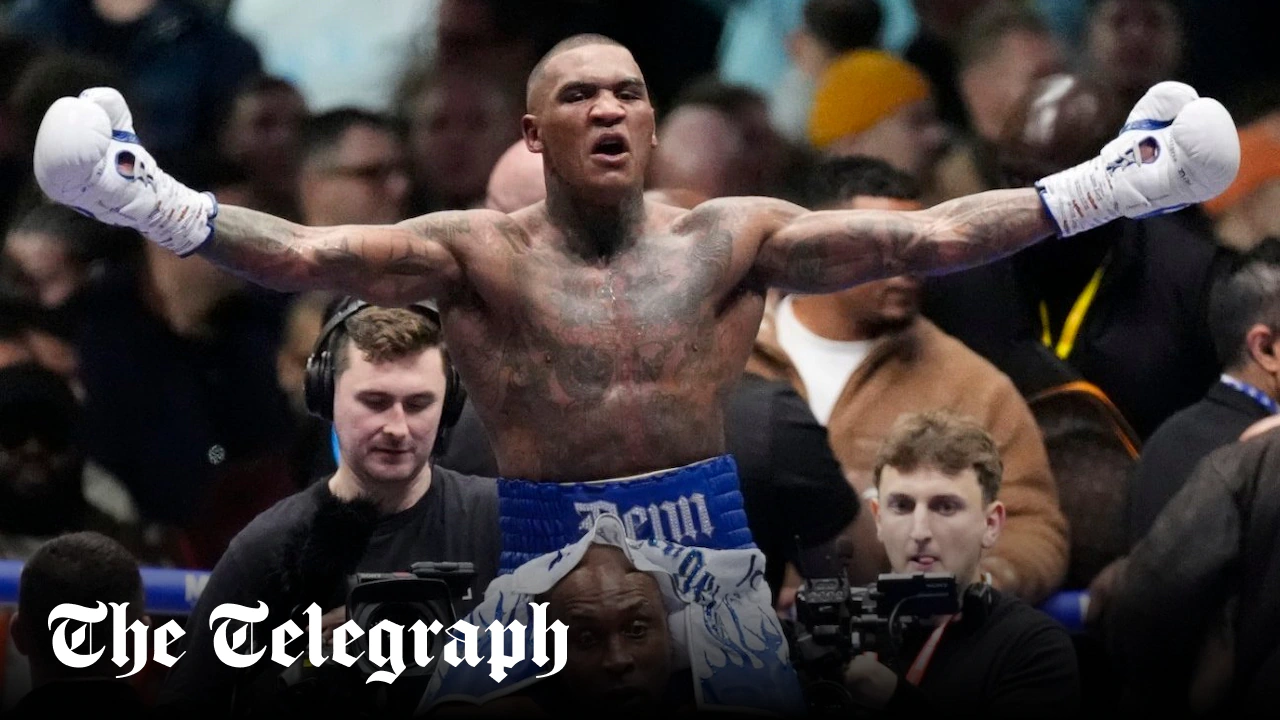
To Hearn, this entire scenario is deeply personal. To Benn, it is business. Several fighters have told Telegraph Sport they would have chosen the payday over loyalty, perhaps handling the situation with a little more tack.
But this will not be the last time that this happens. Benn’s camp has argued that the move to Zuffa provided a global platform and the legacy fights that Matchroom could not finalise. Ryan Garcia and Devin Haney have been touted as possible opponents. They may even venture into cross-platform fights involving the UFC.
For the fighter – Benn is one of the biggest stars in the sport outside the heavyweights – the move represents a clean slate, a way to distance himself from the “egg” jokes and the baggage of the last three years by aligning with the most powerful brand in combat sports.
But this is not just about one fighter. The civil war reflects a broader struggle for the soul of the sport. On one side, you have the traditionalists such as Hearn and Frank Warren (now unlikely allies), who believe in the slow build and the promotional structure that has existed for a century.
On the other, you have White, who wants to centralise power, eliminate the alphabet titles, and run boxing like a league. Benn is the first major defector, but will not be the last. As White prepares to host stadium shows and challenge Hearn to a media battle, the landscape of British boxing has been irrevocably altered.
Benn may have found his bold plans with Zuffa, but he has also ensured that every time he steps into the ring from now, he will be fighting under the heaviest pressure of his life. He is no longer just Nigel Benn’s son or Hearn’s project. He is the man who chose money over loyalty to his promoter.
In the eyes of the fans, he is either a pioneer or a pariah. There is no middle ground in a civil war. Benn finds himself in a unique, if precarious, position. On Saturday night, Benn is in a position where he must win at all costs.
Conor Benn v Regis Prograis is live on Netflix on Saturday night.