
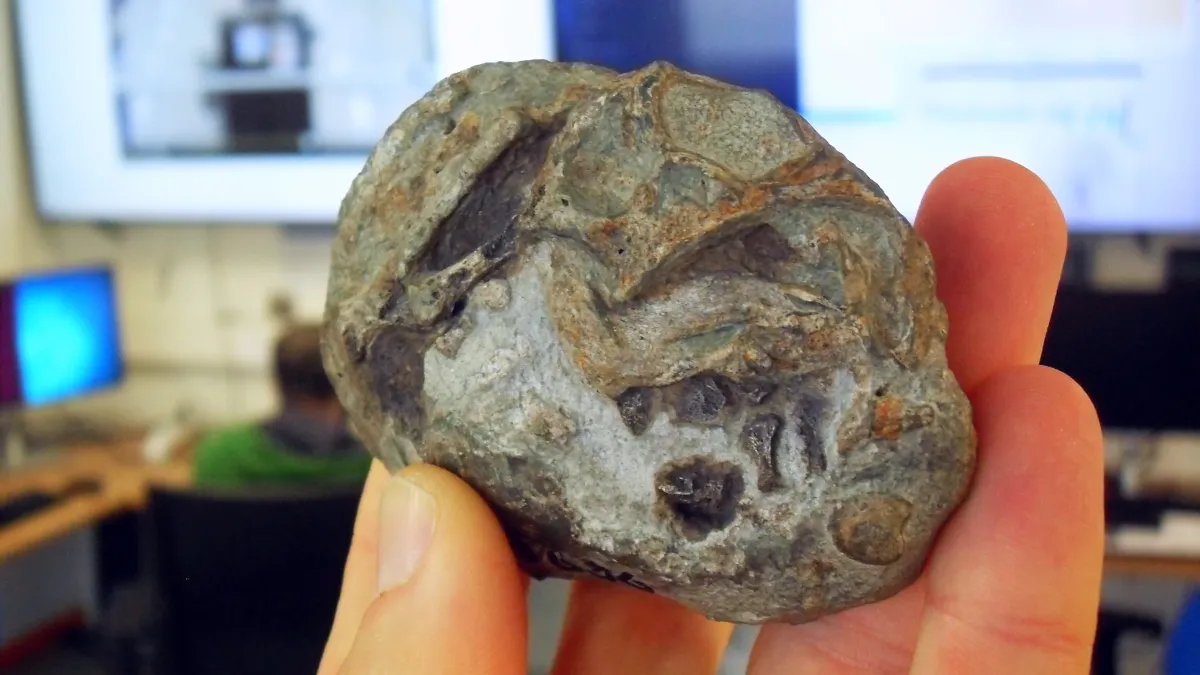
How did the distant ancestors of mammals survive the greatest mass extinction of life in the history of our planet, millions of years before the one that wiped out the dinosaurs?
The surprising answer is that they laid eggs, scientists have confirmed after finding one for the first time.
Never before has fossilised evidence been found of an egg laid by a therapsid, the closest living thing to mammals that existed about 250 million years ago, earning them the title of “mammalian ancestors”.
One of the defining characteristics of nearly all mammals alive today is that, unlike birds and reptiles, they do not lay eggs. It was known that our ancestors must have laid eggs somewhere in our evolutionary history, but it was not known how recently.
Jennifer Botha of the University of the Witwatersrand in South Africa said: “It is thrilling because this discovery breaks entirely new ground … For over 150 years of South African palaeontology, no fossil had ever been conclusively identified as a therapsid egg. This is the first time we can say with confidence that mammal ancestors like lystrosaurus laid eggs, making it a true milestone in the field.”
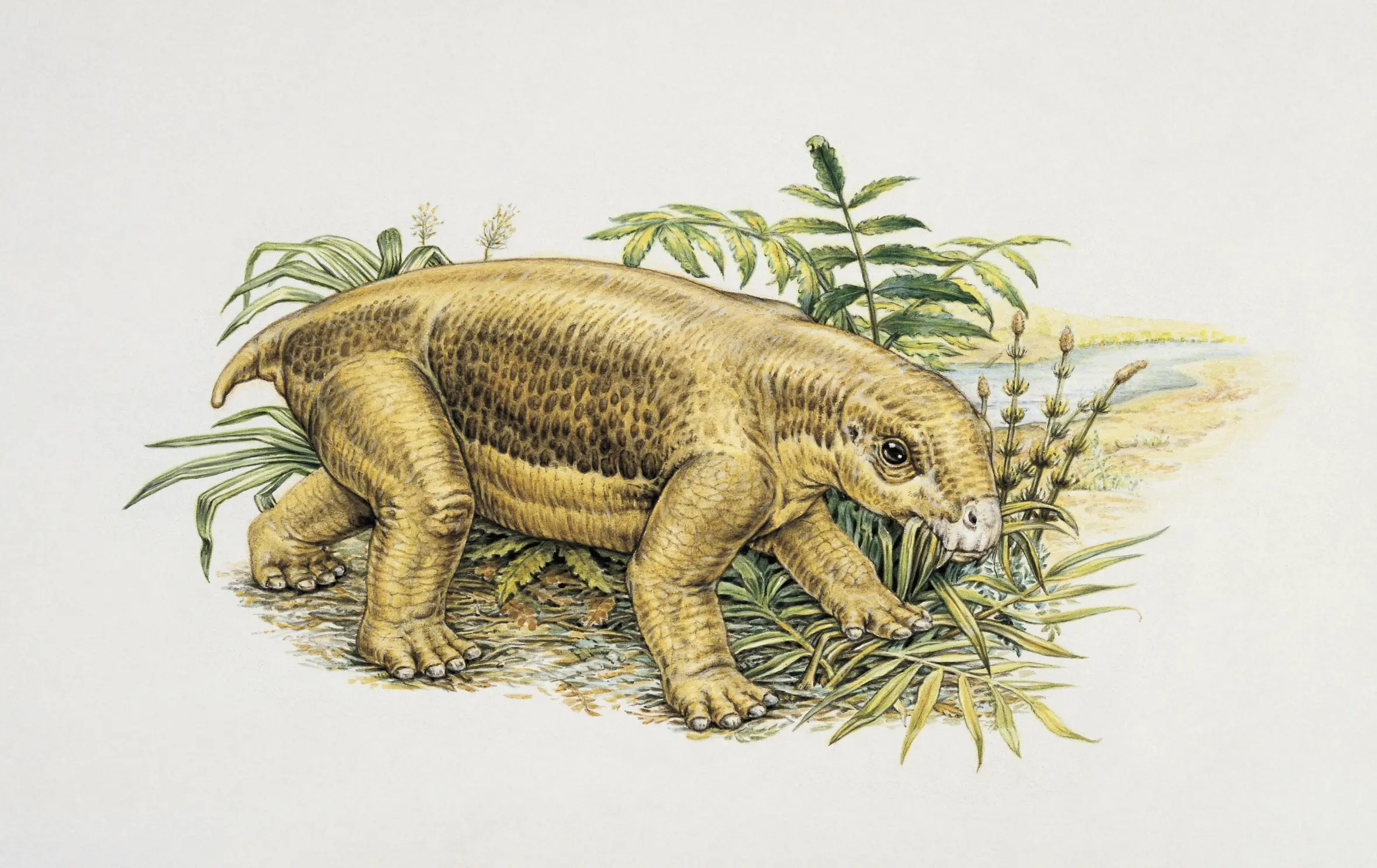
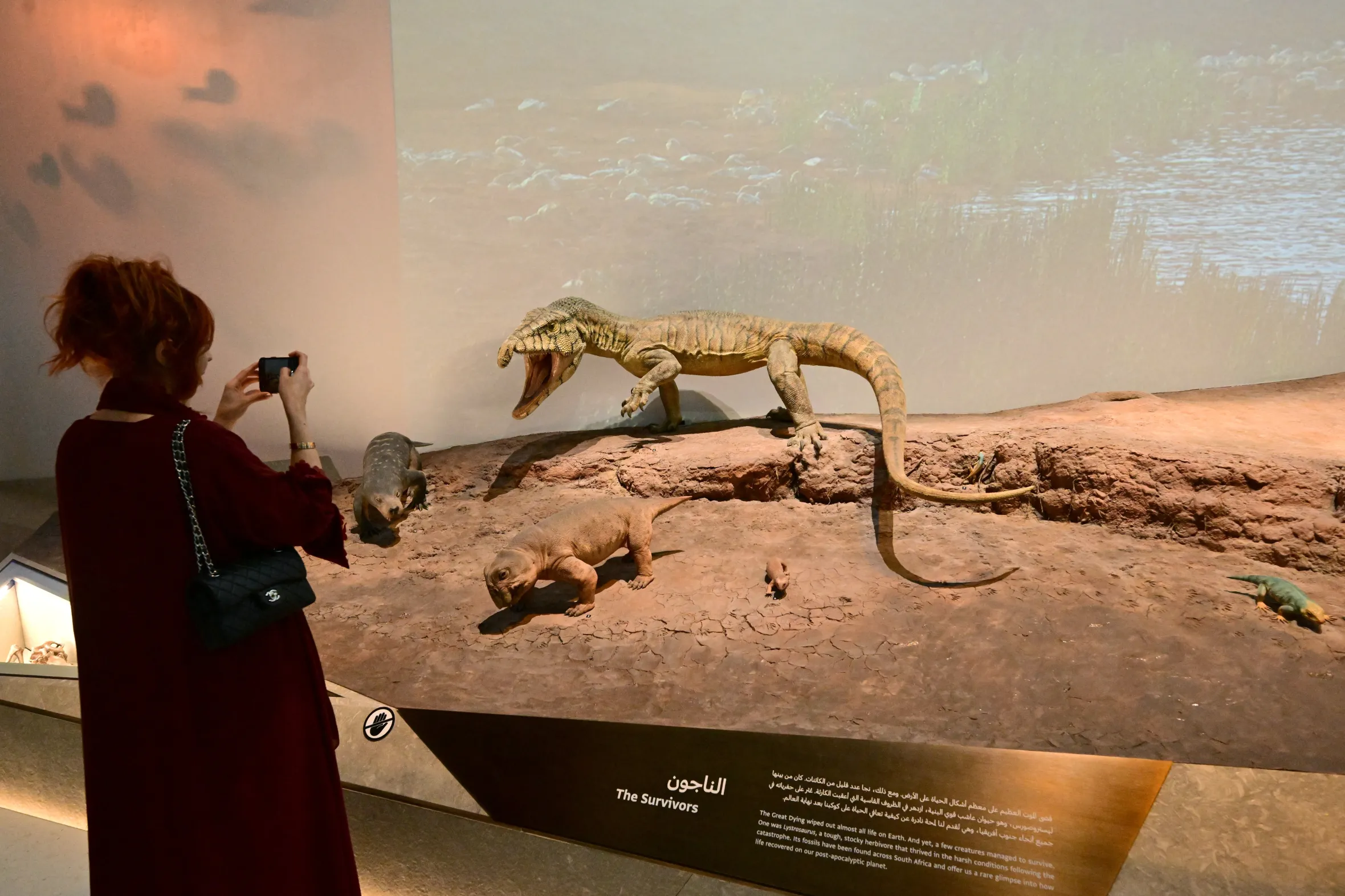 A lystrosaurus dinosaur replica, front, at the Natural History Museum in Abu Dhabi, and, below, an artist’s impression of what it may have looked likeGiuseppe CACACE/AFP/Getty Images
 Ryz Haydul/Alamy
Lystrosaurus and similar animals went on to dominate the land in the years after the extinction, although lystrosaurus is not itself a direct ancestor of modern mammals, including humans, but is more of a cousin.
To understand the history of lystrosaurus we have to go back to an age before dinosaurs had evolved, before the end of the Palaeozoic era and the dawning of the Mesozoic era. The Mesozoic was bookended by two massive extinction events. It was brought to an end 66 million years ago by an asteroid that killed off the non-avian dinosaurs, but it began after an even bigger cataclysm.
About 252 million years ago, more than 95 per cent of all species were wiped out during what is known as the Permian-Triassic or end-Permian mass extinction. It is thought that colossal volcanic eruptions in what is now Siberia pumped so much carbon dioxide into the atmosphere that it caused severe global warming and led to the acidification of the oceans, suffocating most of the creatures that lived there.
There were some remarkable survival stories amid the Armageddon, including the therapsids. It is thought that they were burrowers and that they were warm-blooded, helping them to live through extreme conditions. Their reproductive behaviour may also have been crucial.
A fossil of a curled-up infant from lystrosaurus was found in 2008. It was described as a stout “mammal-like reptile” about the size of a pig that had a beak-like jaw used for eating vegetation. The shape of the fossil led palaeontologists to “suspect even then that it may have died within an egg”, Botha said, but there was no sign of any solid shell, and they did not have the technology to confirm her hunch.
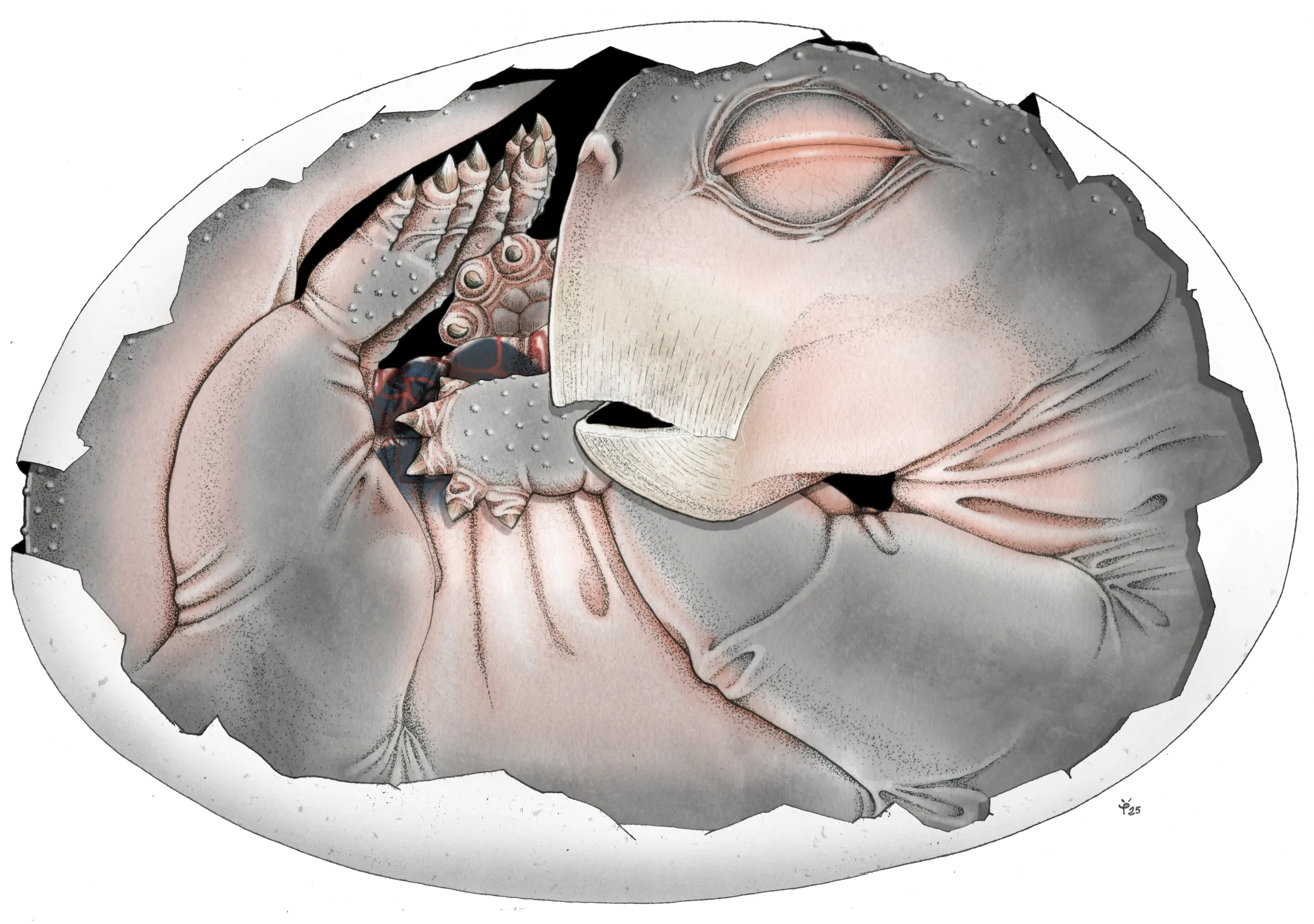 A reconstruction of the lystrosaurus embryo and, below, its skeleton within its partially preserved shellSophie Vrard
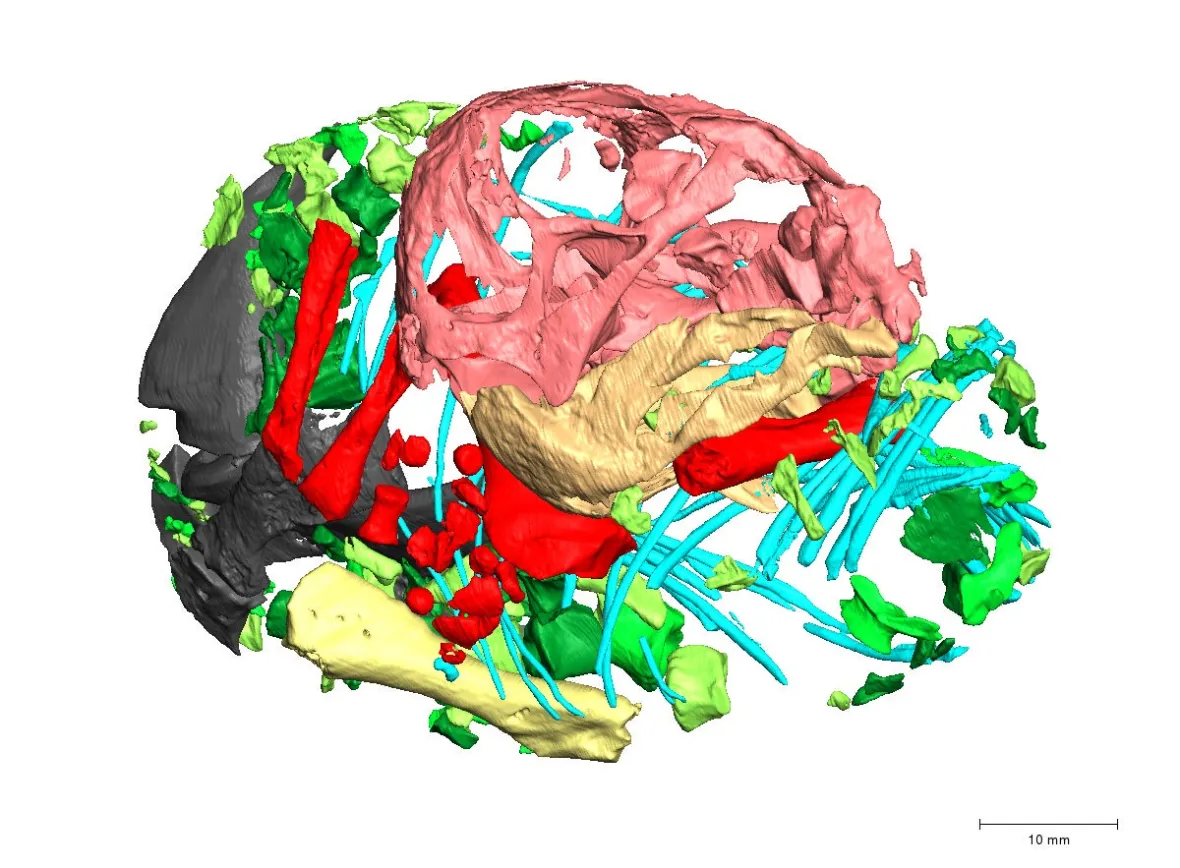
A new scanning technique using a large circular particle accelerator called a synchrotron has now allowed scientists to confirm that some of the infant’s bones, including those in its jaw, were not yet properly fused, showing that it must still have been inside its egg. The lack of a solid shell shows it must have been a “soft, leathery” type of egg. The eggs were large, making them less likely to dry out during harsh conditions, another survival advantage. They would have hatched at an advanced stage of development, allowing them to reach maturity, feed themselves and escape predators from a young age.
Julien Benoit, another author of the study, published in the journal Plos One, said: “This research is important because it provides the first direct evidence that mammal ancestors, such as lystrosaurus, laid eggs, resolving a longstanding question about the origins of mammalian reproduction.”