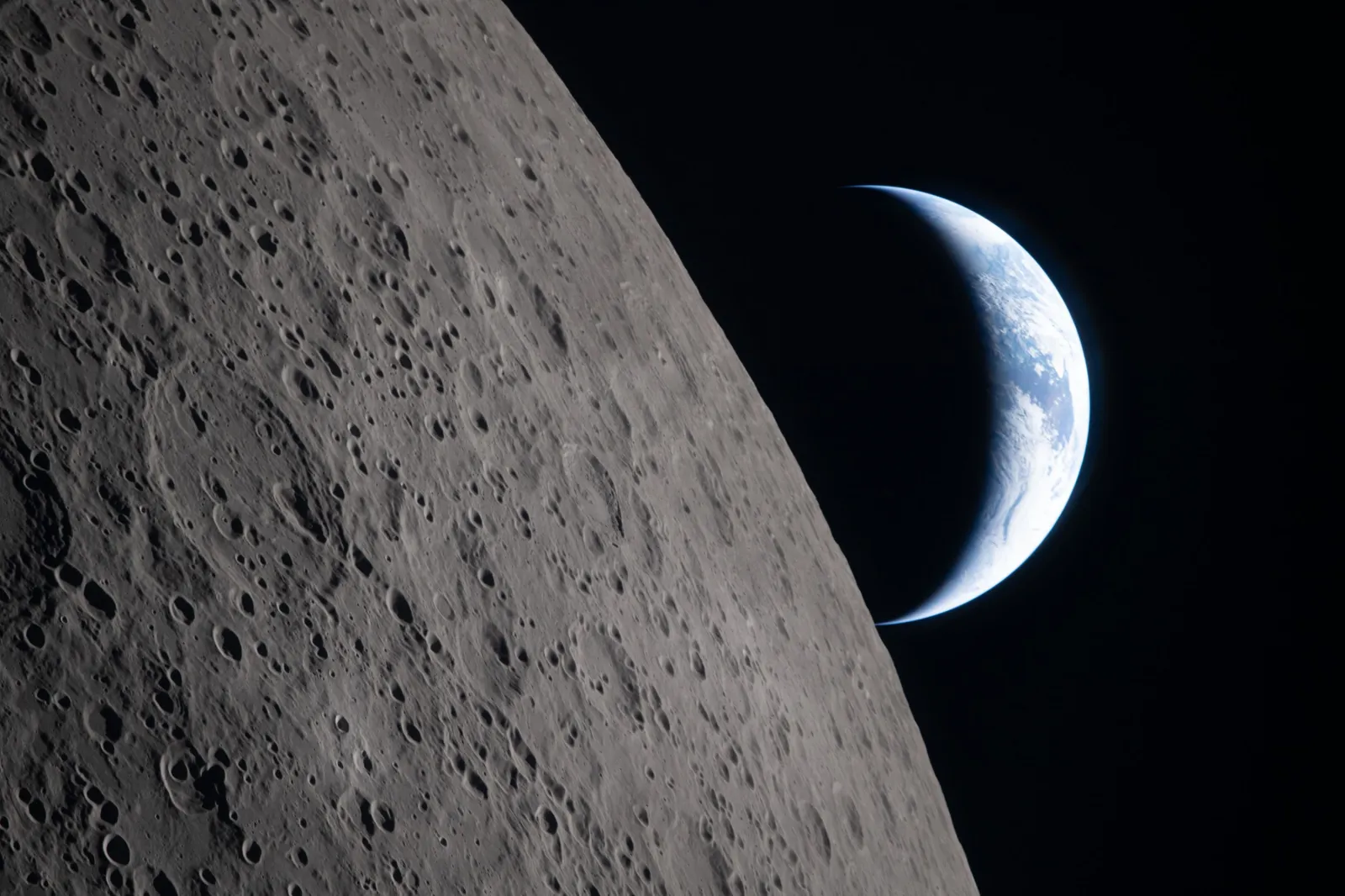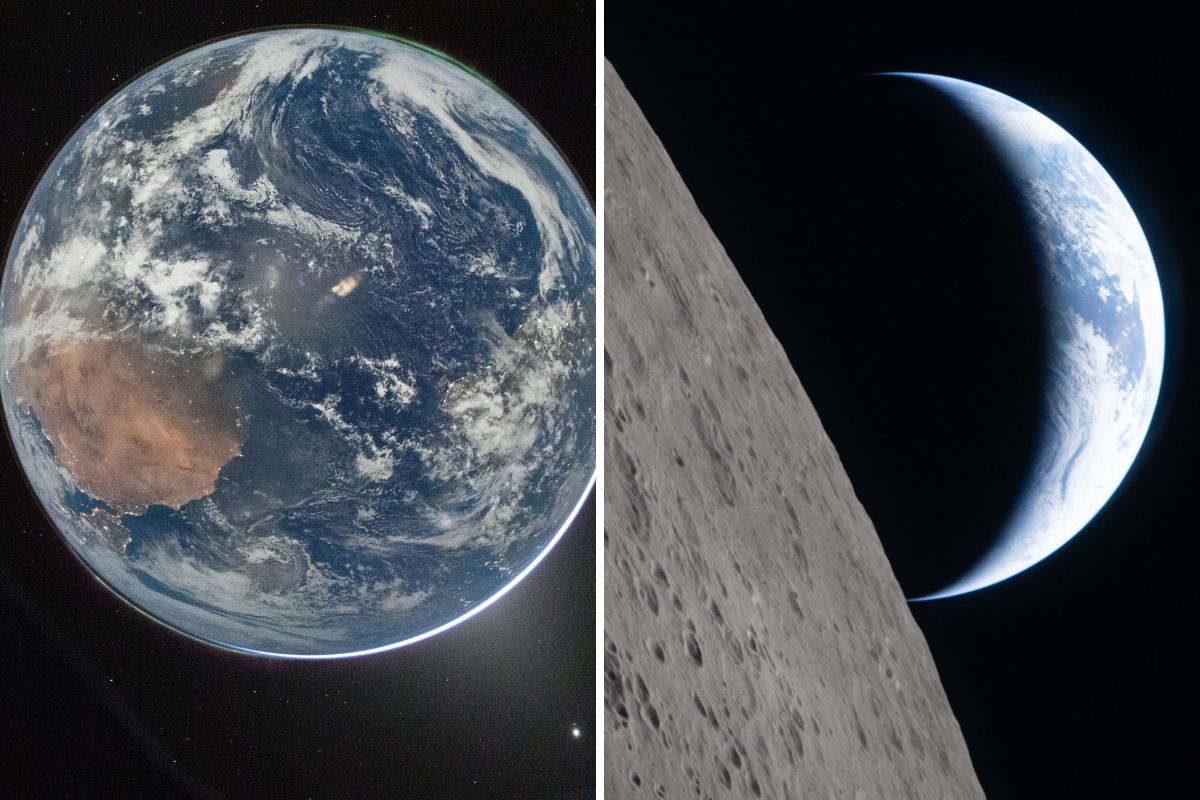
A view of Earth from space shared during NASA’s historic Artemis II mission has prompted a wave of astonishment on social media, with many seemingly being made aware of how much of the planet is covered by water.
For several users on Threads, the perspective challenged long‑held assumptions formed by classroom globes and flat world maps.
“I’m sorry but I had no idea the other side of Earth was all water like that, i thought the continents wrapped around like a stupid globe,” one user wrote in a post showing what appeared to be a Google Earth image of the planet—which is dominated by vast stretches of blue, with comparatively little visible land.
Another user agreed, posting a similar Earth image alongside an image of a globe. “I’ve stared at this globe my entire school life but it didn’t hit me as hard until I saw this image of earth today…with… just…water?”
The user added, “As a kid we grew up thinking large continents wrapped around the entire earth and it’s amazing how far apart they are!”
Sharing another image of Earth, a third user echoed the sentiment more bluntly, writing: “Anyone else F***** UP about this whole side of earth? Lmao [laughing my a** off] those continents really don’t go all the way around.”
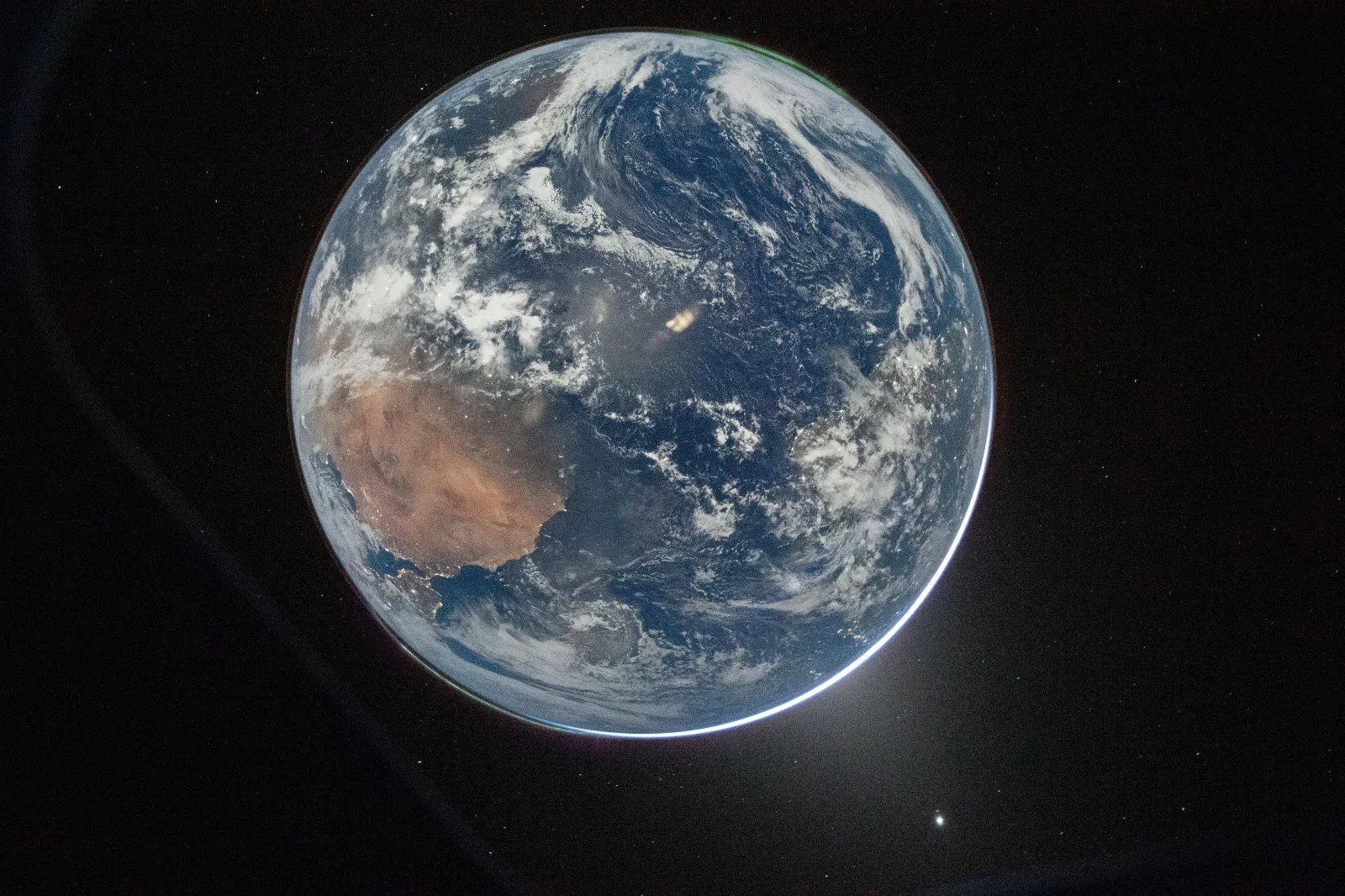
The realizations on social media align with what researchers have long known about Earth’s composition. According to NASA, when “viewed from space, one of the most striking features of our home planet is the water, in both liquid and frozen forms, that covers approximately 75 percent of the Earth’s surface.” The agency notes that geological evidence suggests water has flowed on Earth for about 3.8 billion years, covering most of the planet’s existence.
Despite its abundance, most of Earth’s water is not directly usable by humans. Earth.gov explains that while the majority of the planet’s surface is covered in water, only about 1 percent is readily available for use, including water for drinking and agriculture. The rest is largely locked away deep underground or in oceans, ice caps or glaciers.
NASA estimates Earth’s total water content at about 1.39 billion cubic kilometers (331 million cubic miles), with roughly 96.5 percent contained in the globe’s oceans. About 1.7 percent is stored in polar ice caps, glaciers and permanent snow, while another 1.7 percent exists in groundwater, lakes, rivers, streams and soil. Only a thousandth of 1 percent of Earth’s water is present in the atmosphere as water vapor.
For freshwater specifically, which is essential for human survival, the distribution is even more limited. NASA says groundwater may account for about 22 to 30 percent of the planet’s fresh water, while ice—including ice caps, glaciers, permanent snow, ground ice and permafrost—makes up the remaining 78 to 70 percent. Freshwater stored in easily accessible lakes and rivers represents only a small fraction of the total.
Scientists also continue to study how Earth acquired such vast quantities of water in the first place. NASA has said, “The origins of our oceans are in the stars,” explaining that water molecules are abundant in planetary systems forming around other stars. The agency said asteroids and comets, which are rich in water and date back to the formation of the solar system, likely played a major role.
NASA also said, “Over billions of years, countless comets and asteroids have collided with Earth, enriching our planet with water,” adding that chemical markers in ocean water suggest most of Earth’s water came from asteroids. Observations also indicate that ice, and possibly even liquid water, exists within some asteroids and comets.
Do you have a tip on a science story that Newsweek should be covering? Do you have a question about the Earth? Let us know via life@newsweek.com.