
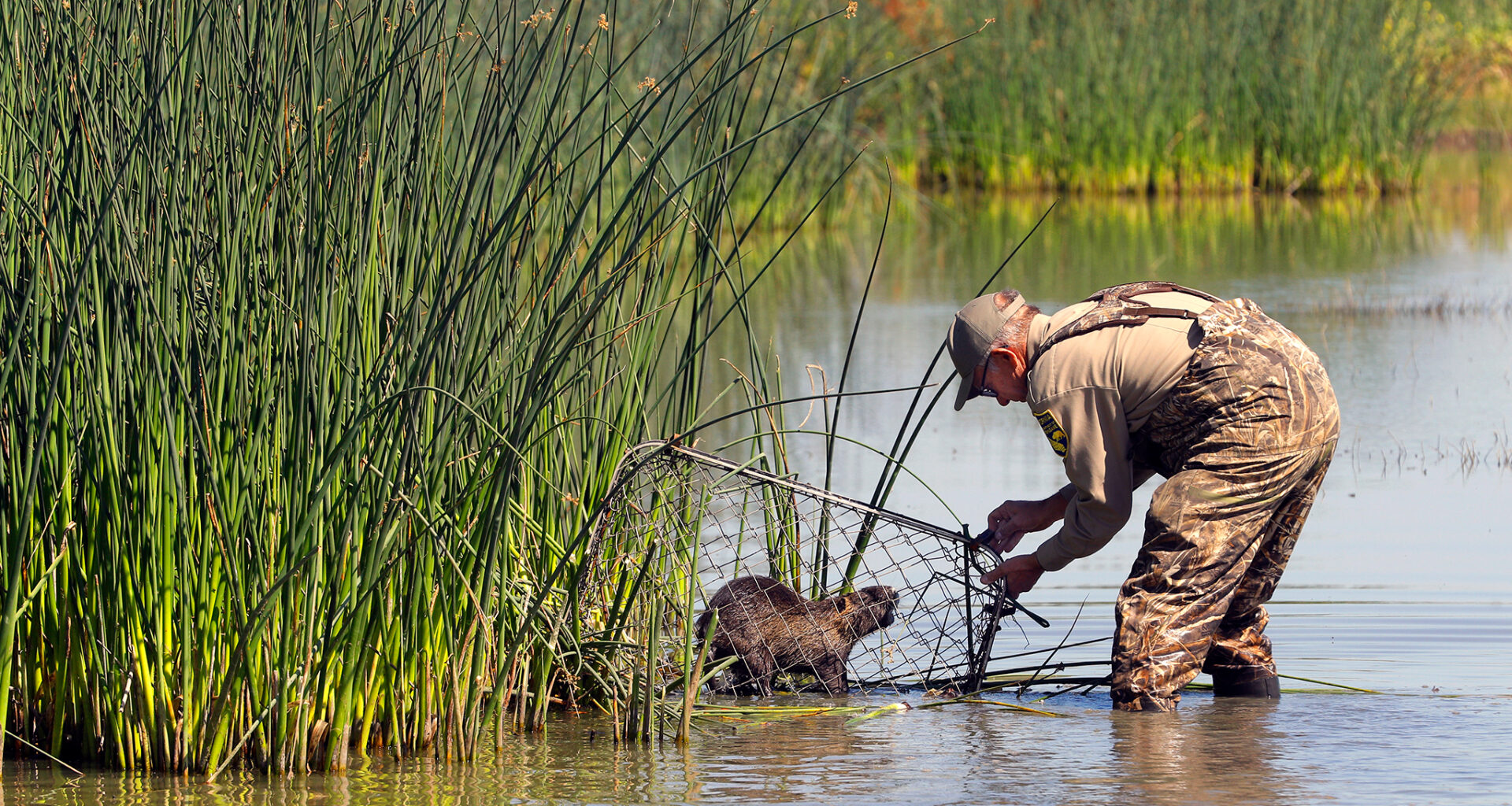
For years now, California has been waging war on nutria, a highly destructive 20-pound rodent native to South America that poses a serious threat to fragile wetlands and endangered species. And now, wildlife officials say it’s possible that someone intentionally reintroduced them.
According to an April 7 news release from the California Department of Fish and Wildlife, genetic sequencing has revealed that the state’s nutria populations are most genetically similar to populations in Oregon, suggesting that, “California’s current nutria invasion was the result of intentional reintroduction, with the original source animals likely being transported from the central Oregon population.”
At the height of the fur trade in the late 19th and early 20th centuries, nutria were bred throughout the world, and were first imported to Oregon in 1937, according to a paper based on the study, published in November 2025. Eventually, feral populations flourished, leading to eradication campaigns. As a result, none of these burrowing rodents were documented in the state of California after they were pronounced eradicated in the 1970s — but in 2017, officials discovered a pregnant female nutria in Merced County.
“Given where nutria were rediscovered in California, it is nearly impossible that they could have migrated there on their own,” Michael Buchalski, Fish and Wildlife wildlife genetics research lead, told SFGATE by email Thursday. “It’s too far of a distance and we don’t find any nutria in the areas in between. That makes human introduction the most likely scenario.”
In addition to harvesting their pelts during the fur trade, people also treated nutria as a form of vegetation control much like sheep or goats, Buchalski said. “Someone may have thought they could be an effective natural way to manage aquatic vegetation on their private property,” he said. “Also, some people just really like nutria. … Or it could have been malicious in hopes that they would cause environmental damage. It’s hard to know.”
People are prohibited from bringing nutria into California and they present a biosecurity risk since they’re classified as an A-rated pest by the California Department of Food and Agriculture. The 2.5-foot-long semiaquatic rodents pose a serious threat to fragile wetlands and crops, and burrow so much that they even have the capacity to “weaken levees to the point of failure,” agriculture officials previously told SFGATE.
Today, eradication efforts cost the state about $5 million annually, with the state Department of Food and Agriculture operating over a dozen vehicle inspection stations at state entry points as a “first line of defense.”
“This study supports our long-held belief that the current invasion is the result of reintroduction rather than explosive growth of a remnant, undetected population,” Nutria Eradication Program Manager Valerie Cook said in the April 7 news release. “While we can only speculate on the ‘reasoning’ behind the reintroduction of this incredibly destructive invasive species, these findings highlight the critical importance of biosecurity inspections aimed at preventing the importation and transportation of invasive plants and animals into and within California.”