
It’s as easy as P, P, P (Picture: Getty/Metro)
When you poo, you should actually P — three times, in fact.
No, we don’t mean urination; we’re referring to a new theory from a leading gastroenterologist that could completely change how you think about your toilet habits.
For most of us, conversations about digestion stopped somewhere around potty training. After that, it becomes a strangely taboo topic — something we experience every day but rarely talk about, even when things go wrong.
Recent research from Symprove found a quarter of Brits have waited a month before booking a GP appointment for digestive issues, while 84% only ever go for a number two in their own home, and many admit they’d rather hold it in for hours or even days, than use a public toilet.
‘Even I, as a gastroenterologist, still see this every day,’ Dr Trisha Pasricha, a physician scientist at Beth Israel Deaconess Medical Center and assistant professor of medicine at Harvard Medical School, tells CNN. ‘Patients come to my clinic, and they’re so mortified to put words to their problem.’
To help people more simply address issues like bloating or pain after eating, constipation, pain during bowel movements, and diarrhoea, Dr Pasricha developed a framework called the three Ps of pooing: propulsion, pliability and pelvic floor.
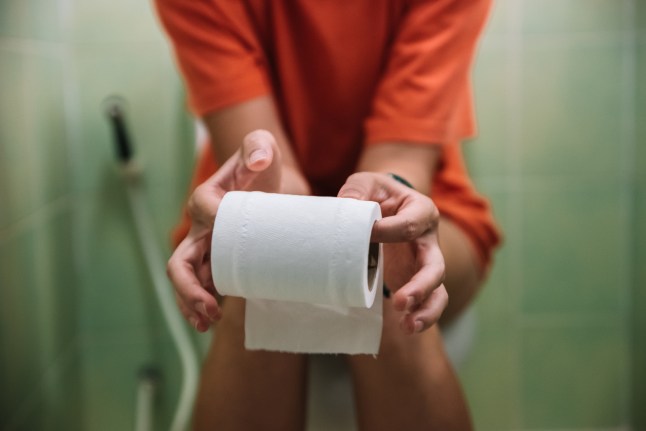
Many people are embarrassed to even use the loo outside their home (Picture: Getty Images)
The idea — which she explains in her recently-released book, You’ve Been Pooping All Wrong: How to Make Your Bowel Movements a Joy — is that digestive health depends on all three working together. If even one is off, things can quickly become uncomfortable or inefficient.
And it matters more than you might think. Long-term constipation has been linked to a range of conditions, from haemorrhoids to chronic kidney disease and even dementia and Parkinson’s.
According to Dr Pasricha, understanding how your body works can not only be ‘incredibly empowering’, it can also help make trips to the toilet easier than ever.
Do you pay attention to your digestive health?
Yes, it’s important for overall well-being.Check
Sometimes, but not as much as I probably should.Check
Not really, I rarely think about it.Check
Sign up to Metro’s The Slice newsletter for your guide to what’s on in London, with trusted reviews, offers and giveaways.
Propulsion
The first of the Harvard doctor’s three Ps is propulsion, which is all about the force that pushes stool through your digestive system and out of the body.
This involves both involuntary contractions in the colon and a voluntary action known as the Valsalva manoeuvre — the brief ‘bearing down’ motion most of us use when we’re on the loo.
‘This raises the pressure in our chest and abdominal cavity, which then has nowhere else to go but downward,’ explains Dr Pasricha.
Avoiding using your phone on the toilet (Picture: Getty Images)
Timing is key here. Your colon naturally produces strong waves of contraction several times a day, particularly within the first hour after waking, and often after eating, exercising or drinking coffee. These high amplitude propagated contractions, or HAPCs, are the moments when your body is primed to go.
Ignoring the urge to poo — whether due to embarrassment, inconvenience or being in public — can disrupt this process, resulting in more straining, longer toilet trips and an increased risk of issues like haemorrhoids.
Creating a routine can help here; listening to your body, going when the urge strikes and making yourself comfortable enough to use unfamiliar toilets. Dr Pasricha recommends carrying a mini toilet spray when you’re on the go and listening to music, but warns not to use your phone on the loo beyond that, since that may keep you sitting and straining longer.
Pliability
Pliability refers to the consistency of your stool, aka how soft and easy it is to pass.
Your colon’s job includes absorbing water from waste, but if too much water is removed, poo becomes hard and difficult to move. That’s where hydration and fibre come in.
When to see a doctor
For many people, small adjustments across these three areas can significantly improve bowel health without medication.
However if issues persist for more than a couple of months — or if you experiencesymptoms like pain or bleeding — it’s important to speak to a doctor.
Adults should be consuming 30g fibre daily, with good sources including fruits, vegetables, whole grains, nuts and seeds. Gradually increasing your intake is best to avoid sudden discomfort, but if you still can’t get enough from your diet, it may be worth trying a psyllium husk fibre supplement.
In terms of hydration, NHS guidance suggests drinking around 6 to 8 cups or glasses of fluid a day. Water-rich foods such as fruits, vegetables and soups can also boost your intake.
Even after making these changes, Dr Pasricha says many people continue to make the mistake of holding in their poo. And the longer stool sits in the colon, the more water is absorbed from it — meaning all your hard work could be wasted.
Pelvic floor
You probably think of pelvic floor in relation to vaginal or urethral strength, but it also controls the release of stool
These muscles need to relax at the right moment to allow stool to pass, with Dr Pasricha using the analogy of squeezing toothpaste out of its tube while the cap is still on.
Positioning is key (Picture: Getty Images)
Specialist pelvic health physiotherapist, Rosie Cardale, tells Metro: ‘One of the pelvic floor muscles (called the puborectalis) wraps around the rectum in a U shape. Usually this muscle is contracted, which keeps a 90 degree “bend” in your rectum and keeps you continent.
‘In order to poo, this muscle needs to relax, which allows the rectum to straighten and lengthen creating a clear passageway for waste to exit the body. This means that the position you sit in can make a difference to how easy it is to pass a poo, with squatting being the most optimal choice.’
Raising your knees above your hips — using a footstool or even a toilet roll under each foot — allows you to mimic this while sitting, but the Symprove expert also says strategic breathing can create a rise in pressure in the abdomen which gets the bowel motion started.
She continues: ‘Try this tip the next time you’re on the loo – lean forward onto your knees, take your hand and make a fist. Place your lips against your index finger and thumb and breathe into it as if you are blowing into a trumpet.
‘Try three long breaths like this to initiate a poo and then continue until you are finished.’
Beyond this, Dr Pasricha says, on more persistent cases, therapies such as biofeedback can help retrain the pelvic floor, teaching better coordination and control.
Do you have a story to share?
Get in touch by emailing MetroLifestyleTeam@Metro.co.uk.
Arrow
MORE: New mutant tarantula discovered and it’s got massive balls
Arrow
MORE: World’s oldest octopus isn’t really an octopus
Arrow
MORE: A third of dieters in the UK’s jab capital are on Mounjaro or Ozempic — how does your city rank?
Comments
Add Metro as a Preferred Source on Google
Add as preferred source
The Slice
Your free newsletter guide to the best London has on offer, from drinks deals to restaurant reviews.