
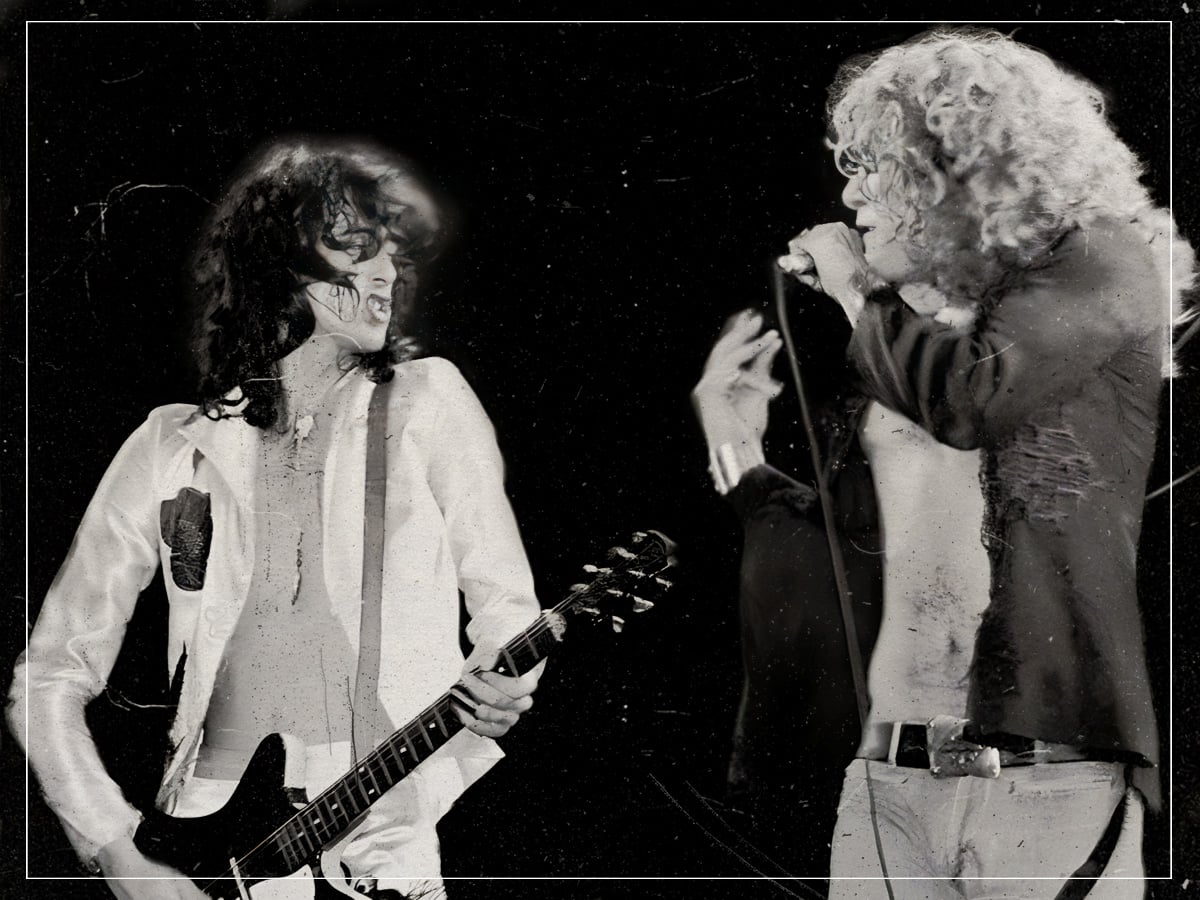
(Credits: Far Out / Alamy)
Fri 10 April 2026 19:55, UK
There would have been a few worried industry executives when the thought of recording a new Led Zeppelin album arose in 1972. That’s not because times were tough, but because they had gotten so good that surely the only way was down.
With Led Zeppelin IV becoming one of the greatest rock albums of all time, the next Zep material was always destined to be a tough one. Having to deliver classic after classic is a trick few bands can pull off, even one as equipped with generational talent as Led Zeppelin was.
However, as they often did, Jimmy Page, Robert Plant, John Bonham and John Paul Jones would surprise all their fans and their label and deliver an entirely unique album, Houses of the Holy.
The group had realised that they had the world at their feet, and their exploration of music had been given the green light. It saw the band’s ambitions increase as they approached their new album, Houses of the Holy. There are a couple of strange songs on the record, too, with ‘The Rain Song’ and ‘No Quarter’ sounding particularly non-Zeppelin.
As many of their fans turned disgruntled at the new approach to their sound, leaving behind the strict purist view of heavy rock they had brought to the fore, Zeppelin cared not and delivered a searing record. As the album was released so close to IV its comparisons have often left the LP in the dust, but House of the Holy showcased a band on the run towards their own musical Mekkah.
The record would feature some of Zeppelin’s most notable songs of all time, like ‘D’Yer Make Her’, ‘The Song Remains The Same’ and ‘No Quarter’, but also allow the band to truly unleash their funky side and pay homage to the Godfather of Funk, James Brown.
The record is famed for having as many musical directions as is possible on an album. That said, it is the song ‘The Crunge’ that has become known for being Zeppelin’s funk number. An unusual 9/8 rhythm, a funk sound, and carefree lyrics have made it an essential listening experience for Zeppelin fans.
When we say essential, we’re not exactly confirming the track as brilliant. Like ‘D’Yer Make Her’, which acted as the other single on the release, the song sees the band trying to experiment but often falling closer to imitation than inspiration. It’s a sentiment that is confirmed when Plant sings, “Where’s that confounded bridge?” in homage to Brown’s famous line.
Lyrically, the song is a little tongue-in-cheek and a little downright stupid—but much of that frivolity came from the song’s conception. Originally beginning life as a jam session between John Bonham and John Paul Jones, the song soon morphed into an album track.
As the track abruptly ends, Plant is left posing the aforementioned question; it becomes clear that the unanswered query is a fair assessment of why the song never popped. There aren’t many moments within the entire discography of the band that don’t land with aplomb, but this is certainly one of them.
ADD AS A PREFERRED SOURCE ON GOOGLE  The Far Out Led Zeppelin Newsletter
All the latest stories about Led Zeppelin from the independent voice of culture.
Straight to your inbox.