
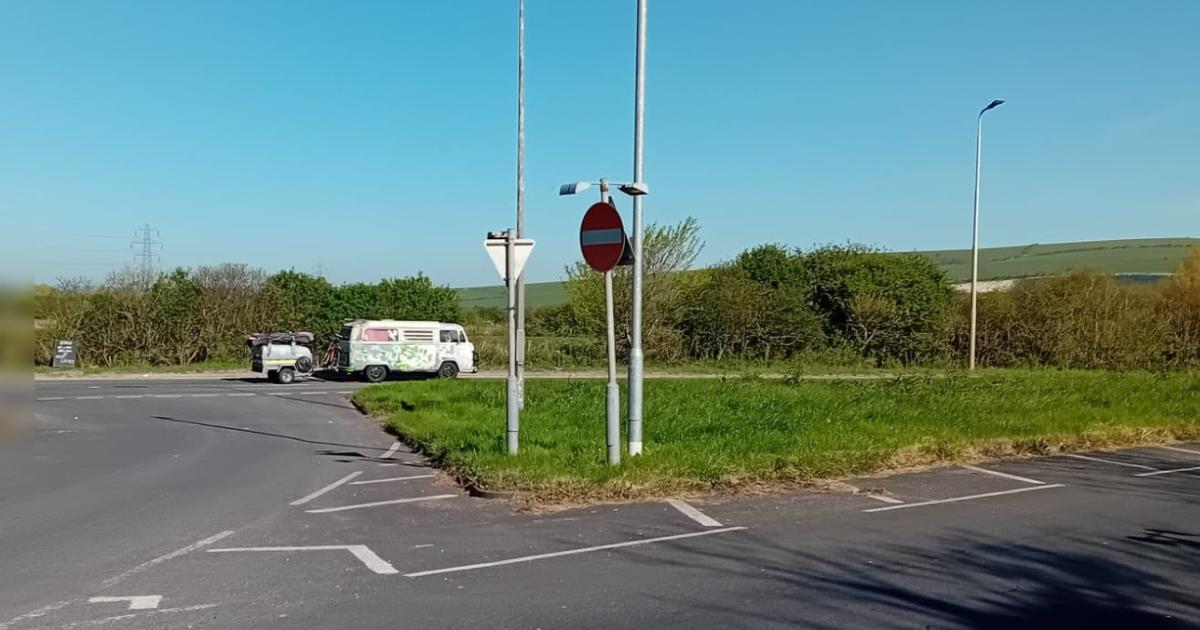
East Sussex Wildlife Rescue and Ambulance Service (WRAS) shared a photo of the birds nesting on grass behind a stop sign at a junction in East Sussex, with the male standing guard over the female as she incubated her eggs.
The rescue service said that as the summer nesting season begins, bird species will be trying to find safe places to create their nests and lay eggs.
The pair of pheasants were found nesting behind the stop sign on this busy Sussex junction (Image: WRAS)
A WRAS spokesman said: “However, their version of ‘safe’ is not the same as ours – as this photo demonstrates.
“On the grass just behind the stop sign, a female pheasant is sat on her clutch of eggs, with the male proudly defending his partner!
“They are quite happy, uninjured, and will hopefully remain undisturbed for the duration of the eggs incubation – therefore we leave them well alone.”
The WRAS urged Sussex residents to remember that all birds, eggs and nests are protected under the Wildlife and Countryside Act.
Inside the East Sussex WRAS hospital (Image: The Argus)
The rescue service said: “Unless you hold a licence, it is illegal to damage, destroy or disturb them.
“Support our wildlife this breeding and nesting season and – unless there is cause for concern or visible injury – leave well alone.”
East Sussex WRAS says its busiest period spans the summer months, when its wildlife hospital near Lewes can reach capacity.
The charity said its hospital can house up to 450 animals needing rehabilitation, depending on their size and species.