
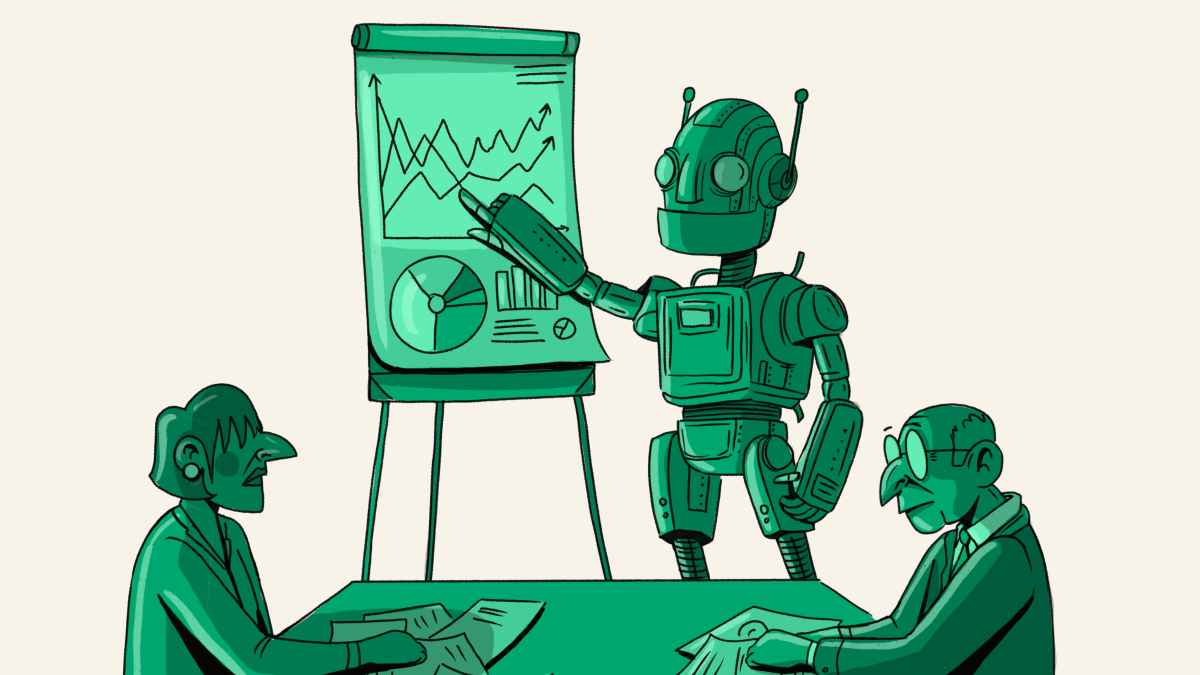
Lloyds Banking Group has welcomed a specialist artificial intelligence robot into its boardroom in what is believed to be a first for a UK blue-chip company.
Executives and board members of the lender have started using a specialist “board bot” to sift through confidential information, help them to overcome human bias when making decisions and prepare for high-level meetings. It is said to be the first FTSE 100 firm to embrace the technology in this way.
Lloyds bosses are using an “all singing, all dancing” agent developed by Board Intelligence, an executive advisory outfit headed by the entrepreneur Pippa Begg.
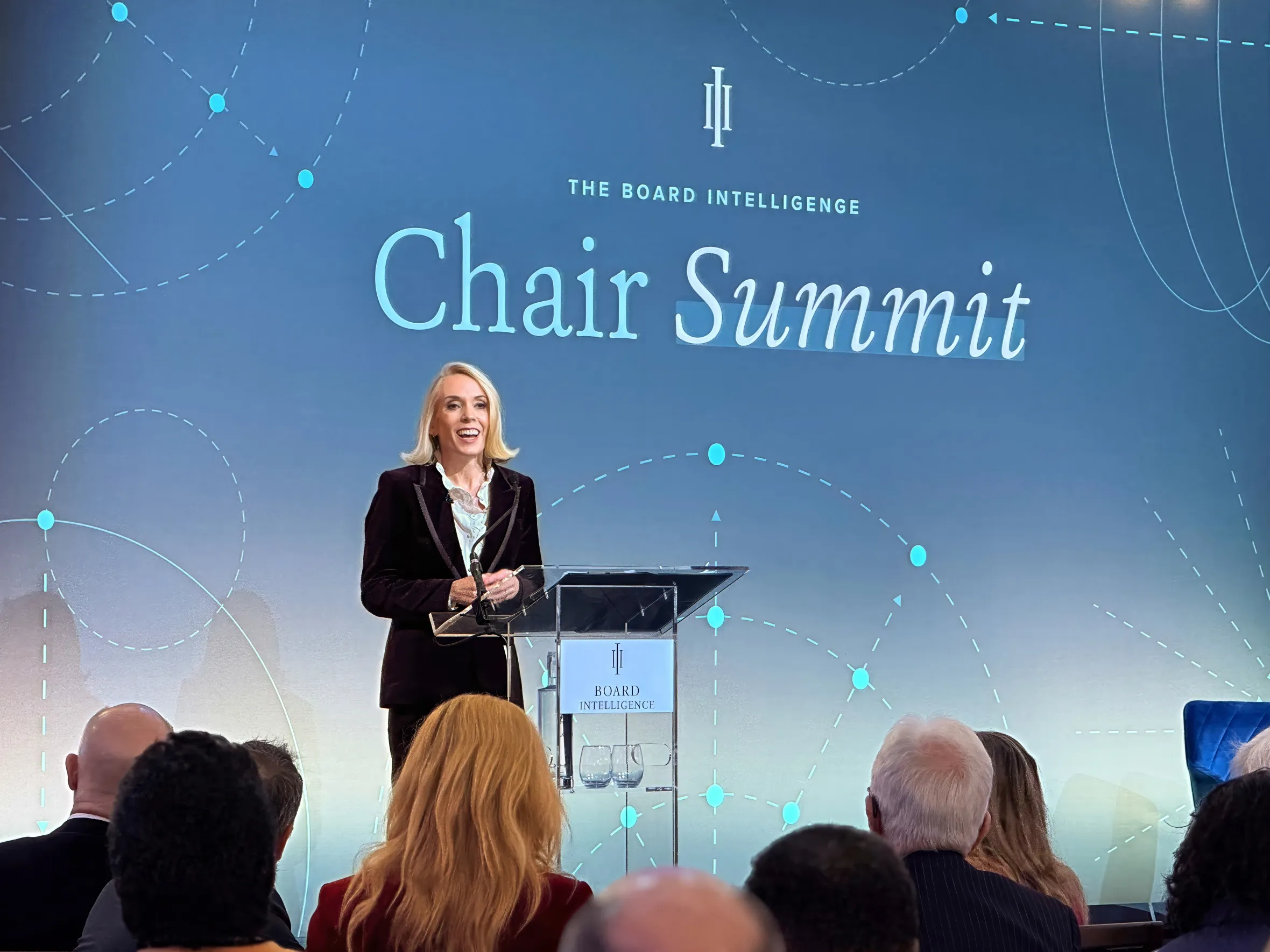 Pippa Begg of Board Intelligence, which developed the AI agent now being deployed by Lloyds
Lloyds’s embrace of board bots comes as the 260-year-old bank is seeking to reposition itself as “the UK’s biggest fintech”. The bank estimates that generative AI tools helped it to generate £50 million in “value” in 2025 — a figure that it wants to increase to £100 million this year.
Nicola Putland, Lloyds’s corporate governance director, said: “We see real potential for AI to support decision making in boardrooms when used carefully and responsibly. We are trialling AI tools to support us to better prepare for discussions through faster analysis, and access to a broader range of perspectives.”
Board Intelligence’s agent has been trained by the company’s experts to create an AI board adviser that can offer guidance in cybersecurity, sustainability, financial analysis, mergers and acquisitions and more. Begg said the agent could help to eliminate “human bias” from board decisions, including on making acquisitions, and analyse executive and employee performance.
While AI bots such as ChatGPT and Google’s Gemini are in wide use among the public and through many corporations, specialist tools are required for boardrooms, which deal with highly confidential company and market data.
“Very few people have access to two things that are important for being able to deliver this,” said Begg. “One, an understanding of what typically doesn’t go so well in executive rooms and boardrooms, and therefore what ‘good’ looks like — because there’s a relatively small population of people that sit in those rooms.
“And then the second piece is to deploy technology in a secure way. Most organisations don’t want to give their internal teams access to [some] information. Our set-up enables us to securely host all that information without [others] being able to read it.”
For now, Lloyds is mainly making Board Intelligence’s bot available to bosses to prepare for meetings. Begg described this as “step one” for most organisations, where AI is used to “augment the human’s ability to consume information, and form judgments and test their judgments and test their theories, before they get into the room”.
The second step, she said, will involve board members having an open laptop in meetings and “being able to almost interrupt and say: ‘Hang on, I think you’re falling into this trap.’ Or: ‘I disagree.’” Begg added that allowing AI to actually have a legal vote could be a “dangerous leap”.
Lloyds and other large banks have been cautiously approaching the adoption of AI. This weekend there are growing fears about the impact that Anthropic’s latest tool, Claude Mythos, could have on the global financial system.
Anthropic’s tool is thought to have a superhuman ability to root out website and app vulnerabilities across the internet, creating concern over cybersecurity. The Telegraph reported on Friday that the Bank of England was preparing to gather City bosses to discuss the implications and risks posed by Claude Mythos.