
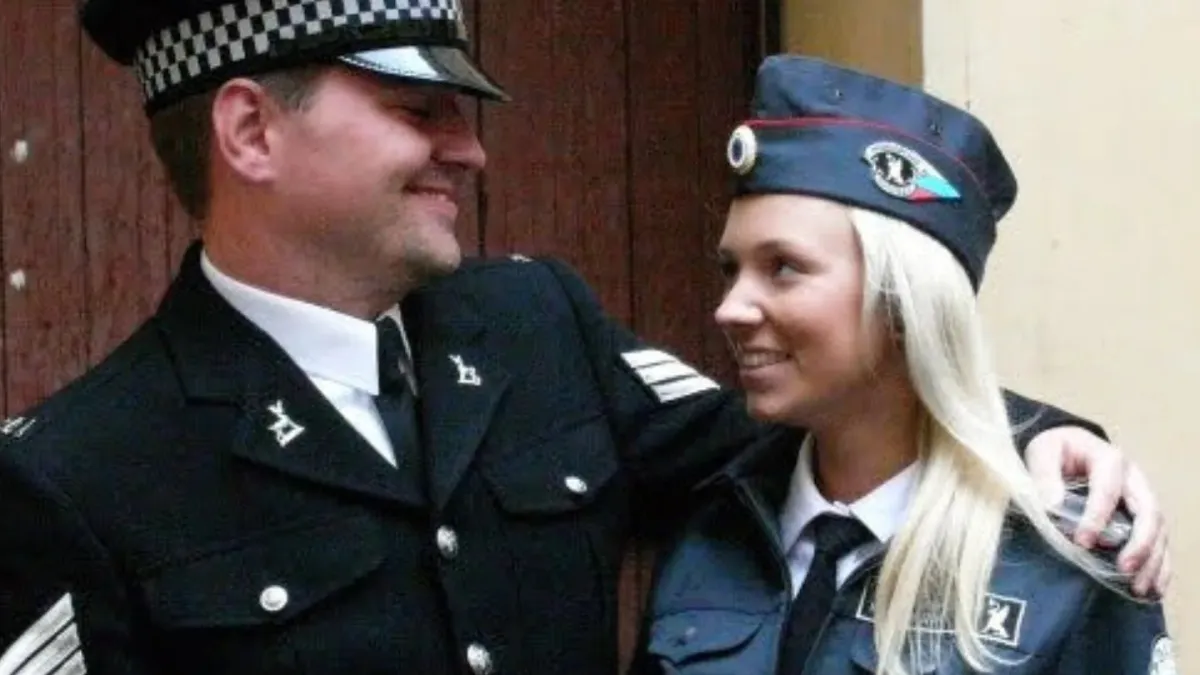
A former police officer from the home counties has become the first British-born person to be stripped of citizenship over their links to Russia.
Mark Bullen had his British passport revoked on national security grounds by Shabana Mahmood, the home secretary, after having worked for more than a decade at Hertfordshire Constabulary.
The unusual move, normally associated with alleged terrorists and dangerous gangsters, came after Bullen was stopped by police at Luton airport and questioned on suspicion of being involved in hostile activity on behalf of a foreign state.
Bullen, 45, had his electronic devices seized and says he was asked about the 2018 Salisbury poisonings during a four-hour interview after flying to the UK from Russia, where he now lives.
It can also be revealed that during his time in the British police, Bullen met senior Russian officers and took part in a month-long exchange to St Petersburg. His social media posts are peppered with pro-Kremlin views and anti-Ukrainian propaganda.
He admitted in a recent interview in Russia that his passion for the Soviet Union since childhood meant that his friends and family in the UK often used to joke: “You’re a spy.”
Bullen, who achieved his “lifelong dream” of obtaining a Russian passport in 2022, denies any wrongdoing.
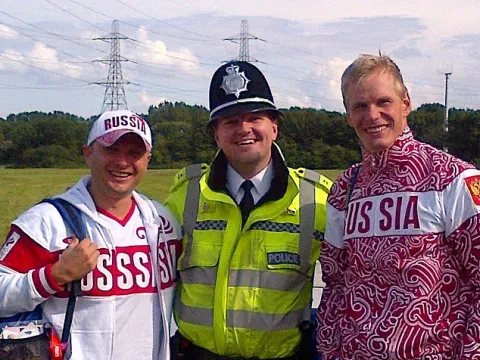
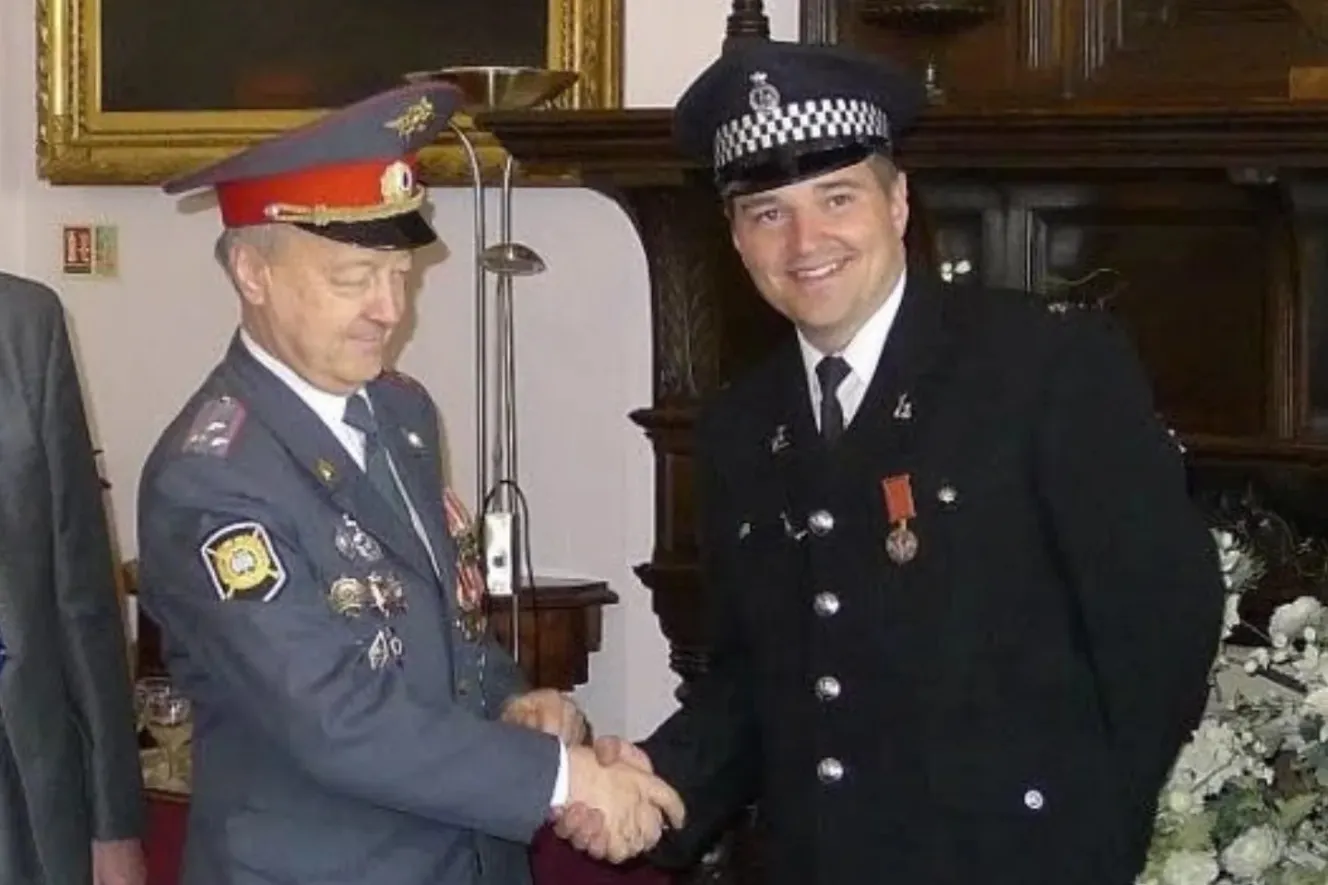 Bullen was presented with an award by a senior Russian police officer at Hertford Castle. Below, with Russian athletes in the UK
The decision to strip him of British citizenship comes at a time when tensions between London and Moscow remain high. On Thursday, John Healey, the defence secretary, accused President Putin of using Russian submarines to spy on critical undersea data cables in UK waters.
Sir Ken McCallum, the director-general of MI5, has separately accused Russian operatives of “sowing the seeds of violence, chaos and division” on Britain’s streets.
Bullen, who grew up in Bracknell, Berkshire, was served with a citizenship deprivation order by Mahmood in October, a month after she became home secretary.
In her letter, which Bullen has publicly shared online, Mahmood wrote: “You are being deprived of your UK nationality on the grounds that to do so is conducive to the public good.”
She said the evidence on which her decision was based “should not be made public in the interests of national security”.
Citizenship removal is a power used sparingly by government. It is most commonly associated with terrorism suspects, including Shamima Begum, the Londoner whose British passport was revoked in 2019 after she joined the Islamic State in Syria as a teenager in 2015.
Deprivation orders have also been served on gangsters involved in the most serious cases of organised crime.
Only two other individuals, both of whom were foreign-born, are believed to have had their British citizenship removed because of their suspected links to the Kremlin.
Anna Chapman, now 44, had her British passport cancelled in 2010 after she was unmasked as a member of a Russian spy ring operating in New York. The former model, born Anna Kushchenko, had managed to acquire British citizenship through a short-lived marriage to Alex Chapman, a trainee psychologist based in Dorset.
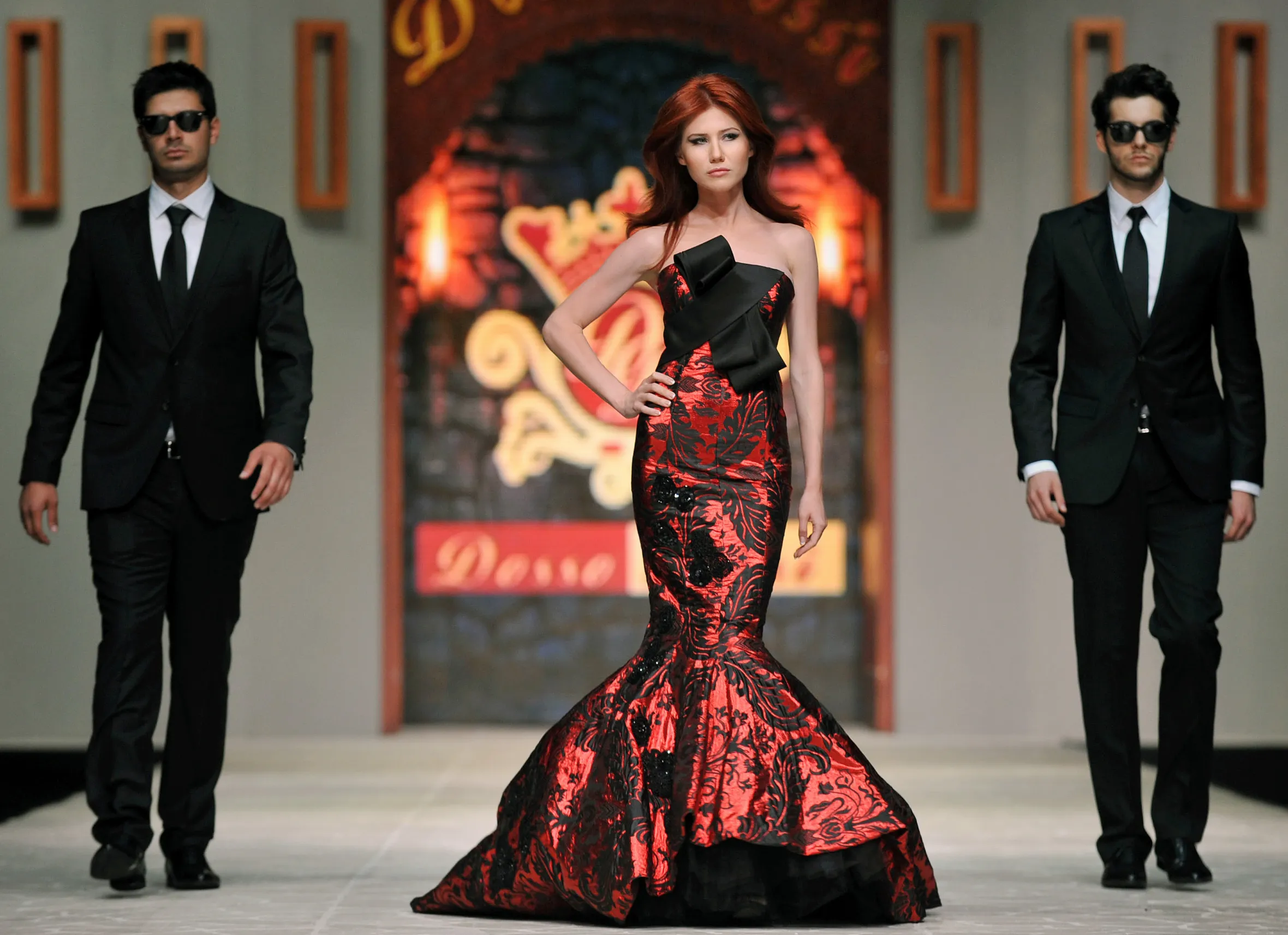 Anna Chapman was arrested in New York in 2010 — two years later she was invited to model in a fashion show in TurkeyAP
In 2019, an Afghan-born man, known only as C2 for legal reasons, was stripped of his UK nationality after it was assessed that he was an alleged agent for the GRU, Russia’s military intelligence service.
Bullen has lived in Russia since 2014, where he works in communications for Zenit St Petersburg, a top-flight football team owned by Gazprom, the energy giant that was placed under UK and US sanctions in January 2025 over Russia’s invasion of Ukraine.
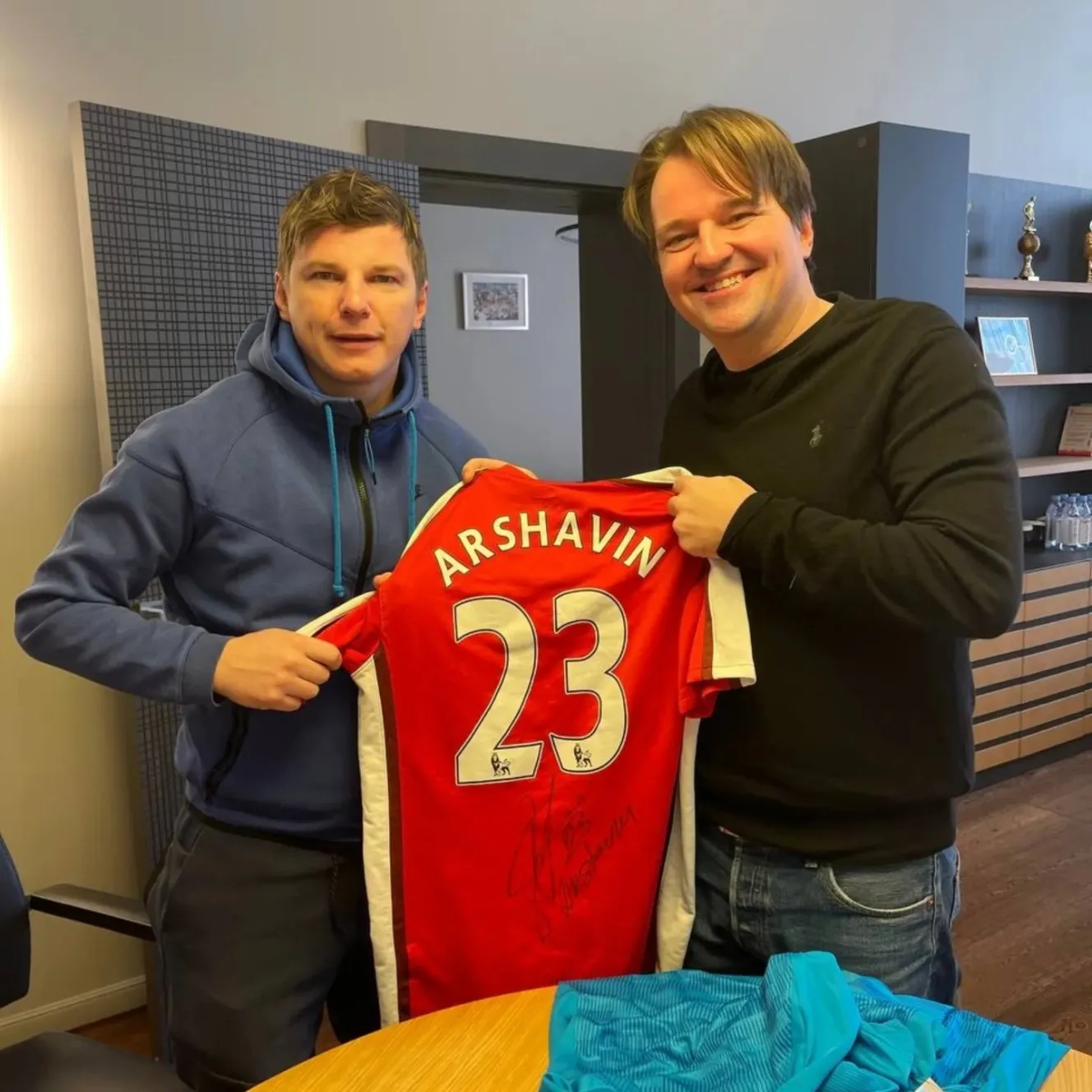 With the former Arsenal and Russia footballer Andrey Arshavin
He is married to a Russian woman, with whom he has four children, but has frequently returned to Britain to visit his family.
Bullen first travelled to Russia aged 18 in 1999, later describing the country as his “childhood love”. In an interview last month with sports.ru, a Russian sports website, Bullen said: “I just remember watching your [military] parades on TV — I really enjoyed them. I read books about the Soviet army. A typical childhood hobby.”
When his plans to settle in Russia fell through in the early 2000s, he returned to the UK and joined Hertfordshire Constabulary as a police constable.
During an 11-year career at the force, Bullen, a self-taught Russian speaker, invited officers from Russia to the UK. In 2010, he spent a month in St Petersburg on a month-long exchange trip.
He told sports.ru: “There’s an organisation called the International Police Association (IPA). It established friendly ties between countries. And I really like people from other countries — especially from Russia.
“Through the IPA, we organised exchanges of experience: for example, I worked in Russia for a month, and then Russian police officers came to our unit [in Hertfordshire].”
Bullen said he also had work ties to police in the US, Ukraine, Italy and France.
He claimed his frequent trips to Russia came to the attention of Special Branch officers at his force in 2013. For 90 minutes, they asked him questions, such as: “‘Why do you go to Russia? Who are your Russian and Ukrainian friends in London?’”
A year later, he told sports.ru, he decided to leave Hertfordshire Constabulary, in part because of “a falling out with my new boss”.
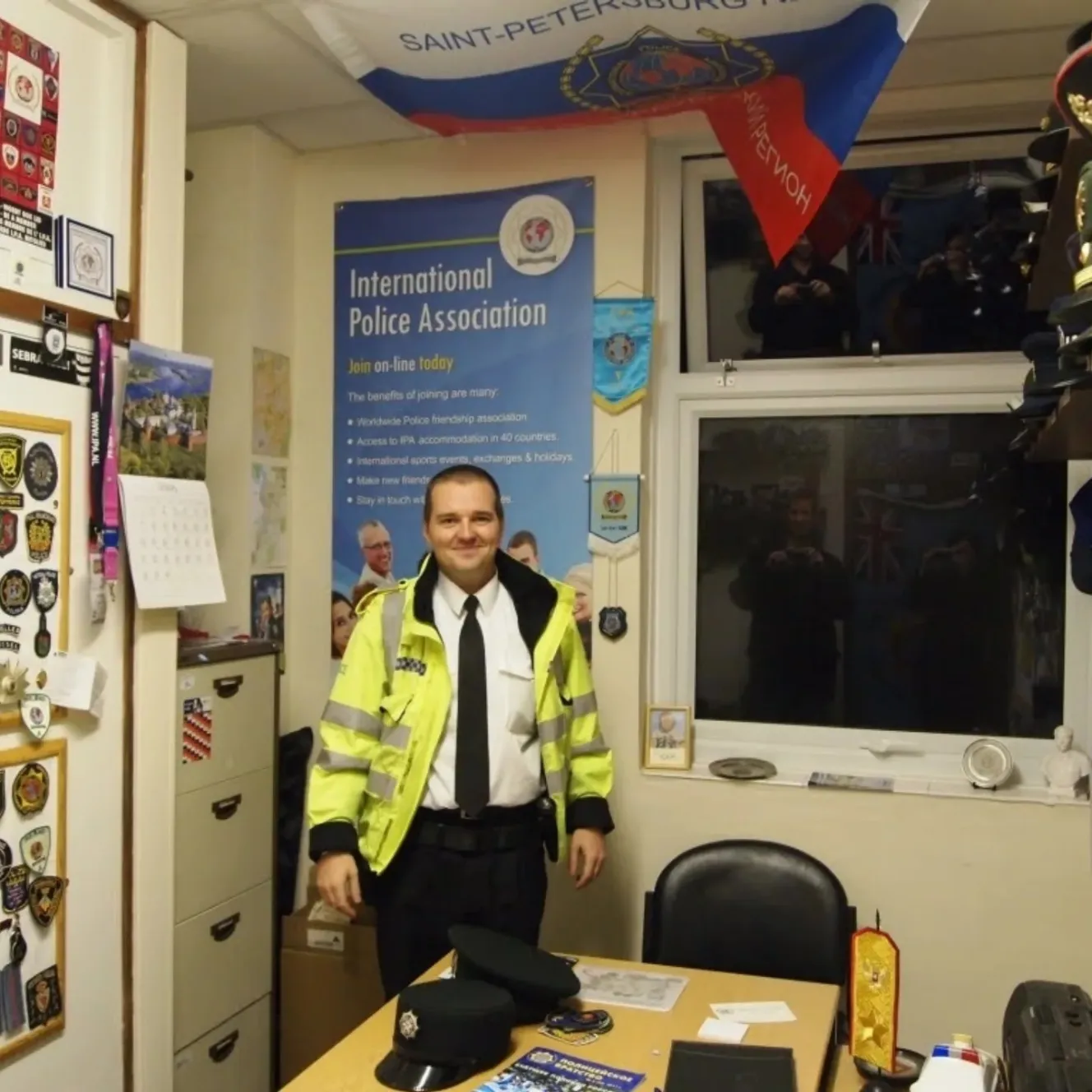 A scheme with the International Police Association enabled Bullen to travel to Russia while a serving British police officer
After finding a new job handling social media accounts for Zenit St Petersburg in 2014, Bullen would travel back to the UK once or twice a year to visit friends and relatives.
In 2022, he acquired Russian citizenship. “It’s been a lifelong dream. When I got my passport, it was the happiest day,” Bullen told the Russian sports website.
However, it appears that his activities were being monitored by the British authorities. In November 2024, Bullen was stopped by counterterrorism officers at Luton airport after flying to the UK from Russia, via Turkey.
He was questioned for four hours under Schedule 3 of the Counterterrorism and Border Security Act 2019, which relates to suspected hostile state activity.
Bullen has complained on X that British officers treated him like the “Stasi”, East Germany’s secret police.
However, he has not publicly disclosed that he was stopped under Schedule 3 powers. Bullen told sports.ru that he was questioned about the 2018 poisoning of Sergei Skripal, a former double agent, and his daughter, Yulia, in Salisbury by GRU operatives .
“‘What do you know about the Skripals? What about Salisbury?’ Nothing,” he said. “‘Who in the Russian government do you know?’ Nobody.”
He told the Russian website that he “still can’t believe” how he was treated, adding: “What did I do [wrong?] All this just because I live in Russia.”
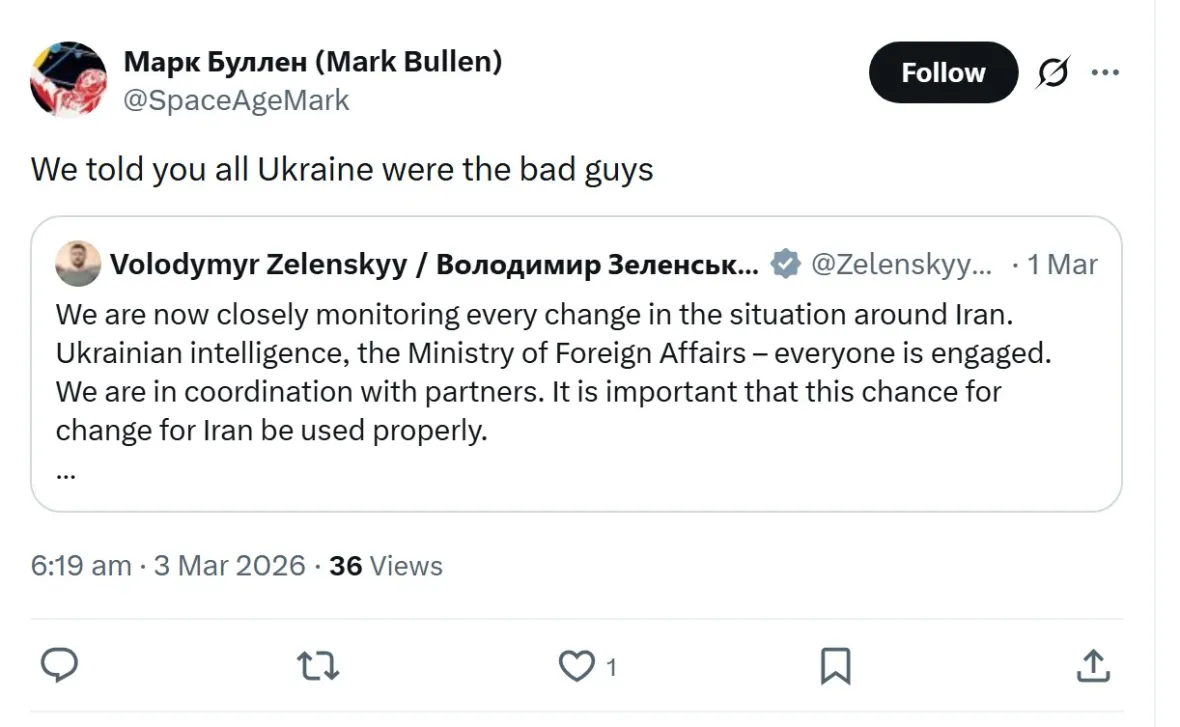 His social media posts are peppered with pro-Kremlin views and anti-Ukrainian propaganda
When approached for comment on Friday, Bullen said his lawyers had advised him “not to respond to any media at this time”.
The Metropolitan Police, which leads on hostile state cases, said in a statement: “On November 12, 2024, a man, aged in his forties, was stopped by counterterrorism officers at Luton airport using powers under Schedule 3 of the Counterterrorism and Border Security Act 2019 after arriving in the UK on a flight from Turkey.
“He was detained and digital devices were seized from him for further examination before he was let on his way. There was no arrest.”
The Home Office said: “Deprivation of British citizenship is a vital tool used to protect the UK from some of the most dangerous people, including those involved in terrorism, hostile state activity, or serious organised crime.
“Deprivation decisions are never taken lightly, but this government will always take whatever action is necessary to keep our country safe.”