

I have a confession to make. It’s so shameful I would never disclose it at a dinner party. I am a fan of The Apprentice. There, I’ve said it. While more cultured colleagues are discussing the latest Scandi noir or the new JFK series on Hulu, I’m quietly counting down the days until The Apprentice final, which airs next Thursday.
The most recent episode, where the final five candidates were interviewed by some of Lord Sugar’s most terrifying business acquaintances, provided the usual blend of horror and hilarity.
It’s no longer fashionable to admit to watching The Apprentice (if it ever was), and I’m not blind to its flaws. The show, now in its 20th year, is frequently ridiculous, formulaic, often unfair on candidates and, yes, wildly unrealistic.
Which raises the question: what is the point of shows like this any more?
When The Apprentice first aired in 2005, it offered something genuinely rare: a glimpse into the world of business that many people never saw. It demystified pitching, buying, selling and branding for a mass audience. But technology has moved on, and much of it now feels oddly out of touch. Tasks that force candidates to navigate using paper maps rather than smartphones are a case in point. The format has barely evolved.
Unsurprisingly, Mike Soutar, the Scottish entrepreneur and one of Sugar’s advisers in the interviews round, insists he remains “a genuine fan”. “Nothing’s made up or scripted (I’m not an actor), there are zero retakes, and all the drama comes from the jeopardy that to win you need to be both a great team player and hugely selfish,” he said.
“The only real difference between tasks and real-life business decisions is that they are performed under the tightest of time frames. Time pressure brings out the very best and worst in candidates. But even then that’s pretty true to real life: the best leaders have to make multiple decisions, at speed, in the absence of full data.”
His defence will do little to convince the detractors. Oli Barrett, a founder, investor and event host, said he was “100 per cent unconvinced that today’s main TV players have kept up with modern business”. The result, he argues, is a “missed opportunity to entertain, inspire and attract people into business”.
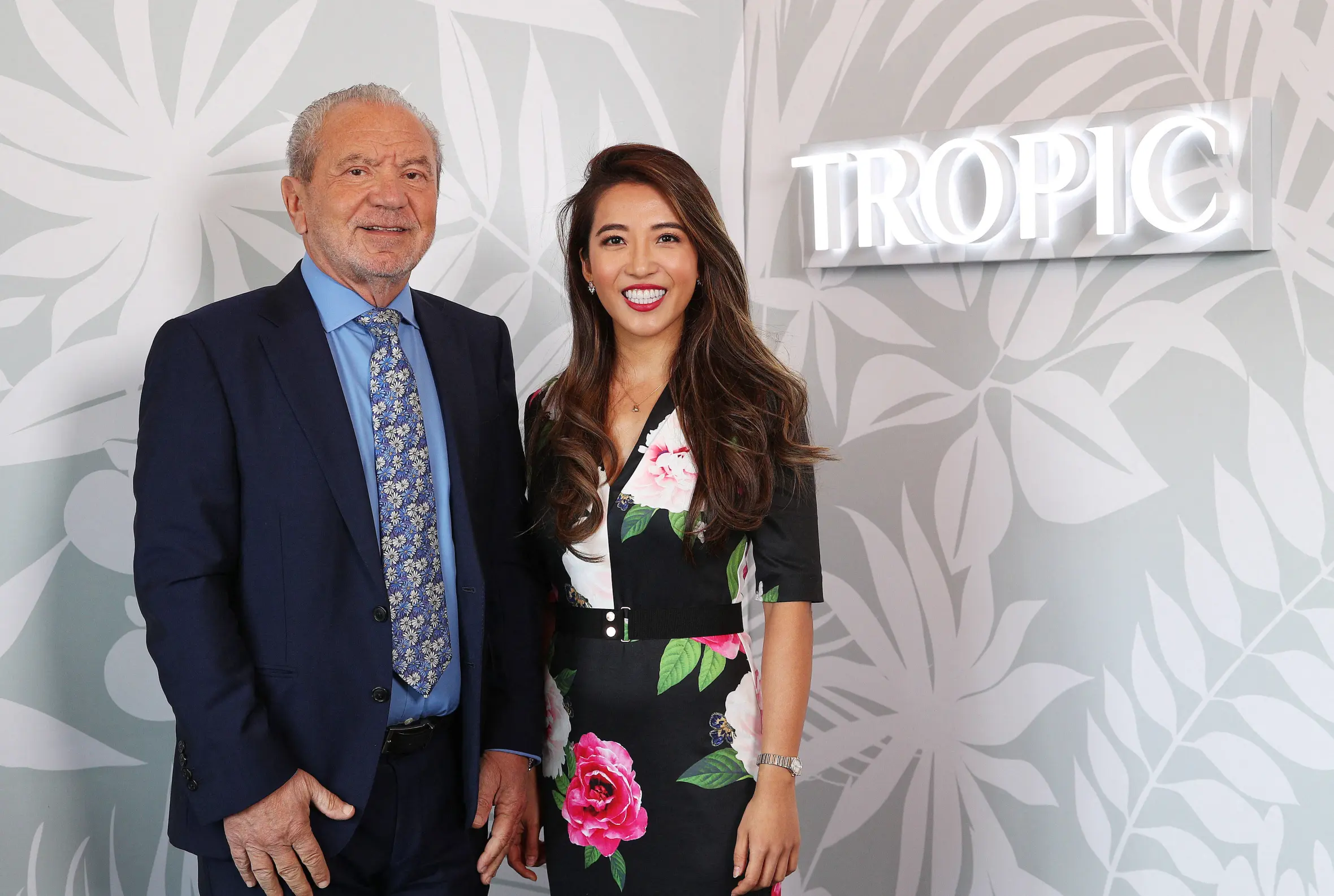 Lord Sugar with Tropic founder Susie Ma, who was a runner-up on The ApprenticeJoe Pepler/PinPep/WENN.com
If the formula is creaking, some of the central figures may be, too. When the show began, Lord Sugar was seen as a formidable entrepreneur. Today, there is a risk that the Amstrad founder feels about as up with the times as one of the computers he peddled in the 1980s.
David Gluckman, a branding expert and author, dismissed the programme as “typical cheapskate TV”, describing Sugar, who made his name in consumer electronics, as “a second-hand appliance salesman” and his aide Baroness (Karren) Brady as someone who “sneers for a living”. Kristian Bromley, an entrepreneur who has appeared on the show as a judge during tasks, compared Sugar to “a surly reanimated human hedgehog”.
His on-screen humour can feel equally dated. In a recent episode, discussing a skincare product for acne, he quipped: “I know all about ’ackney’ — I grew up there.” Groan.
Sugar has also attracted criticism beyond the show. In 2023, it emerged he had attempted to declare himself a non-UK resident for tax purposes, a move that would have avoided a £186 million bill — though, as a member of the House of Lords, he remained automatically resident.
Clever editing, while making for entertaining television, has long been a source of frustration for candidates. Rothna Akhtar, from the current series, claimed on Instagram that she was largely edited out of a home-shopping task despite being one of the top performers. Others have spoken about the darker side of sudden fame. Lawrence Rosenberg, one of this year’s final five, said a negative portrayal in one episode led to “a lot of hate” online, including antisemitism. “It was really horrible,” he admitted.
And yet, like many contestants, he still describes the experience as “incredible”. He said he’s made “friends for life” and hopes to watch back “in 50 years’ time with the grandkids”.
The show’s track record in producing successful entrepreneurs is mixed, but not entirely negligible. One of its biggest successes, Susie Ma, was a runner-up rather than a winner. Her skincare brand, Tropic, had revenues of £68 million in 2024 and she bought Sugar out of her business in 2023, reinstating her 100 per cent ownership.
Ma recently made a guest appearance on Dragons’ Den, another show where entrepreneurs are as likely to appear in an effort to boost their profile as truly seeking investment. Lottie Whyte, the irrepressible co-founder of sports recovery brand MyoMaster, was a recent victor, holding her own when challenged on the uniqueness of her business. She chose not to take the £100,000 investment offered by Sara Davies and Gary Neville, the former England footballer, and later told me she was inundated with messages, particularly from women, inspired by her no-nonsense approach.
“I can’t tell you how many thousands of messages I’ve had from women who said, ‘You encouraged me to start my business,’ or ‘I’ve gone to raise funding because of you,’ or even, ‘I’ve gone into meetings and not been afraid to stand up for myself because of you,’” she recalled.
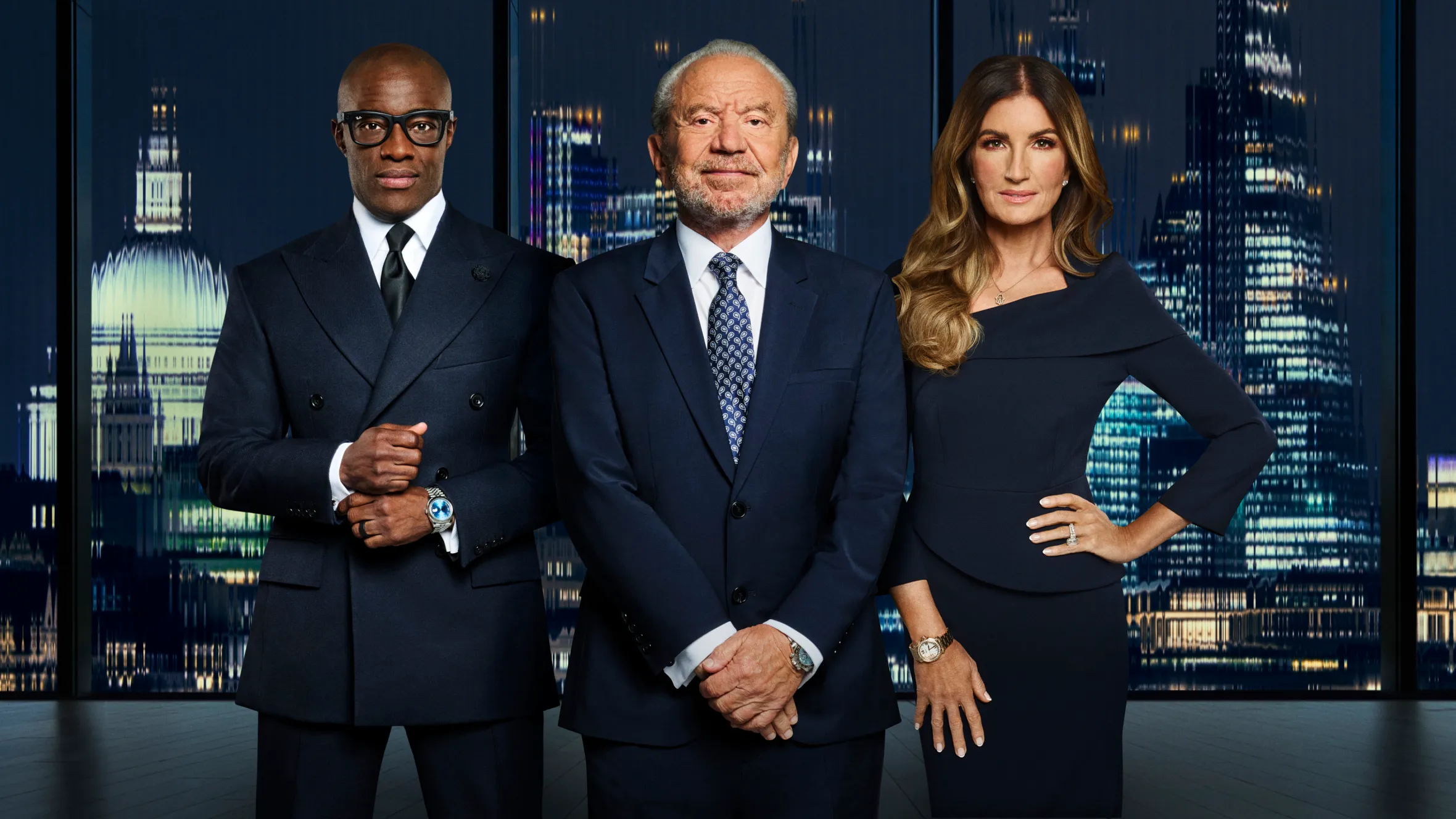 The Apprentice team: Tim Campbell, Lord Sugar, Baroness (Karren) BradyBBC/Naked (A Freemantle Label)/Ray Burmiston
And this strikes at the core of why these formats endure. It is easy, if you spend your time around start-ups, to assume everyone has access to role models — that everyone follows founders like Grace Beverley, Emma Grede or Steven Bartlett on social media.
It is equally easy to assume that in the age of YouTube and Netflix, terrestrial TV is irrelevant. But Bromley suggests otherwise. Appearing on BBC1 “still does wonders for your DMs”, he says, recalling having to sit “in my pants” to cool down from the flood of messages. “Can a few likes on Instagram provide the same heat trauma? I think not.”
There’s also something human about the power of appointment viewing. Several people responding to my LinkedIn post on the topic said watching The Apprentice provided a rare moment of connection with teenage children or ageing parents. And in a world of endless scrolling and separate screens, anything that still gets people watching together — properly together — can’t be all bad.
hannah.prevett@sundaytimes.co.uk