
(Credits: Far Out / Alamy)
Sun 12 April 2026 7:34, UK
As the lyricist for the Beach Boys, Van Dyke Parks cut a concerned figure as he gazed out of his apartment window one sunny Californian morning, “I lived under a billboard that said, ‘The Beatles is coming’,” he recalled.
It was a mildly perturbing sight. “I got the sense that it was a plague, and that it was going to have cultural implications throughout the world,” he concluded over his coffee. The line that heralded this impending invasion was the brainchild of Derek Taylor, the press officer for The Beatles.
Taylor’s claim was a bold one, but it carried more than a grain of truth. There was an air of gathering inevitability about the forthcoming Beatlemania. Everybody could see their potential and the pounds and dollars that followed them everywhere they went. It made sure Macca, the apparent leader of the group, was eyed up for heavenly supergroups, and everybody was trying to ride on the coattails of the biggest band on the planet.
Another band that had gained notoriety in the mid-1960s, as London’s swinging set roared into gear and they entered the peak of their powers, was the Roger Daltrey-fronted group The Who and their uncompromising approach to song creation. By 1966, their generation-defining sound and fiery live performances had made them roaring rock stars revered all across Britain. However, it didn’t necessarily mean that they weren’t envious of their Liverpool counterparts.
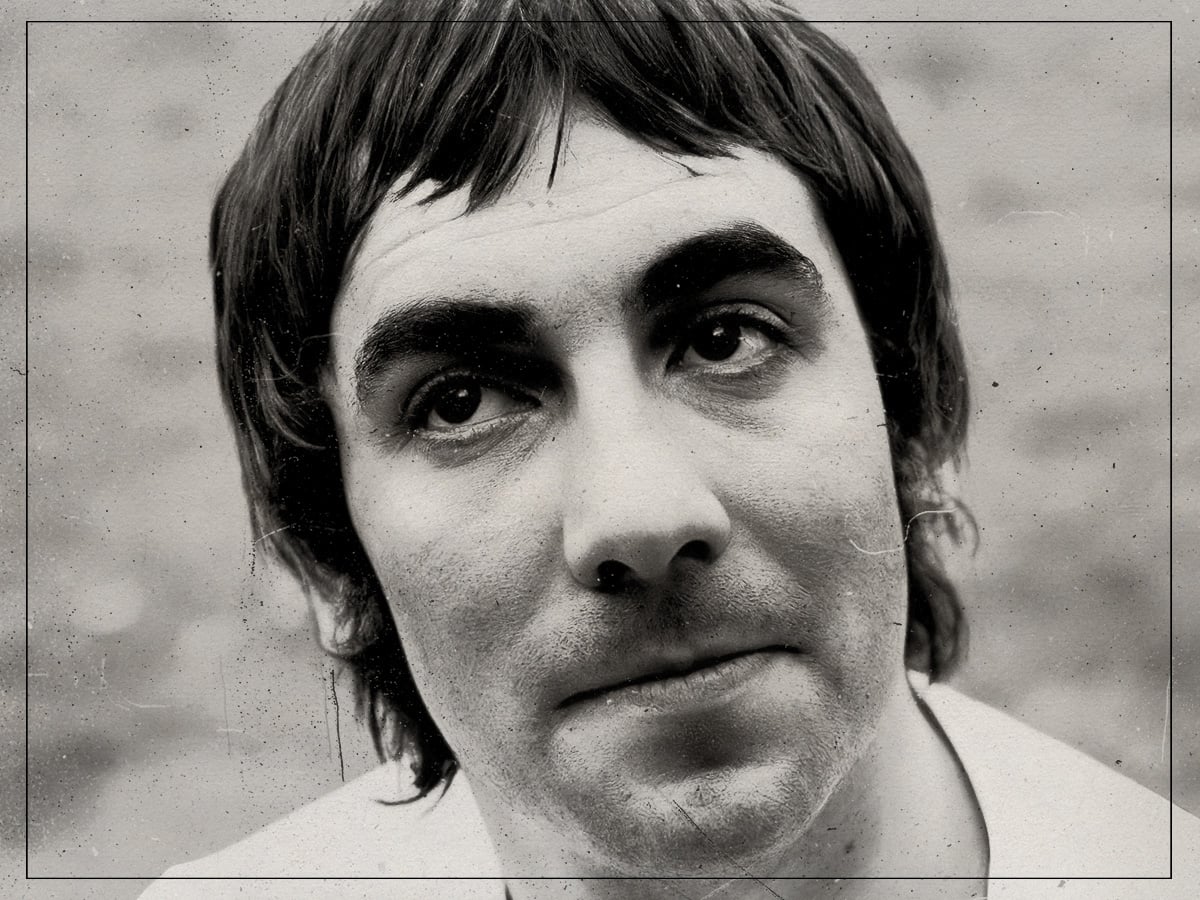
‘My Generation’ will forever define the effervescent angst of youth, and perhaps nowhere is this notion distilled more perfectly than in The Who’s legendary drummer, Keith Moon. However, the drummer wasn’t always so keen on being a part of the band thanks to the tempestuous relationships between himself, Pete Townshend, Roger Daltrey and John Entwistle. It was a difficult group to be within, and the percussionist knew he may have been in for a calmer ride with the Fab Four. Not to mention a more lucrative one to boot.
 (Credits: Far Out / Alamy)
The tensions in The Who slowly became violent and included Moon and Daltrey coming to blows after the singer had flushed the drummer’s drugs down the toilet in interventionist disgust. Later down the line, Moon chased Townshend with a knife through a crowded train car. Daltrey was even kicked out of the band for some time during their burning beginnings. All that fuss had left Moon hoping for a more peaceful career. Yes, even Moon – that Moon – craved a bit more tranquillity than the rip-roaring Who could offer.
With the ‘Baba O’Rielly’ band seemingly drifting further away from the pinnacle of rock ‘n’ roll stardom with each passing spat and failure to top the charts, Moon began looking to other London-based bands to showcase his talents. The Animals turned Moon down after an unsuccessful pitch, and so Moon decided to ask Paul McCartney if there was room in The Beatles for him and his unique style.
It was ‘66, and the Fab Four were flying high. Revolver was making waves as a pioneering work of psychedelia, whatever the hell that was, and The Who’s biographer Mark Blake claims Moon figured it was the perfect time to pledge his services. At a London speakeasy, the drummer sidled up to McCartney’s booth and made his move.
Dryly, McCartney replied and explained that the group weren’t really looking for a new drummer. The Beatles may have had some hard times in the latter part of their career but, unlike many other groups, they never replaced members. Even when Ringo and George Harrison walked out on the band in 1968 and 1969.
The Beatles always returned as the Fab Four, ready to dominate the charts and the rock music critics’ columns forevermore. If anything, that unity, and the brotherly tiffs that punctuated it, was what made them so magical in the first place. So, in a wry fashion, without missing a beat, when Moon made his drunken pitch, McCartney suggested that the drummer take it up with Ringo and settle it between them.
That was never likely to happen. Ringo and Moon were bosom buddies. As Ringo’s one-time partner, Nancy Andrews, would recall, “His interaction with Ringo was incredibly intimate.”
She added, I’ve noticed over the years that drummers have a shorthand language, and they don’t need to complete sentences to convey their thoughts. Ringo and Keith could say two or three words to each other, and there would be an instant understanding.”
That understanding might have been spiritual, but they were notably different drummers. As McCartney would explain in reference to his irreplaceable sticksmith. “The first few minutes that Ringo is playing, I look to the left at George and to the right to John, and we didn’t say a word, but I remember thinking, ‘S**t, this is amazing’.”
His simplicity was a strength that let the band gel, as ‘Macca’ appraised: “Look, I love Led Zeppelin, but you watch them playing and you can see them looking back at John Bonham, like, ‘What the hell are you doing? This is the beat. You could turn your back on Ringo and never have to worry. He both gave you security and you knew he was going to nail it.”
That, in short, was the antithesis of Moon’s appeal. He was an entirely different force, incongruous with the Fab Four. Yet, Moon also began to see himself as somehow connected to the band he so dearly loved. “Keith Moon had become convinced he was ‘Mr. K’ in The Beatles’ song ‘For the Benefit of Mr. Kite!’ from Sgt. Pepper,” Townshend once recalled.
More so than a genuine conviction, Townshend saw this as a worry portent of his bandmates’ slide. “He played it constantly, and his ego began to get out of control,” he added. Much like his pitch, with Moon, you wonder where the boundary between his view on reality and rock ‘n’ roll mythology lies.
ADD AS A PREFERRED SOURCE ON GOOGLE  The Far Out Beatles Newsletter
All the latest stories about The Beatles from the independent voice of culture.
Straight to your inbox.