
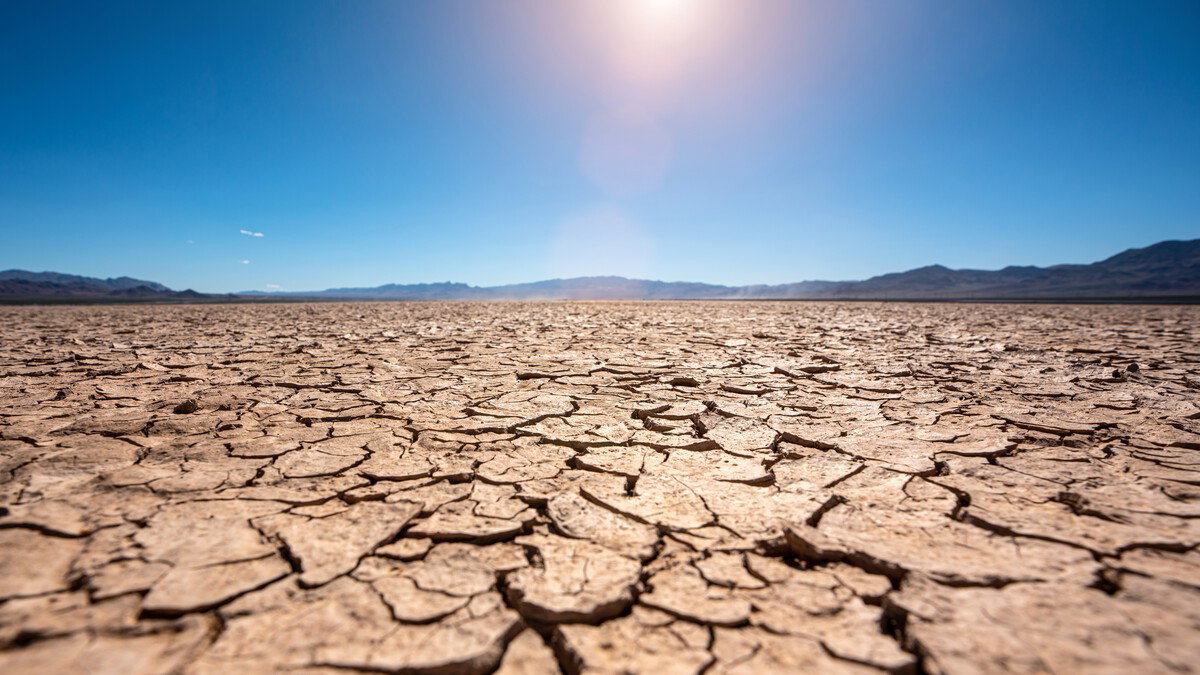
Scientists warn extreme heat could make most of Earth uninhabitable in the distant future
Credit: Shutterstock/Audio und werbung
Scientists at the University of Bristol have identified Spain as one of the few “survivable islands” on Earth’s next supercontinent, Pangea Ultima, which is expected to form in 250 million years. According to the study published in Nature Geoscience, a “triple whammy” of increased volcanic CO₂, a hotter sun, and extreme “continentality” will leave 92% of the planet uninhabitable for mammals.
While the interior of the new supercontinent will see temperatures soar above 50°C, Spain’s projected shift toward higher northern latitudes puts it in a rare temperate zone. This geological “luck” means the Iberian Peninsula could remain one of the only coastal regions cool enough to support life in an otherwise hostile global desert.
A world reshaped by tectonic forces
Earth’s continents are constantly moving due to tectonic plate activity. Over millions of years, these slow shifts cause landmasses to split apart and then collide again. Scientists believe this process will eventually form a new supercontinent often referred to as Pangea Ultima. Pangea Ultima
Most Read on Euro Weekly News
In this scenario, the Atlantic Ocean would gradually close, bringing Europe, Africa and the Americas together into one massive landmass. But the real story is not just geography. It is climate.
A planet that becomes far harder to survive
According to climate models, this future supercontinent would create extreme environmental conditions. Temperatures across large parts of the planet could exceed 40°C, driven by increased volcanic activity, higher carbon dioxide levels, and a brighter Sun. Scientists estimate that up to 92 per cent of Earth’s land could become uninhabitable for mammals under these conditions.
The reason is simple. When continents merge into one large mass, inland areas lose the moderating influence of oceans. This leads to intense heat, dryness and limited rainfall, turning vast regions into hostile environments.
Why Spain stands out in this extreme scenario
So where does Spain come in? In these projections, the Iberian Peninsula ends up positioned further north within the new supercontinent. That location becomes crucial.
Regions closer to the poles are expected to experience relatively milder conditions compared to the scorching interior. While still far from comfortable, these areas could offer one of the few environments where life might persist.
Spain, along with parts of Portugal, France and even the UK, appears in this “more survivable” zone due to its future latitude and proximity to ocean-influenced climates. It is not that Spain becomes safe in an absolute sense. It simply avoids the worst extremes expected elsewhere on the planet.
Important context behind the headlines
Before drawing any real-world conclusions, scientists stress one key point: these projections operate on timescales far beyond human civilisation. Humanity may not exist in anything like its current form by the time these changes occur. Even the models themselves are based on long-term geological trends and contain a degree of uncertainty.
There are also multiple possible outcomes. Different simulations suggest alternative supercontinents such as Aurica or Amasia, each with very different climates and survival conditions.
What this tells us today
While the idea of Spain being a future “safe zone” is fascinating, the real takeaway is much closer to home. These models use the same physics that scientists apply to understand current climate change. The difference is scale. What happens over hundreds of millions of years follows the same principles already shaping today’s weather patterns and ecosystems.
In other words, the future of the Earth is not static. It is constantly evolving. And while 250 million years may feel irrelevant to daily life, studies like this highlight how dramatically conditions on this planet can shift, even if the changes are too slow for us to witness.