
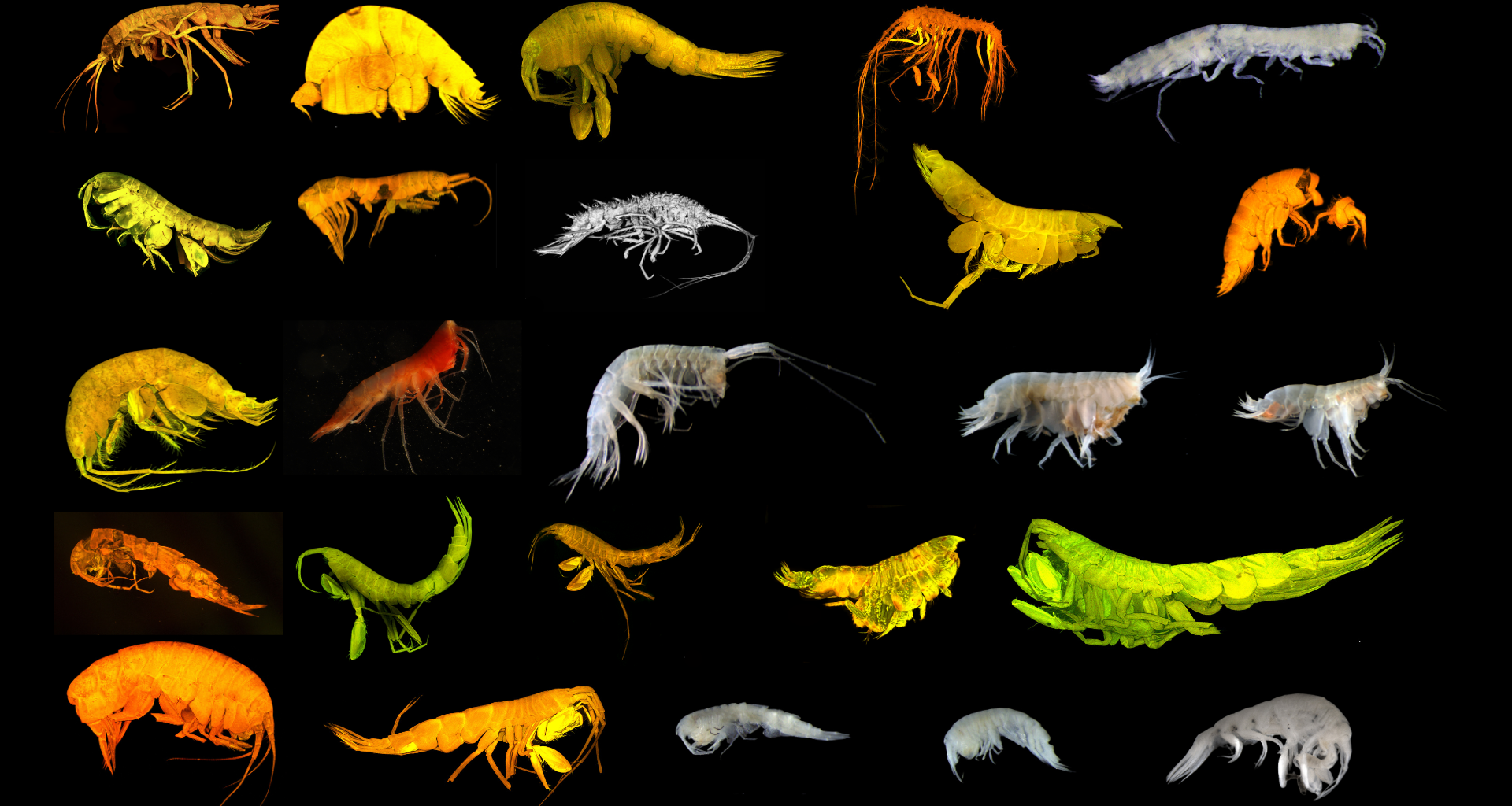
Scientists discovered 24 new species of tiny crustaceans and an entirely new evolutionary branch from a deep abyss in the central Pacific, some 4,000 meters below the surface.The the Clarion-Clipperton Zone (CCZ) is studded with chunks of fused nickel, cobalt, copper and other minerals, making it one of the most commercially coveted tracts of ocean on Earth.An estimated 90% of species in the Clarion-Clipperton Zone remain unnamed even as the U.S. moves to streamline the permitting process to mine the seabed for critical minerals.A 2025 study found that a commercial mining test in the zone reduced animal abundance by 37% within the machine’s tracks, highlighting the ecological cost of extraction in a region science is only beginning to understand.
See All Key Ideas
Researchers pulled 24 tiny new creatures from a deep abyss in the central Pacific Ocean, some with long, spindly legs and others with more squat, compact bodies. Some appeared to feed on the sediment itself, while others had large claws suggesting they prey on other creatures living in the mud.
The discoveries, published in ZooKeys, come from the Clarion-Clipperton Zone (CCZ), a roughly 6-million-square-kilometer (2.3-million-square-mile) expanse of seabed between Hawai‘i and Mexico.
The newly described species are all amphipods, a diverse group of crustaceans. The shrimp-like creatures, most about a centimeter long, or less than half an inch, have evolved in the deep sea, some 4,000 meters (13,100 feet) below the surface, over millions of years.
Among the finds was a completely new superfamily, Mirabestioidea, and a new family, Mirabestiidae, representing previously unknown evolutionary lineages.
“If you imagine that on planet Earth, we know about carnivorous mammals, we know that bears exist and we know that the families of cats exist, it would be like finding dogs,” Tammy Horton, a researcher at the U.K.’s National Oceanography Centre and co-lead of the study, told Inside Climate News.
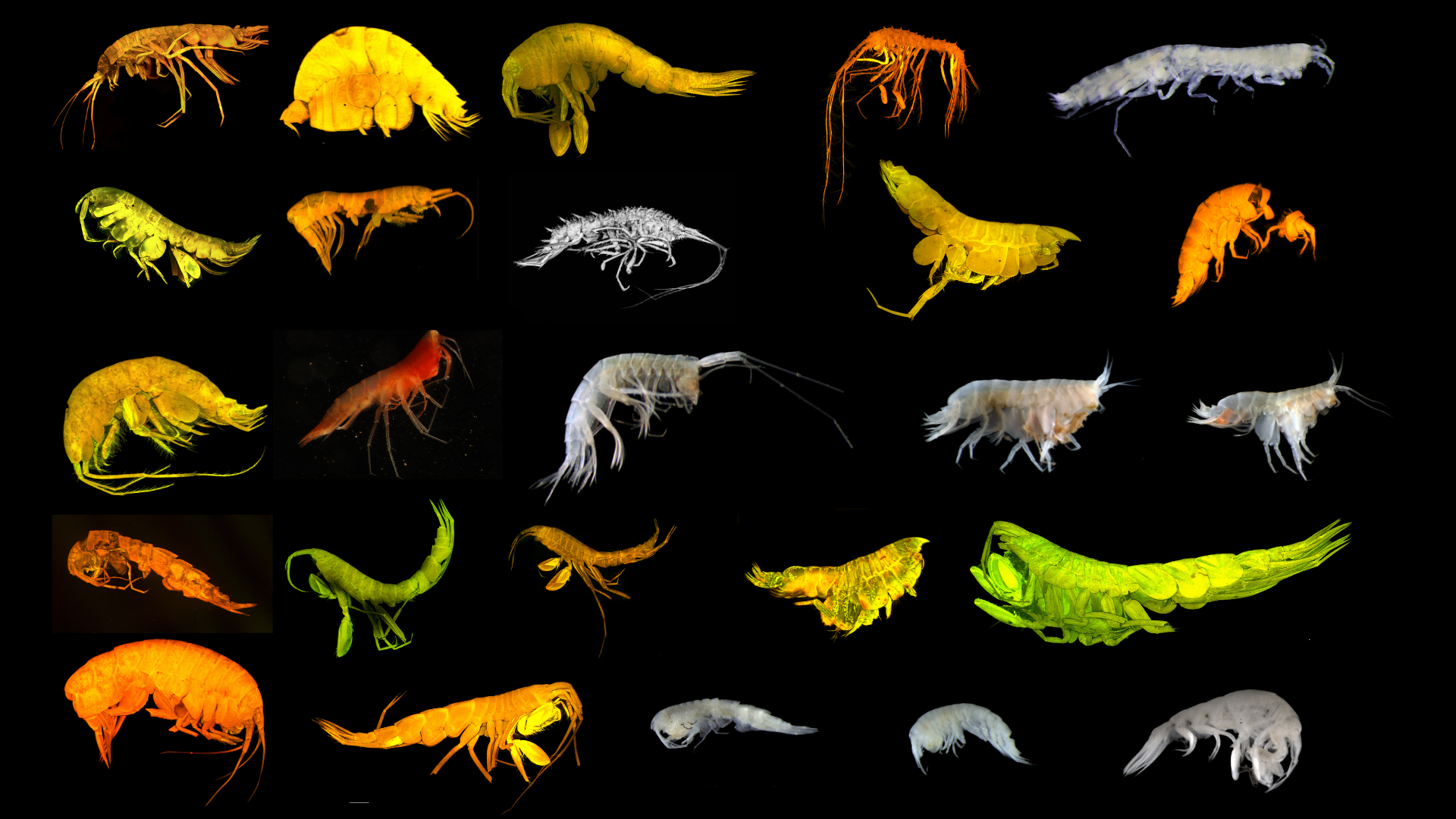 Collage of the 24 new Amphipod species identified in Clarion-Clipperton Zone, CC BY, National Oceanography Centre, Southampton
Scientists collected the specimens by extracting large cubes of mud from the seabed, known as box cores, and hauling them up to a research ship. After washing and sieving the cores, researchers found a variety of amphipods nestled among the mud and metallic nodules.
During a weeklong taxonomy workshop at the University of Łódź in Poland, 16 scientists collaborated to describe the new species at a pace that would have been impossible working alone. The effort is part of the International Seabed Authority’s “One Thousand Reasons” project, which aims to formally describe 1,000 new deep-sea species by 2030.
Horton named a species in the new superfamily, Mirabestia maisie, after her daughter. Another species, Lepidepecreum myla, was named for a character in the video game Hollow Knight, because both “are just little arthropods trying to survive in total darkness,” Horton said in a press release.
“It’s estimated there are around 5,600 species in the CCZ, but around 90% of these are undescribed,” Eva Stewart, a deep-sea scientist at the U.K.’s Natural History Museum who contributed to the research, said in an article published by the museum.
Anna Jażdżewska, a professor at the University of Łódź and co-lead of the study, told Inside Climate News that formally naming species gives them a “passport for living,” allowing people and policymakers to recognize them as living entities worth protecting.
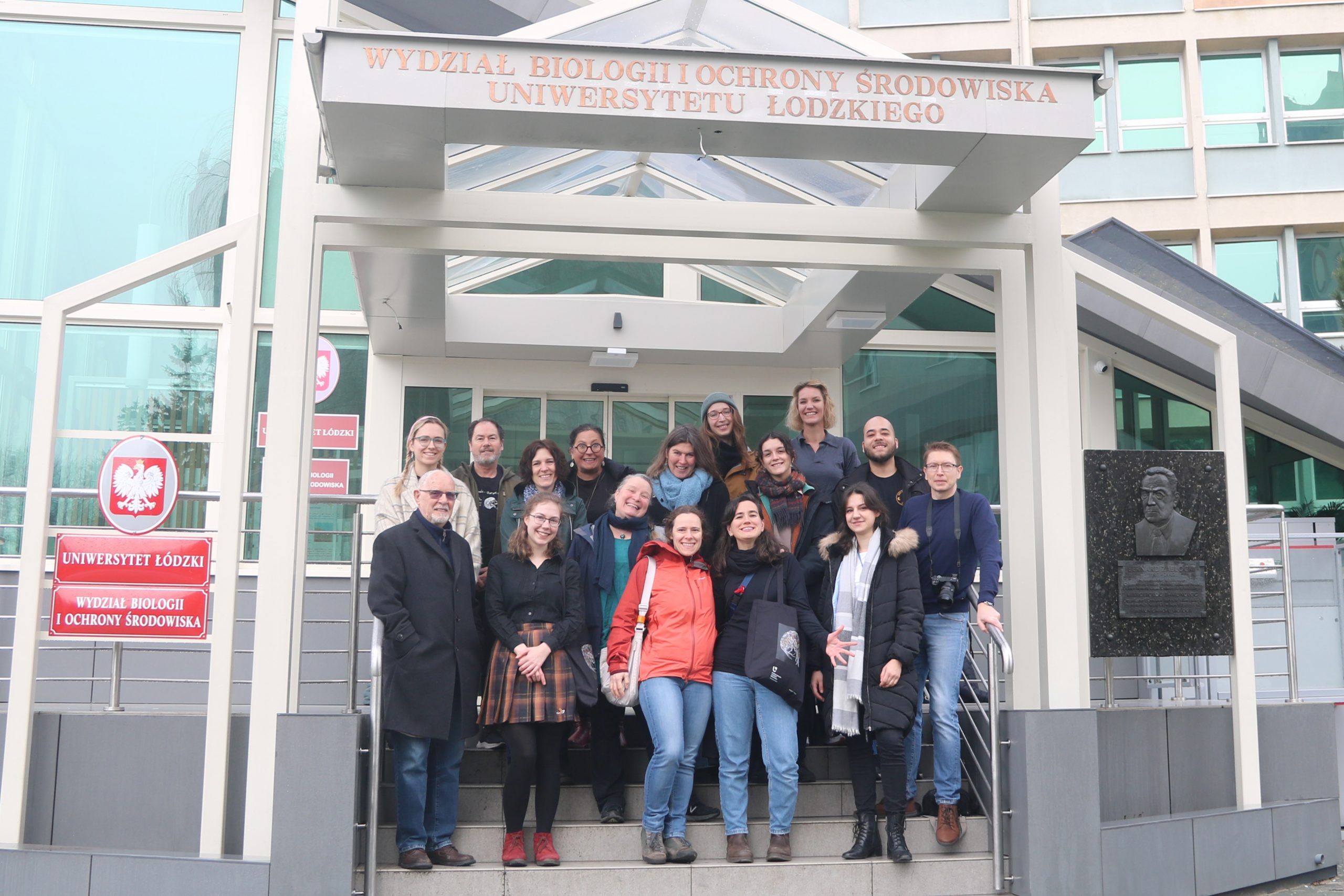 Participants of the taxonomic workshop at University of Lodz in 2024 who named the new amphipod species. CC BY, Anna Jażdżewska
At the current pace, researchers say the amphipod fauna of the eastern CCZ could be nearly fully cataloged within a decade — if the seabed is still intact by then. However, closing that knowledge gap has gained greater urgency as pressure grows to mine the seabed.
The CCZ is studded with metallic nodules, potato-sized chunks of fused nickel, cobalt, copper and other minerals, many of which are prized for their use in the production of batteries and green energy technologies. That makes the CCZ one of the most commercially coveted tracts of ocean on Earth.
In January, the U.S. National Oceanic and Atmospheric Administration (NOAA) finalized a rule allowing companies to apply simultaneously for exploration licenses and commercial recovery permits, streamlining what had been a two-step sequential process. The old two-step process required companies to first obtain an exploration license, conduct exploration (which includes scientific research and environmental data collection), and only then separately apply for a commercial recovery permit. The new consolidated process lets companies apply for both at the same time.
The Metals Company, a Canadian mining firm, has since filed a new consolidated application covering roughly 65,000 km2 (25,000 mi2) of the CCZ — an area about twice the size of Belgium. In March, NOAA determined that TMC’s application met regulatory filing requirements and could proceed to full review.
Mining could have an ecological cost. A study published in December 2025 found that within the tracks left by a commercial mining machine during large-scale tests in the CCZ in 2022, the number of animals dropped by 37% and the number of species fell by 32%.
“We’ve just done 24 [species],” Horton told Inside Climate News, “and that is a drop in the ocean, literally, of how many more we have to describe.”
Banner image: Image Collage of the 24 new Amphipod species identified in Clarion-Clipperton Zone, CC BY, National Oceanography Centre, Southampton
Deep-sea mining rules face delays despite urgent push
Citations:
Jażdżewska, A. M., & Horton, T. (2026). New deep-sea amphipoda from the Clarion-Clipperton Zone: 24 new species described under the sustainable seabed knowledge initiative: One Thousand Reasons campaign. ZooKeys, 1274, 1-16. doi:10.3897/zookeys.1274.176711
Stewart, E. C., Wiklund, H., Neal, L., Bribiesca-Contreras, G., Drennan, R., Boolukos, C. M., … Glover, A. G. (2025). Impacts of an industrial deep-sea mining trial on macrofaunal biodiversity. Nature Ecology & Evolution, 10(2), 318-329. doi:10.1038/s41559-025-02911-4
FEEDBACK: Use this form to send a message directly to the author of this post. If you want to post a public comment, you can do that at the bottom of the page.
