
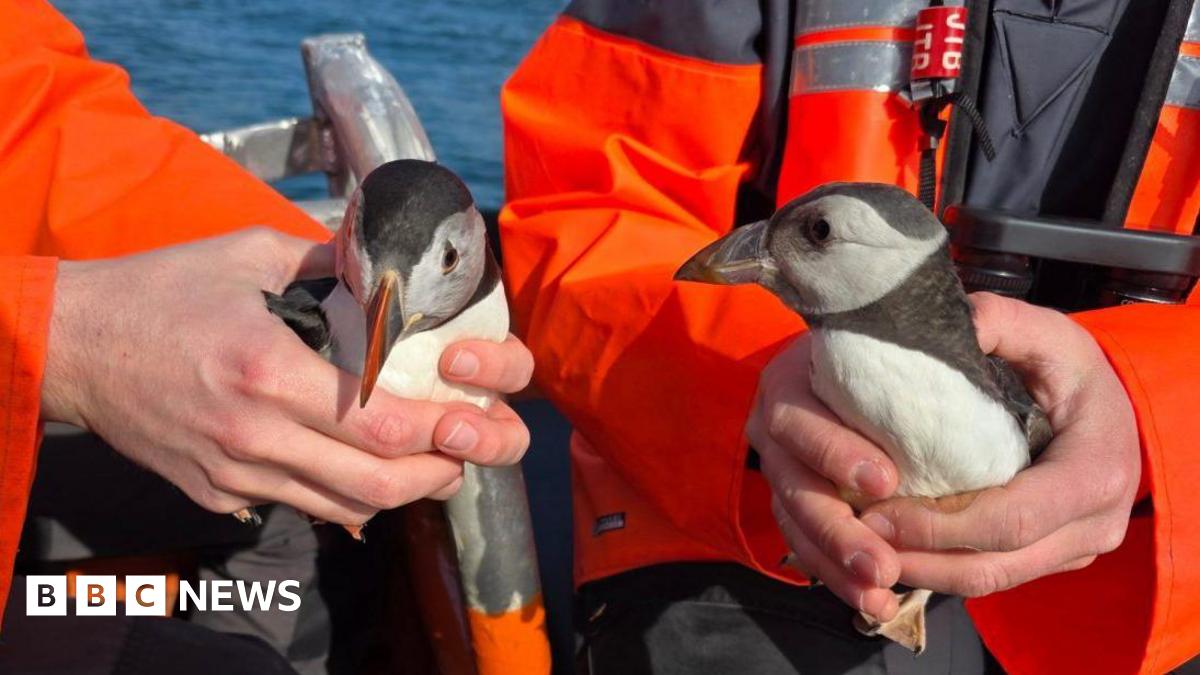
The positive news came after thousands of seabirds washed up dead across Europe earlier this year.
Dozens of the puffins had washed up on beaches across Scotland – about 1,000 miles from their winter home in the North Atlantic.
When large numbers of birds wash up dead or dying on beaches, usually due to winter storms, it is a natural phenomenon called a wreck.
Bird Life International has said the incident could be the worst “seabird wreck” to hit Europe in a decade.
Emily Burton, conservation manager at the Scottish Seabird Centre in North Berwick, previously told BBC Scotland News that puffins were already facing “huge pressures” caused by climate change.
She said: “Puffins only return to land for a short period each year to breed, spending most of their lives out at sea, so finding them washed up on our beaches in winter is concerning.
“Seabirds can struggle to survive during periods of stormy weather, as it makes it harder for them to feed.
“Changes to our oceans driven by the climate crisis, threats from disease, and unsustainable fishing practices can all reduce food availability or contribute to these tragic mortalities.”