
Published on
April 14, 2026
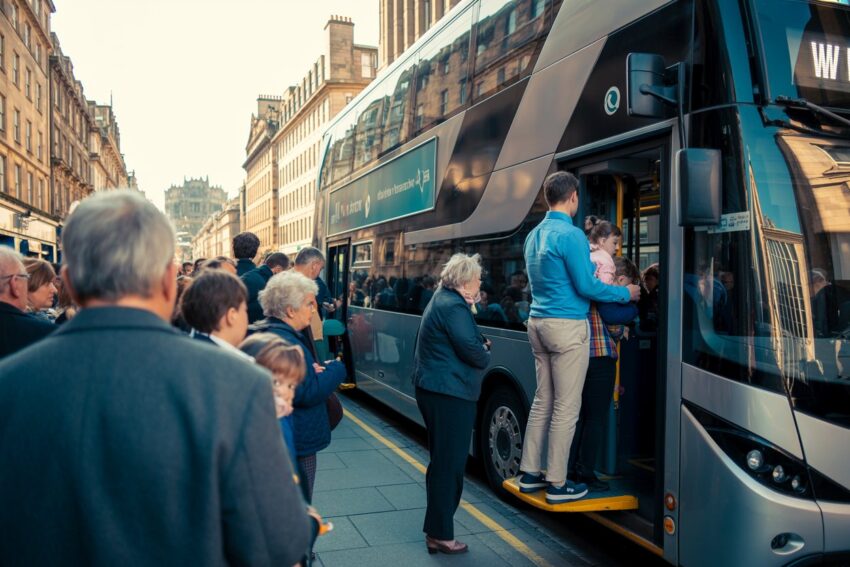
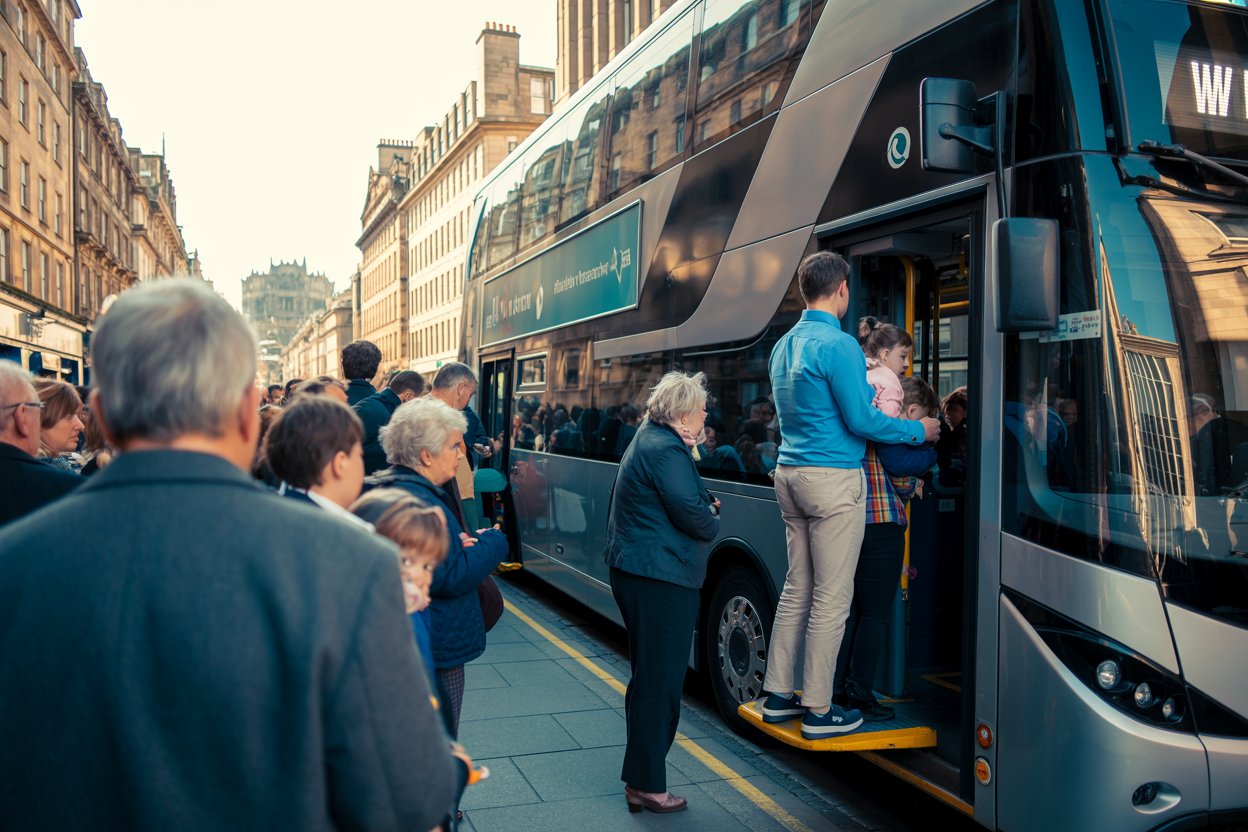
Image generated with Ai
The United Kingdom Scotland travel landscape could undergo a major transformation as the Scottish Greens propose free bus travel for all, alongside wider transport and economic reforms, ahead of the 2026 Scottish Parliament elections.
Play News Now
TTW Audio Brief
According to recent reports, the party’s manifesto includes a commitment to make bus travel free across Scotland, alongside plans to bring bus services into public ownership and expand rail infrastructure.
What the free bus travel plan means for travellers
If implemented, the proposal would eliminate fares on buses nationwide, significantly reducing travel costs for commuters, tourists and occasional travellers.
For travellers, this would mean:
Advertisement
Advertisement
Lower daily commuting expenses
Easier access to cities, towns and rural areas
Greater flexibility in planning trips without worrying about ticket costs
The policy builds on existing schemes, such as free bus travel already available to under-22s in Scotland, and aims to extend those benefits to all age groups.
Advertisement
Advertisement
Why transport is central to the manifesto
Transport is a key pillar of the Scottish Greens’ vision. The party argues that removing fares would help address the cost of living crisis while also encouraging people to shift away from private cars.
Their broader transport strategy includes:
Nationalising bus services
Investing in new rail lines
Expanding public transport infrastructure
These measures are designed not only to improve mobility but also to reduce emissions and support climate goals.
How this could reshape travel behaviour
Free public transport has the potential to significantly change how people move around.
Evidence from pilot schemes suggests that removing fares can:
Increase public transport usage
Reduce reliance on private vehicles
Improve connectivity in underserved areas
For tourists, especially international visitors, free buses would make exploring Scotland far more accessible and cost-effective.
What is the universal basic income proposal
Alongside transport reforms, the manifesto also proposes a universal basic income (UBI), a system where citizens receive regular payments regardless of employment status.
The idea is to provide financial security and reduce inequality, although it remains a debated policy in the United Kingdom.
For travellers and the travel industry, such a policy could indirectly influence spending patterns, potentially increasing domestic tourism if people have more disposable income.
Can these proposals be funded
One of the biggest questions surrounding the manifesto is funding.
The Scottish Greens have suggested raising revenue through new taxes on wealth, property, large corporations and certain industries.
However, independent analysis indicates that the proposals may require significantly higher funding than currently outlined, raising questions about feasibility.
What this means for domestic and international travellers
If implemented, the free bus policy would position Scotland as one of the most accessible travel destinations in Europe.
For domestic travellers:
Cheaper and more flexible commuting
Greater access to remote and rural destinations
For international tourists:
Reduced travel costs within the country
Simpler and more convenient travel planning
This could boost tourism, particularly in regions that are currently less connected.
The bigger picture for travel in the United Kingdom
The proposal reflects a broader shift toward making public transport more accessible and sustainable.
Across the United Kingdom and Europe, governments are increasingly exploring:
Subsidised or free public transport
Investment in greener mobility solutions
Policies to reduce car dependency
Scotland’s plan, if realised, would be among the most ambitious of its kind.
What travellers should watch next
The proposal is part of an election manifesto, meaning its implementation depends on political outcomes.
Travellers should watch for:
Election results and coalition possibilities
Policy announcements on transport funding
Pilot schemes or phased rollouts
If adopted, the changes could redefine how people travel across Scotland in the coming years.
The travel takeaway
The Scottish Greens’ proposal signals a potential turning point in public transport policy.
For travellers, the idea of completely free bus travel represents not just a cost saving but a shift toward more accessible, inclusive and sustainable travel.
If realised, it could transform Scotland into one of the most traveller-friendly destinations in Europe, where mobility is no longer limited by cost but driven by accessibility and convenience.
If implemented, this policy could also set a precedent for other parts of the United Kingdom and even across Europe, where governments are actively exploring ways to make public transport more affordable and sustainable. A successful rollout in Scotland could encourage similar initiatives elsewhere, reshaping regional travel dynamics and making low-cost, eco-friendly mobility a standard rather than an exception.
Advertisement
Advertisement
