
One of the UK’s leading museums has accepted demands by a Chinese firm that publishes its catalogues to remove images that fall foul of the country’s censorship laws.
The Victoria and Albert Museum has agreed to requests by the Chinese printing company to delete maps and images from at least two recent exhibition catalogues, according to documents released to the Guardian after freedom of information requests.
Like other prominent institutions, including the British Museum, Tate and the British Library, the V&A often uses Chinese printers because they can produce catalogues at half the cost of British or European companies.
But in doing so, they have to accede to censorship requests relating to any topics or images deemed sensitive by the Chinese government, such as Buddhism, Taiwan, Tibet, Tiananmen Square and pro-democracy activities.
The disclosures from the V&A lay bare the detailed scope of China’s censorship on museum publishers. They show how Beijing’s red pen even extends to historical maps and photographs on seemingly unrelated subjects such as Fabergé eggs and British Black music.
They also show the apparent willingness of a publicly funded UK institution to agree to Chinese suppression despite the problems it can cause in the production process.
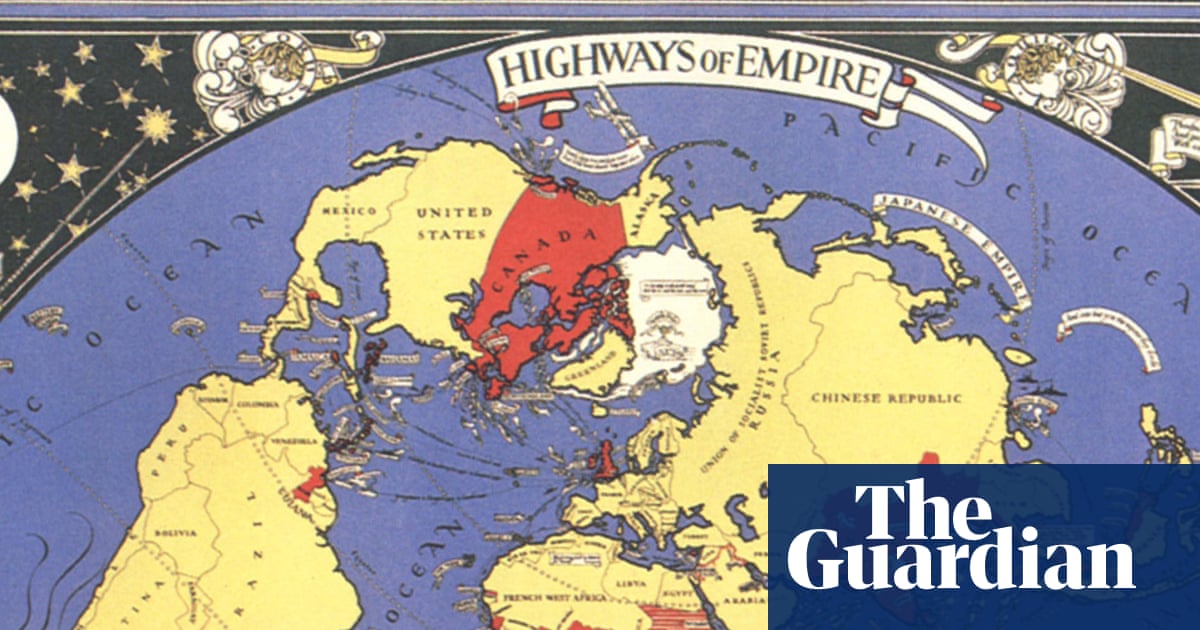
For the catalogue of the Music is Black exhibition, which opens this Friday, the V&A wanted to use a 1930s illustration of trade routes of the British empire. But an email from the V&A’s Chinese printers sent last November said it had fallen foul of Beijing’s censorship body, the General Administration of Press and Publication or GAPP.
The email from the Chinese printers, C&C Offset Printing, said: “There is a map on p10 relates to China (there is China border here and we need to use the standard maps from Chinese Government) and GAPP rejected it. Our suggestion is to delete this map or use another image.”
The V&A agreed despite bafflement at the decision. An internal email exchange between V&A colleagues revealed the censorship had caused a delay in printing the catalogue. It said: “It’s a historic map showing British colonial rule so nothing to do with China – just shows China on the map and that seems to be enough to warrant rejection! Printing paused while we amend files … SORRY.”
The map was due to illustrate an introduction to the catalogue by Gus Casely-Hayford, the director of V&A East. An email to him said it was too late to find alternative printers.
It said: “We were aware of sensitivity around contemporary maps but it now clearly applies to historic maps too. As we have ordered the paper to the printer it is sadly too late to move print to Europe, so we’ve had to put back the schedule a week in order to find a replacement illustration.”
Casely-Hayford replied by saying: “So sorry- must have been very stressful.” He also suggested replacing the censored map with a photo of the musician Dennis Morris. Eventually the V&A used a photo of people arriving in Southampton on the liner Begoña after a voyage from the West Indies.
The V&A also agreed to pull another map it wanted to use for catalogue to a 2021 exhibition Fabergé: Romance to Revolution. It also removed a photograph of Lenin from the book because the Chinese printers said Lenin could be deemed “sensitive” by GAPP.
An email from the V&A production team to one of its curators expressed frustration at the censorship. It said: “The Chinese printer is not able to print the book with the revolution/Lenin image at the start of your essay. I should have foreseen this, but the list of restrictions is ever changing.”
The V&A said in a statement that the changes demanded by China on these catalogues were “minor”.
It said: “We carefully consider, on a case-by-case basis, where we print all of our books. We sometimes print in China, but maintain close editorial oversight. We were comfortable making minor edits, as they did not affect the narrative and we would obviously pull production if we felt any requested change was problematic.”
The Tate, the British Museum and the British Library have all also used Chinese printers on recent catalogues and books currently available for sale in their shops.
The British Museum refused to respond to questions about how it dealt with any China censorship requests on at least eight recent publications it has had printed in China.
A spokesperson said: “We work with a range of printers across Europe and Asia. Print orders are placed with suppliers based on a number of factors including quality, availability of materials, schedules and cost.” They added: “We won’t be commenting any further on the matter.”
The British Museum is chaired by George Osborne, who as chancellor championed closer economic links with Beijing and promoted a “golden decade” in UK-China relations.
The British Library claimed it had never had an issue with censorship on the catalogues it had printed in China.
A Tate spokesperson confirmed Chinese printers had published several of its children’s books and some catalogues, but added: “Tate Publishing has never changed the content of any books at the request of a printer.”
A UK publisher who asked not to be named said: “We have tried to print in this country, but is just very expensive. We just had a quote from a Welsh printer that was double what we’re paying in China. There is always a delay in the print process while it goes through a body in China that checks up things. There are sensitivities about maps and anything that mentions Tibet for example.”
A former employee of C&C Offset Printing said: “Of course printing content disapproved by Chinese government is forbidden. Why should it be surprising? It’s a Chinese company.”