
I am sitting between my two teenage daughters at a Taylor Swift concert. From the outside, it looks like the perfect moment: a mother with her girls at the show of a lifetime, surrounded by screaming fans dressed in costumes from every era of Taylor’s musical journey.
But inside, something is wrong. A kind of dread rises in me as I watch the massive clock on the stage counting down the seconds until Taylor appears, as if her arrival and my survival are somehow linked.
The truth is, I don’t want to be here. I tried to get a friend to take my kids, but he insisted I go. “You have to!” he said. What I couldn’t explain to him — even to myself — was that I was certain if I went to this concert, something terrible would happen.
The clock strikes zero, and the crowd erupts. My two teenage girls turn toward me, smiling. I smile back and nod. Yep, having fun. But I’m not. A queasy cocktail of emotions explodes inside me, and the only thing I can do — short of running from the stadium — is collapse onto my seat.
Hidden below everyone else on their feet — cheering, dancing, and singing — I search through the gaps in the crowd like a small child looking for something that would help me understand what I was feeling. Finally, I glimpse the giant screen. There she is, bold and luminous, moving as if on top of a wave — 70,000 Swifties her ocean, carrying her spirit across the stadium.
I can’t believe I gave this all up.
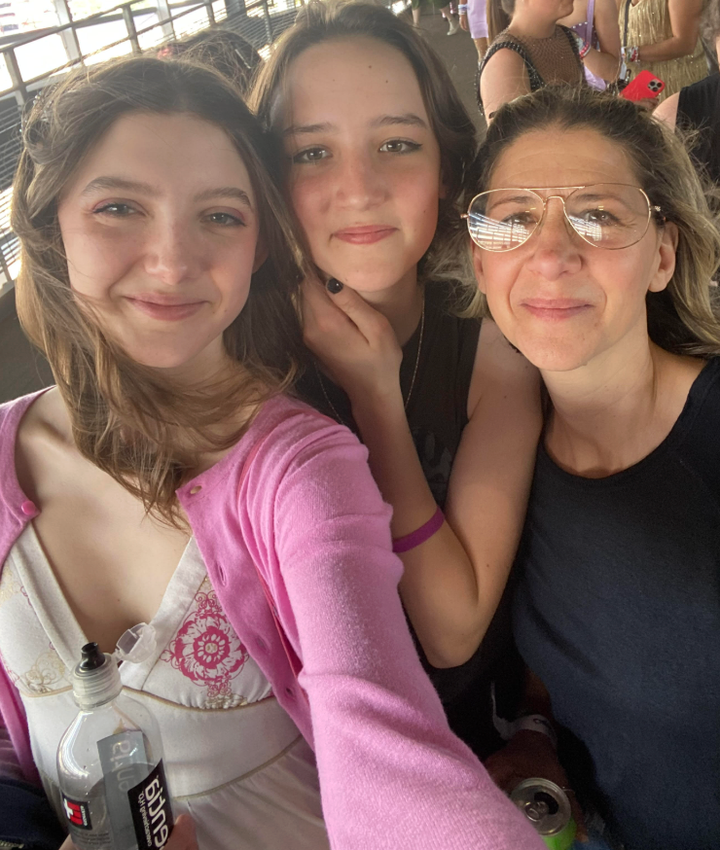 The author (right) with her daughters at a Taylor Swift concert in 2023
Courtesy of Oskar Saville
I never dreamed of being on stage. If I had a dream, it was simply to get out of my childhood home and escape the abuse I experienced there. And if I could, help others escape too.
But one night, a simple comment from a stranger changed everything.
I was 23, and the only time I had ever let anyone hear me sing outside my childhood bedroom was the week before in that same karaoke bar in San Diego.
I felt elated by the man’s words. It was like my purpose had finally been revealed to me.
I went back to that bar every night after that. I’d pick a song from the large binder, take the mic, and stand in the dark corner underneath the stairs. There, hidden from view, I’d quietly delight in the sound of my voice — something I had never had the safety to do as a child.
People began to know who I was at the bar. I could see the excitement in their eyes when I walked in. I had never been seen or wanted before. My new love loosened my fear. I stepped out from the dark, and immediately doors began to open. I received an invitation to sing with Robin Le Mesurier — Rod Stewart’s guitar player — and then others.
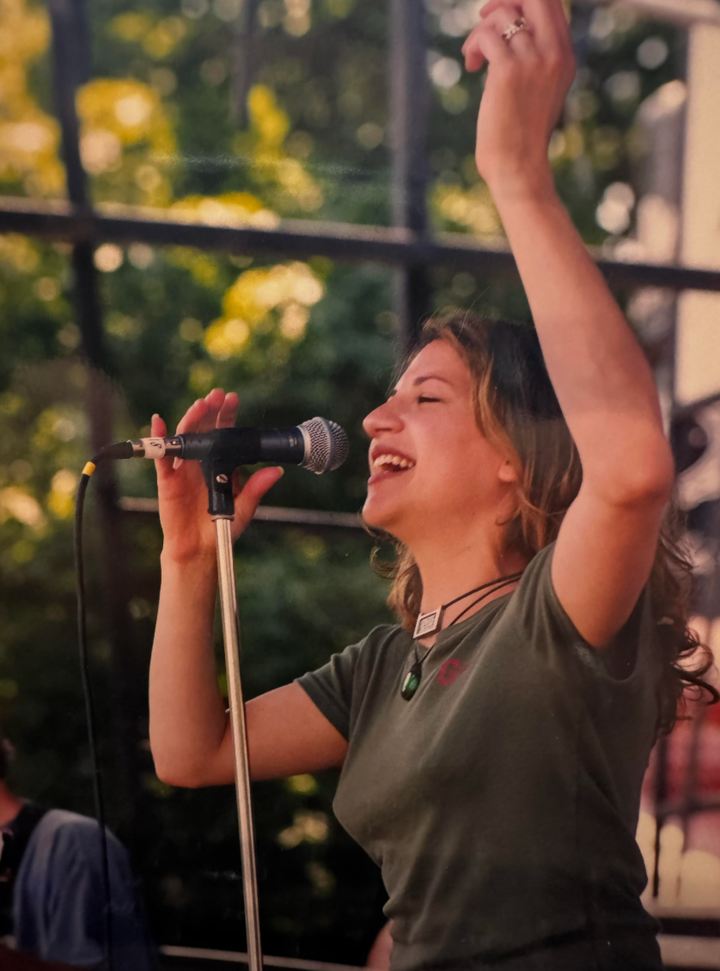 The author performing at the Chicago Music Festival in 1999.
Courtesy of Oskar Saville
Eventually, I became the lead singer of 10,000 Maniacs in 2002.
Being on stage was glorious. I felt alive. Free to be me. I was celebrated for having a big voice and a big personality, attributes that offstage — as a woman — got me chastised.
Being with the Maniacs was wonderful. The guys were great musicians, and Natalie Merchant had written incredible songs that gave voice to issues that too often went unaddressed in society: child abuse, addiction, alcoholism, and teenage pregnancy.
I also felt I was helping people. After gigs, fans would say things like, “You changed my life” and “The way you sang that song, it really touched me” and “It’s as if you knew what I had gone through.”
I did know exactly what they were feeling. When I would sing “What’s the Matter Here,” I felt empowered, like I was calling out to my mother, in front of all those people, and saying, “Look, Mom, you can’t get me.”
The truth, however, was that my childhood experiences had already gotten me. The shame I carried and the belief that I had to hold it in was secretly killing me.
The year I joined the Maniacs was also the year I met my husband.
I had gone on a three-month solo adventure to Ireland. I imagined traveling with my guitar and getting to know the country all by myself, but on my fourth day, he appeared. He was handsome, but he was also hurt and angry due to a prior relationship, and separated from his two children, who were living in another country. All of this drew me in.
I spent the summer with him in his stone farmhouse that was built during the Irish Famine and still filled with remnants of the last owners’ 1950s belongings. I drank coffee from the vintage robin’s egg-blue teacups, cooked gourmet meals on a two-burner camping stove, hung the washing on the line while watching the cows in the pasture beyond, and climbed onto the roof to fix holes as the rain came down. It felt like we were building something new out of all that wreckage. And when he smiled and his dimple appeared and he called me “his girl,” I melted.
One day, he told me he wouldn’t be able to handle it if I became too successful or well-known. This worried me, especially since I had just joined a legendary rock band, but I believed his comment came from his fear that he wouldn’t be enough for me. I dismissed my worries — and his — and chose him.
We got married in 2004 and moved to Dublin.
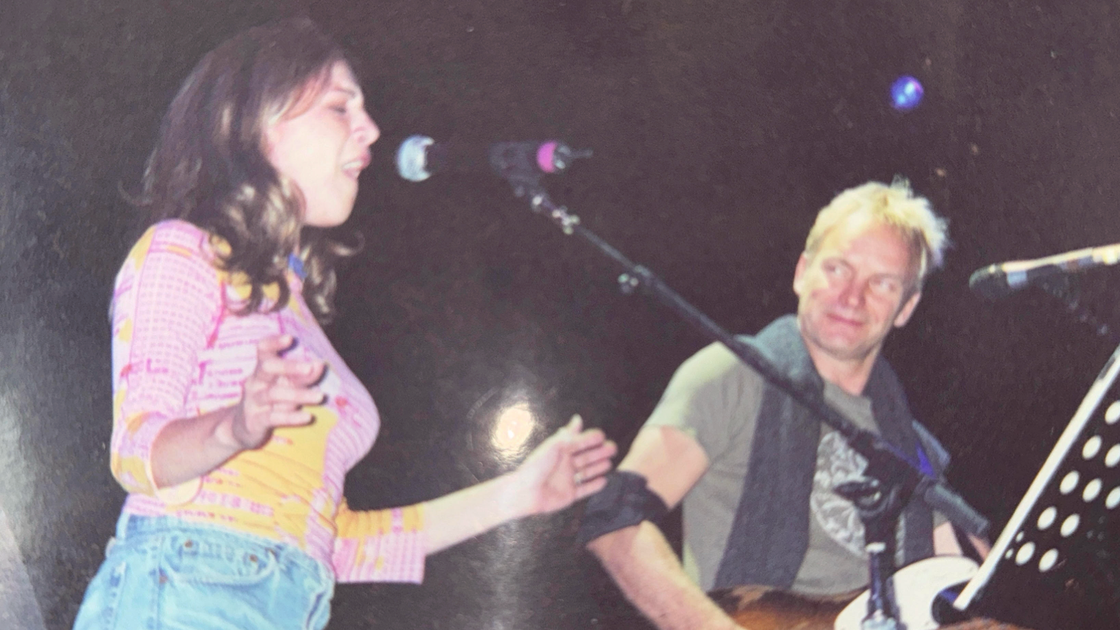
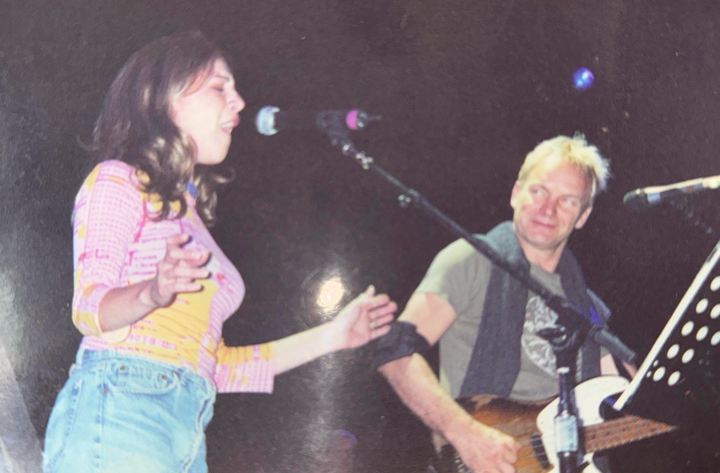 The author singing with Sting in Chicago in 2000
Courtesy of Oskar Saville
Our first child was born in 2005. I was overjoyed. I had been waiting for her since I was 7 — the age when I had promised myself that one day things would be different for my kids.
I was fiercely protective. She never left my side. Even when I was on tour, a trustworthy friend would hold my daughter on the side of the stage where she could see me singing my heart out and know I was still there for her.
In 2007, on my mother’s insistence, I left Dublin for a gig in Los Angeles without my daughter. My mother had come to stay with us for an extended period because she was losing her home in California. “I want to help you,” she said. Despite everything she’d done to me, I was desperate to believe her. I still wanted a mother.
My whole childhood I had heard her say, “it’s a man’s world.” I had watched men belittle her — call her nasty, foolish, too much. I believed this could be our moment and that she would cheer me on in my career. I thought together we might lift our next generation out of what she herself had never escaped.
Instead, she sat at my table praising my husband while I placed dinner in front of her, and cut me down for wanting my daughter with me on tour. I was suddenly 6 years old again, cowering, and somehow telling myself this was love.
The morning after the show in L.A., I had a strange thought: Am I pregnant? I bought a test on the way to the airport, and in a crowded bathroom, I peed on it. The two positive lines that developed looked like two roads — one led to my dream of singing, and the other led to my children.
Far from my friends in the U.S. — the women who might have been more like me — I was surrounded by my husband’s sprawling family. His parents had been together for 40 years. He had nearly a hundred cousins. I wanted my children to grow up with roots like that, not the childhood I had escaped. Besides, how could I possibly take two children on tour?
I quit the band. I stopped listening to music and never spoke about it again, except when someone recognized me or I had a slip of the tongue. When people asked why I had never mentioned my former life — and love — I fumbled. Truthfully, I didn’t fully understand it myself.
Six months before leaving the band, I opened a children’s clothing shop. Maybe, deep down, I had already surrendered the idea that I could have it all.
As an immigrant in Ireland, I was an outsider. I spoke too openly about feelings, about the tender stories we all carry. “We don’t talk about those things here,” I was often told. But I knew healing only came with feeling.
My shop became a kind of secret den. Women came for the beautiful clothes for their children, but they stayed for the conversations — for a place to be seen, heard, and feel safe enough to cry.
I worked six days a week in the shop with my daughter beside me. At night, I would return home, cook, and take care of the family. I was proud of myself. I felt strong and resilient like the Irish mothers around me, but deep inside, there was a weakness I could not undo.
During the birth of my second child, my leg slipped from its socket. The pain was searing. I could not hold back the tears. “I’m sorry I’m not strong like the Irish women,” I said, begging my husband for forgiveness.
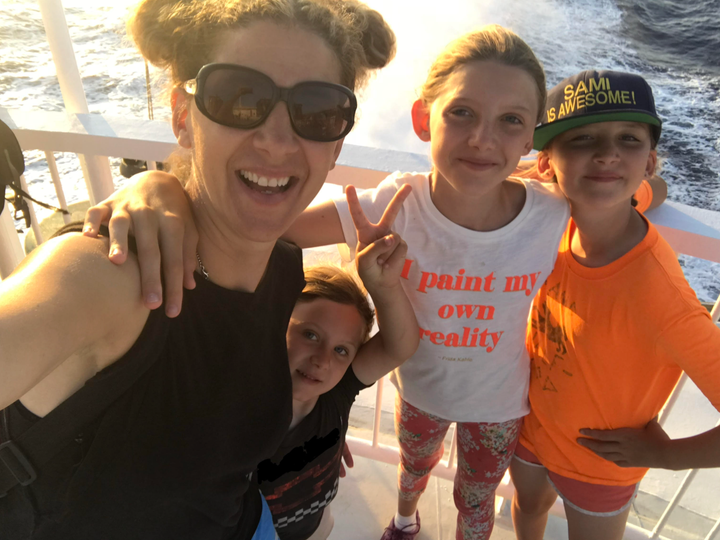 The author with her children in 2017
Courtesy of Oskar Saville
Eight months later I lost a pregnancy, and I collapsed inward. My body had failed. I felt ashamed of the feelings inside me. I was determined to pull myself together. I took my two babies to Greece in the hope that the sun and warmth would heal me, but the strain already present in my marriage grew like the continent between us. I doubled down in my efforts to fix myself and make my family whole again.
In the years that followed, I became an energy healer. I lost two more pregnancies. I closed the shop. We moved across continents searching for something I couldn’t name — the thing that would fix me. Fix us.
We finally landed in New York City, where my son was born in the dark silence of Hurricane Sandy on my birthday.
I threw myself into building a new life — a home, my energy healing business, a family that looked whole from the outside — but we were like that old farmhouse: built in a famine.
In the wake of Donald Trump being elected president in November 2016, I began attending a friend’s meditation group in hopes of finding some calm. After one of the meetings, a woman approached me and introduced herself by saying, “Hi, I’m Julie, and I’m an actress.”
Maybe it was the shock of the election that had me reeling or the strangeness of this random woman announcing her profession — whatever it was, it annoyed me.
“Hi, I’m Oskar, and I’m a musician,” I struck back.
“That’s awesome, what kind of music?” Julie asked.
I was surprised to hear myself tell her about my music career. Within minutes, she said, “You should sing the national anthem at Madison Square Garden. I know someone who knows someone there.”
I thought she was joking, but she wasn’t, and she insisted I give it a go. I finally agreed to send in a recording of myself and then promptly forgot all about it.
A few weeks later, I received a phone call from the talent booker at MSG.
“The Rangers wanted you, but I had to tell them they were 30 seconds too late — The Knicks got you first.”
I hung up in shock. What was going on? I felt lost. I had been away from the industry — and completely hidden my past — for so long that I really didn’t know how to handle this.
I called a friend who was not only a musician, but also the first person I had opened up to about the struggles in my life and marriage. She gently walked me through what I needed to do — step by step — and told me how to do simple things like buying a dress and trying it on, which seemed like rocket science to me.
She also helped me tell my kids the secret I had never shared with them.
A few weeks later, I stood in front of 20,000 Knicks fans — and my three children. I could feel their pride. The mommy they had always loved and believed in was now basking in the light that they had always seen around her. I could share this part of myself that I had kept locked away and they loved me for it. And now they could brag to their friends: “My mamma is a rock star.”
I took the mic. I felt like a genie being let out of her bottle. My voice, which I had pushed down for so long, now reverberated through the stadium — and I heard it.
“My voice, which I had pushed down for so long, now reverberated through the stadium — and I heard it.”
Six months later, I left my husband.
The ending of our relationship was messy and it brought up all kinds of trauma from many different points in my life, including the abuse I suffered as a child. I never wanted my kids to feel even a hint of what I had experienced, so it made me determined to prioritize doing what was best for them. I didn’t want to make any waves, so I reverted back to the silence I had momentarily escaped in front of the crowd at the Knicks game.
That suffocating silence lasted until the night I saw Taylor, and her voice awakened me again. I now understand why I was so scared of going to that concert. I was afraid of seeing someone living the life I had given up and doing what I truly loved doing. But nothing terrible happened that night. Instead, it was like a spell was broken as I listened to Taylor’s songs and watched the way the crowd reacted to every movement she made. I felt myself — my truest self — tremble beneath all of my pain and fear.
The next morning, my children circled around me, and said, “You’re such a good mamma. Why not love yourself the way you love us?”
Was it possible? To love oneself?
I wanted to, but knew that I first had to confront the grief and the misery that I had avoided for so many years. With the encouragement and love of my kids, I began digging into my past — into everything that hurt and the weakness I’d spent too long believing lived at the core of who I was. I prayed for the strength to feel everything I had numbed… and feel it I did.
It wasn’t easy. Some days I wanted to run or retreat back into silence, but I gently reminded myself that love never gives up. I knew that there was no future in trying to stand still or living with ghosts, so I continued to push forward.
I began to write about what I’d been through and several months later, I found the courage to do a one-woman show, “Breaking Open,” at the Edinburgh Fringe Festival. My children acted as my production crew and proudly wore t-shirts that read, Please come to my momma’s show.
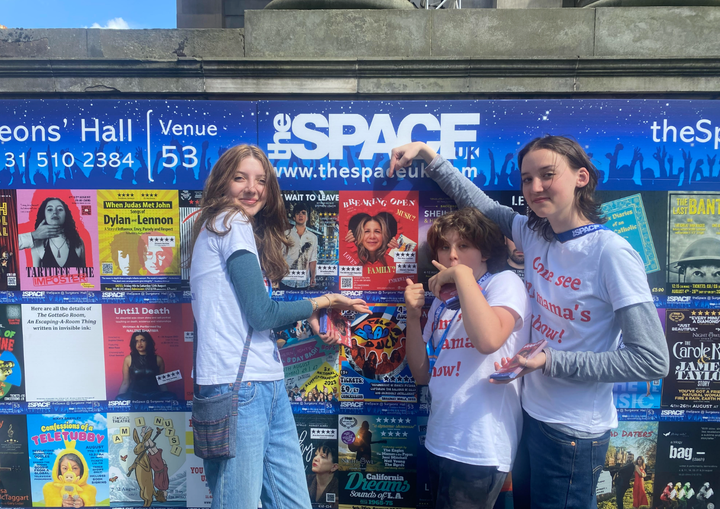 The author’s children in front of a poster for her one-woman show in Edinburgh, Scotland, in 2023
Courtesy of Oskar Saville
I have learned so many things over the past 10 years: shrinking myself serves no one, but sharing my light does; family isn’t defined by outward appearance, only love and understanding; and, most importantly, it’s never too late to choose a new path — even when it feels scary.
As for music, I’m standing at the edge of another beginning. I’ve slowly started writing new songs and I’m letting myself dream of new musical adventures. I may not ever even front another rock band, but whatever I do, I’ll be using my voice. No one will ever take that away from me again.
Oskar Saville is a mother of three incredible children, a writer and performer. She lives in New York City and is currently working on a memoir. For more from her, check out her Substack.
Do you have a compelling personal story you’d like to see published on HuffPost? Find out what we’re looking for here and send us a pitch at pitch@huffpost.com.