
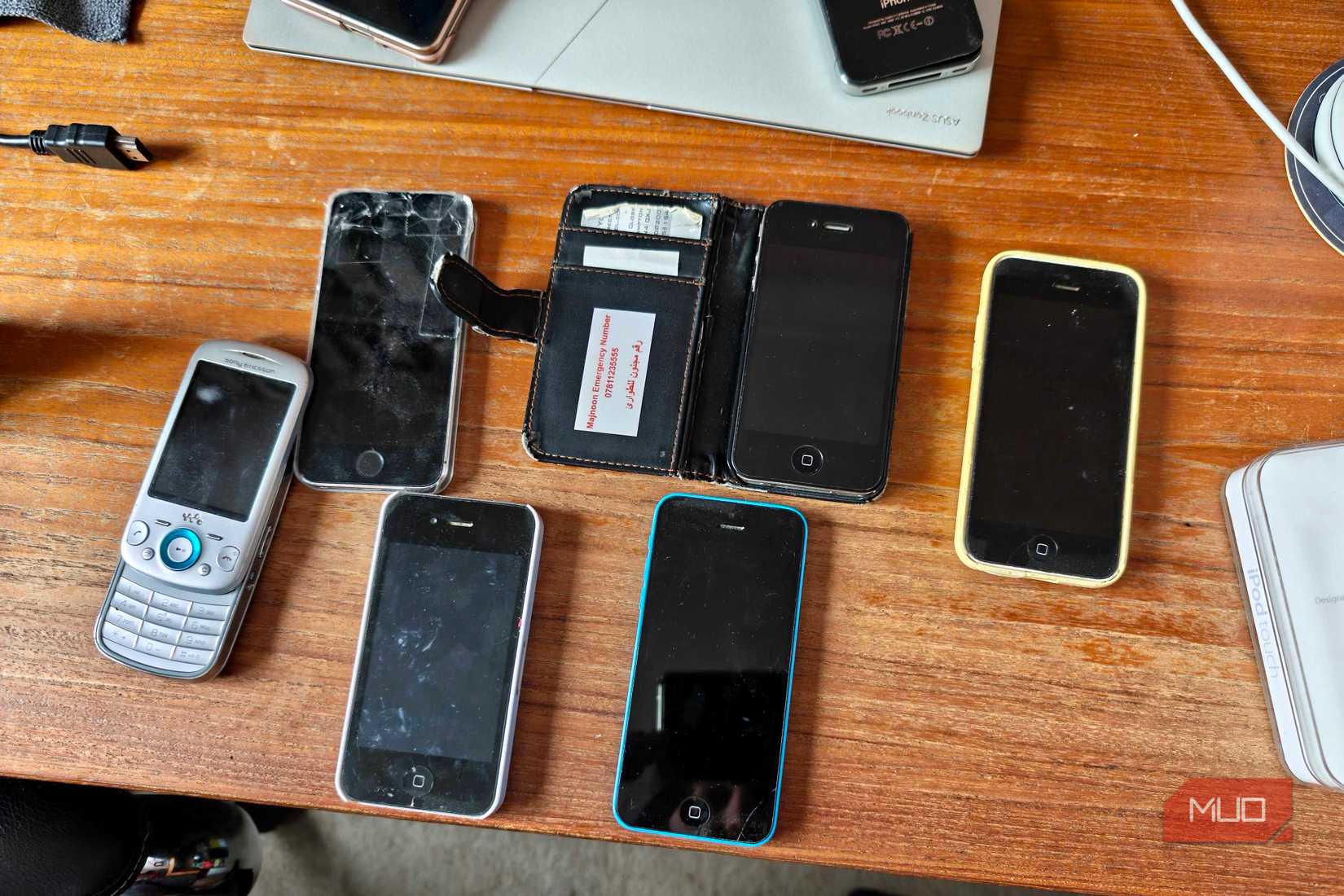
I am currently staying at my parents’, working from my Dad’s old office. It’s a classic old office, filled with more files than anyone could reasonably need, dusting shelving units with CD demos for Encarta 98, and of course, the obligatory stack of old smartphones.
I thought the old smartphones were fun. It’s a stack of old iPhone 4’s from years ago.
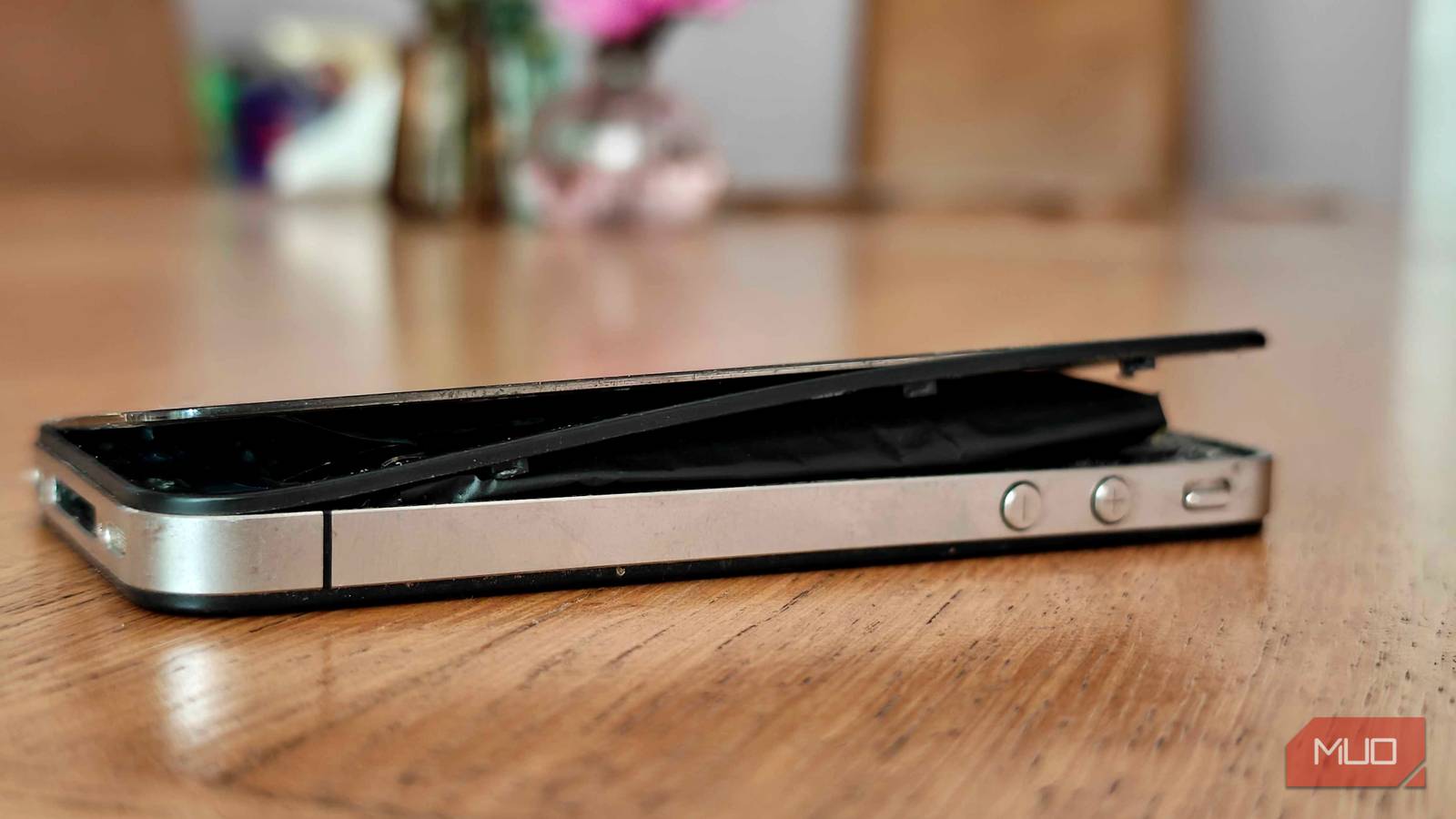
But what I actually found among the stack wasn’t just worrying, it was downright dangerous, an accident waiting to happen: a bulging, bursting, smartphone battery, just waiting for its opportunity to burn the house down.
Related
These bad habits are destroying your laptop’s battery
What your laptop wishes you knew about battery care.
There is an old battery in your house waiting to cause a fire
Why do batteries swell?
Lithium-ion batteries degrade over time through a process called electrolyte decomposition. As the battery ages — whether through repeated charging cycles or simply sitting in storage — the electrolyte fluid inside the cell begins to break down and produce gas. That gas has nowhere to go. The battery’s sealed casing inflates from the inside, slowly at first, then more obviously.
Partial discharging with long-term storage is one of the easiest ways to push a lithium-ion battery to the point of swelling. If I had to guess, that old iPhone 4 has been sitting on the shelf in this study for at least 10 years, if not more.
The iPhone 4 launched in 2010, and my family upgrades typically every other generation. The iPhone 6 launched in 2014, so we could be talking 12 years.
Now, given that the swelling on this smartphone wasn’t at critical levels, I suspect the swelling has occurred in the past few years, meaning it sat dormant for a long time. But once the swelling starts, it’s only going one way.
My parents had no idea about the risks of a swollen smartphone battery
Ticking time bomb?
The biggest problem with a swollen smartphone, laptop, or any other type of battery is that it’s unstable. In addition, the chemicals and elements used in the battery composition are highly flammable and also incredibly difficult to extinguish through “normal” means.
If the casing on an old, swollen battery is damaged, punctured, or otherwise, it can cause an enormous reaction that that produces intense heat, and can lead to extensive damage or even death.
Even without a puncture, continued storage of a swollen battery carries risk. Continued gas production puts ongoing pressure on the device casing. In phones, this typically pushes the screen away from the chassis. In tablets or laptops, it can crack the chassis itself, exposing the battery further. The problem does not stabilize on its own.
Spotting a swollen smartphone battery is relatively simple
Bulging devices are a giveaway
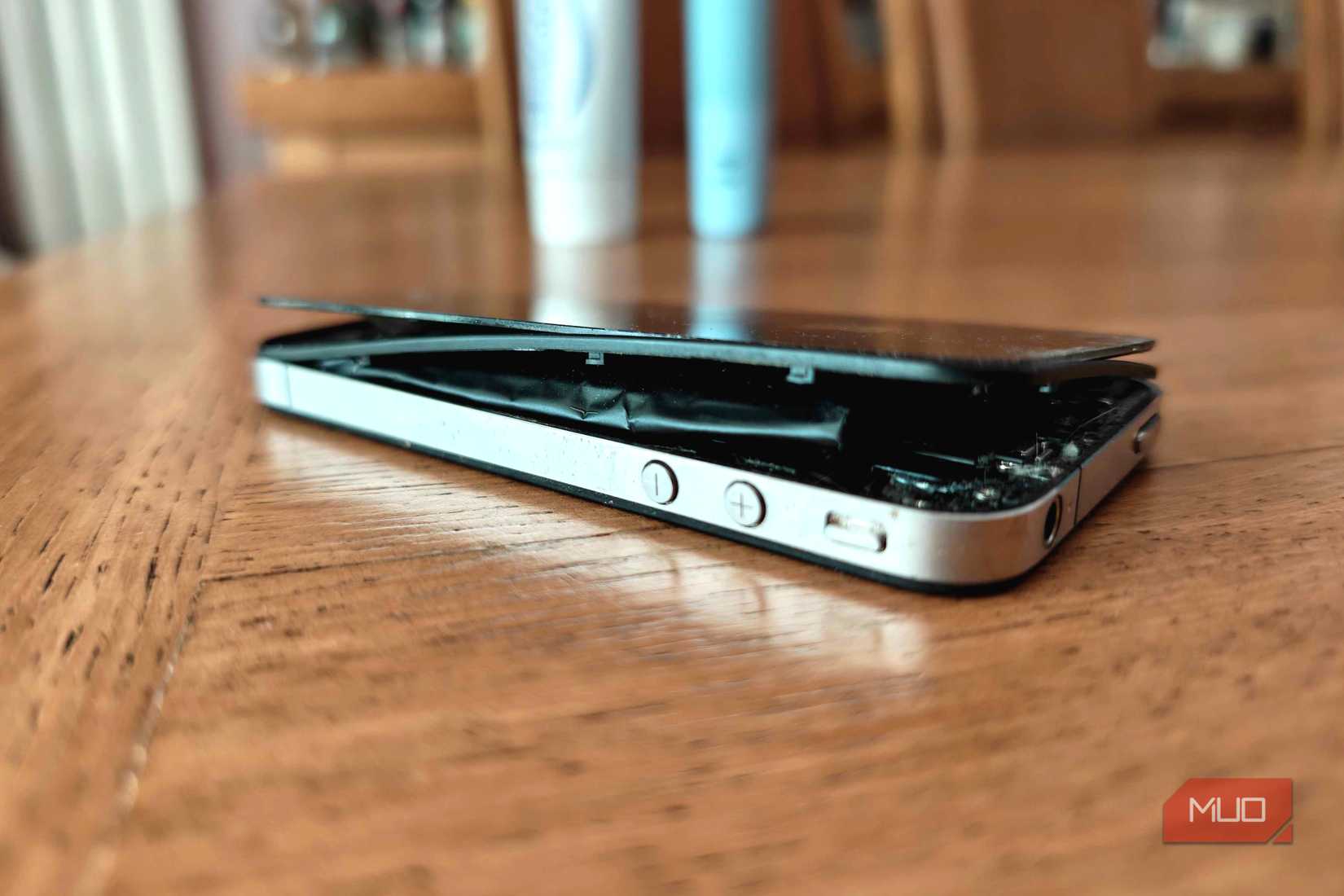
The most obvious sign is physical deformation. A screen that sits higher on one side, a back panel that rocks when placed on a flat surface, or a phone that no longer closes properly at the seams.
On older devices with removable backs, the battery itself may be visibly rounded or bubble-shaped. On sealed modern smartphones, you are looking at the casing deformation rather than the battery directly.
I’ve also read that at times, you can smell the bloated battery, though I’ve never experienced this myself. According to iFixit, if your device battery gives off a “sweet, metallic, or acetone smell,” that could signal expanding gases escaping the battery, which is extremely dangerous.
You need to dispose of the battery safely and quickly
Not in your household trash
If you find a device with a swelling or swollen battery, don’t panic. You do need to dispose of this, but you can’t just dump it into the household trash collection.
It has to be taken to a special recycling center that can deal with lithium-based batteries.
The Battery Network lists thousands of drop-off locations where you can take a battery for safe disposal, though you may want to call ahead and double-check they take swollen cells before you set off.
Similarly, iFixit’s E-Waste has a range of options for safe disposal, while many major retailers like Best Buy, Home Depot, Lowe’s, and Staples accept lithium-ion batteries. Again, in all cases, call your local store before you head off to make sure they accept swollen batteries.
Related
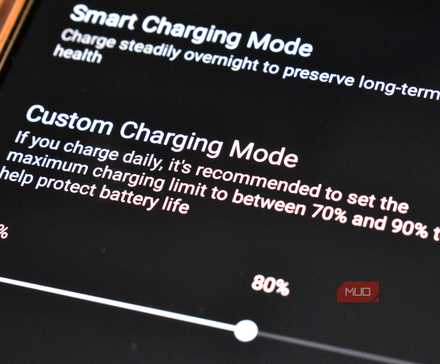
Why charging your phone overnight isn’t bad anymore
Charging your smartphone overnight isn’t nearly as dangerous as everyone makes out.
Go and check now
The phone on my parents’ shelf had been there for the better part of a decade, if not more. Nobody had thought about it, nobody had checked it, and nobody would have until something went wrong. Old devices have a way of becoming invisible once they stop being useful.
I’d advise taking five minutes today to have a quick check through your old phones, tablets, e-readers, fitness trackers, and laptops that have been in storage. Lay them on a flat surface and look at them properly to see whether they are still the shape they should be. If anything looks wrong, don’t wait to deal with it. The longer a swollen battery sits, the more unstable it becomes.