
For years, Montreal has produced some of the world’s top artificial intelligence researchers.
Now, a new program from the city’s flagship AI institute, Mila, is trying to lay the seeds to turn more of them into pioneering founders — and keep them based in Canada.
The institute’s investment arm, Mila Ventures, is preparing to launch a four-month “venture scientist” boot camp, beginning this June, aimed at researchers with deep expertise in STEM fields, as well as ideas to tackle a significant problem, but perhaps little training in building companies.
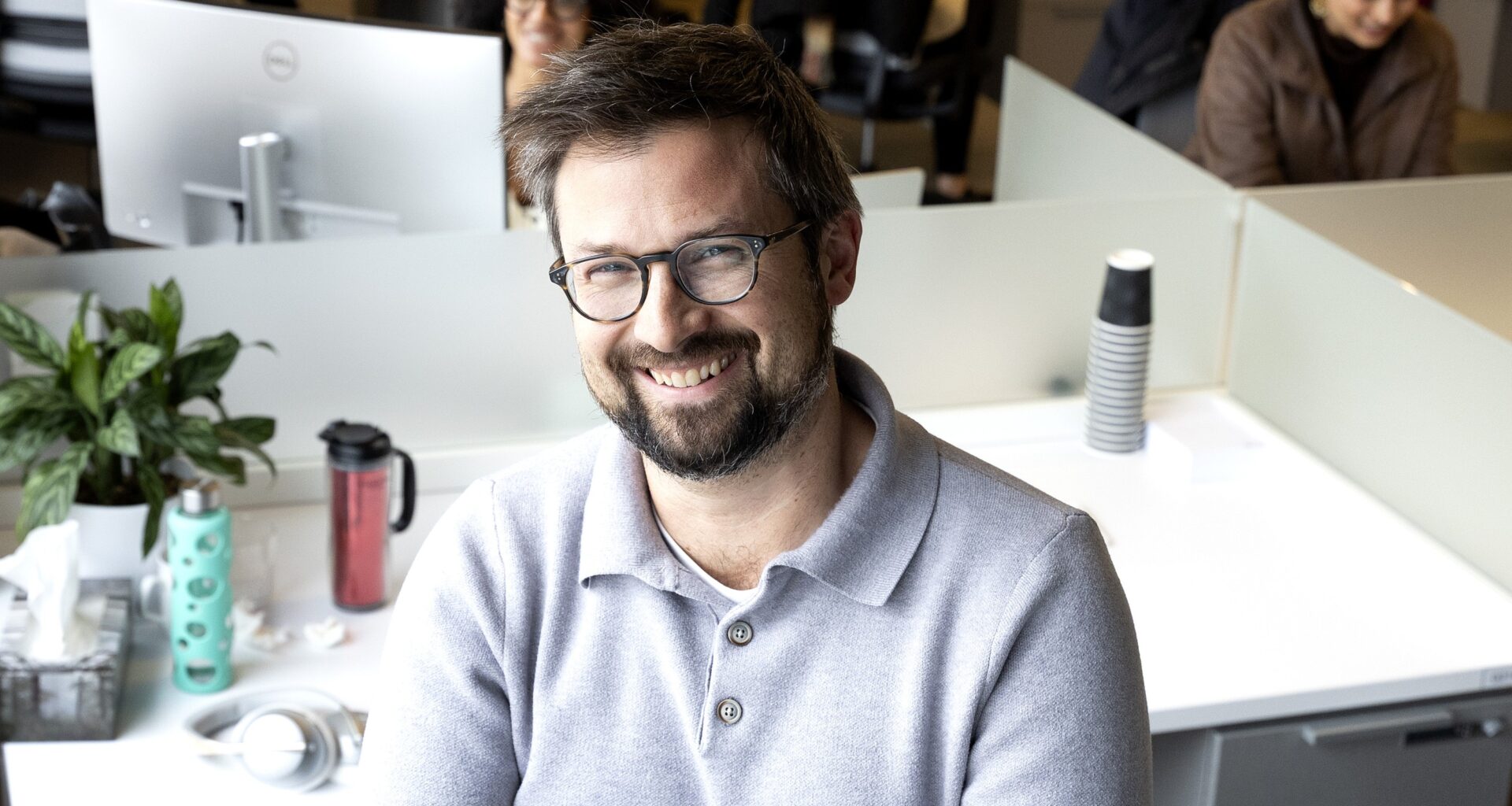
The ambition: produce high-growth startups, potentially even billion-dollar firms further down the road, said Jonathan Guillemette, director of scientific entrepreneurship at Mila Ventures.
That next wave of game-changing startups, according to Guillemette, will come through people with deep expertise in particular fields, or what the institute calls “venture scientists.”
“The venture scientist boot camp exists for people who know something very deep about science — knowledge that’s not easily accessible through AI tools or Google,” he said. “Those are the people most likely to build deep-tech and AI companies.”
Initially, the program will target about 25 startups, though there is no fixed number, while the long-term plan is to scale to as many as 100 startups a year, Guillemette said.
Scientists from across STEM fields (not just AI) are encouraged to apply, Guillemette said, adding that applicants must be able to work in Canada.
There are also no quotas. The filter is quality research, Guillemette stressed.
Those accepted will receive stipends of about $10,000 over the four months and work out of Mila’s headquarters in Montreal’s Little Italy.
A high-pressure, fast-paced environment
Ultimately, participants will work on their own startups while learning alongside others in a fast-paced, cohort-based environment designed to accelerate progress and prepare their companies for rapid growth, Guillemette explained.
The program also seeks to address a wider challenge in Canada: keeping founders in the country.
Less than a third of high-potential Canadian-founded startups in 2024 were headquartered domestically, according to a study by The Globe and Mail. Canada’s leading startup hubs — Toronto-Waterloo, Vancouver and Montreal — have also shed a combined US$66 billion in ecosystem value since their respective peaks, according to the National Angel Capital Organization and Startup Genome.
Mila itself, founded by Professor Yoshua Bengio, known as one of the world’s Godfathers of AI, and home to a community of more than 1,500 members, accounts for a significant share of the world’s most cited AI researchers. Still, only a small fraction of global venture capital flows to Canadian startups.
“Out of all the researchers I studied with, not a single one stayed in Quebec,” said Guillemette, a Montreal native with a Ph.D. in physics from McGill University, speaking of his own experience. (After university, Guillemette went on to teach as well as start a company of his own. He joined Mila Ventures late last year.)
This boot camp, he said, is designed to close that gap between discovery and commercialization.
“Mila Ventures’ answer is to say: we have the talent, we have an amazing ecosystem, let’s build the rest of what is required to foster and nurture that early-stage talent.”
We have the hard part — the people.
Jonathan Guillemette
director of scientific entrepreneurship at Mila Ventures
Guillemette noted that while figures like Google founders Sergey Brin and Larry Page are widely known, a broader class of founders — scientists — have quietly built some of the world’s most valuable companies.
“There are a ton of these ‘venture scientists’ hiding in plain sight at the top of major tech firms,” he said.
In existence for about a year, Mila Ventures, under the leadership of Stéphane Marceau, has already supported over 20 plus startups, joining wider a push in the city and province to better foster the tech ecosystem.
Guillemette said about 80 per cent of this boot camp will focus on building, including customer interviews and product iteration,
The remainder will cover topics such as identifying the limits of current AI knowledge and how to start a company, at a time when new AI tools are allowing founders to do more with smaller teams and lowering the barriers to launching companies.
Participants will also be assigned ‘venture managers’, who will hold them accountable on a weekly basis.
In the end, Guillemette said participants will hopefully incorporate and build their companies locally, and, in some cases, even begin generating revenue by the end of the program.
“Canada also needs to think more about sovereignty — in infrastructure, in IP, in how we build,” Guillemette said.
“Ideally, they’ve incorporated in Quebec or Canada, and they’re able to build here.”
Do you have a story? I’d love to hear it: hnorth@postmedia.com

I’ve been writing for the Montreal Gazette since 2023, chasing the biggest stories I can find and always looking for new ways to tell them. I studied economics and computer science at McGill. Now I live in the city’s Plateau, where I wear Doc Martens to blend in among the hipsters. It doesn’t work. Seen something interesting? Email me: hnorth@postmedia.com