
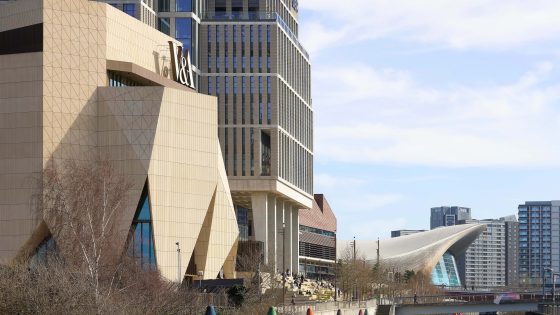
Designed by O’Donnell + Tuomey and first revealed in 2018, the 7,000m² waterfront museum forms the centrepiece of a wider cultural masterplan by Allies and Morrison. The 42.5m-tall building has been inspired by an X-ray image of a 1954 Cristóbal Balenciaga dress and the Japanese concept of ma (‘the space between’).
Its intricate steel skeleton, which was topped out in 2021, is wrapped in precast concrete façade panels manufactured by Techrete in North Lincolnshire. Each of the 479 panels forming the three-dimensional folded façade is bespokely shaped and scored with incisions and profiles that reference the letters V and A.
Two entrances at waterfront and podium levels welcome visitors through triangular openings that recall pattern-cutting darts. Benches are integrated into the façade to extend its threshold into the public realm, which includes a new bridge designed by Spanish practice Camps Felip Arquitecturia with Buro Happold.
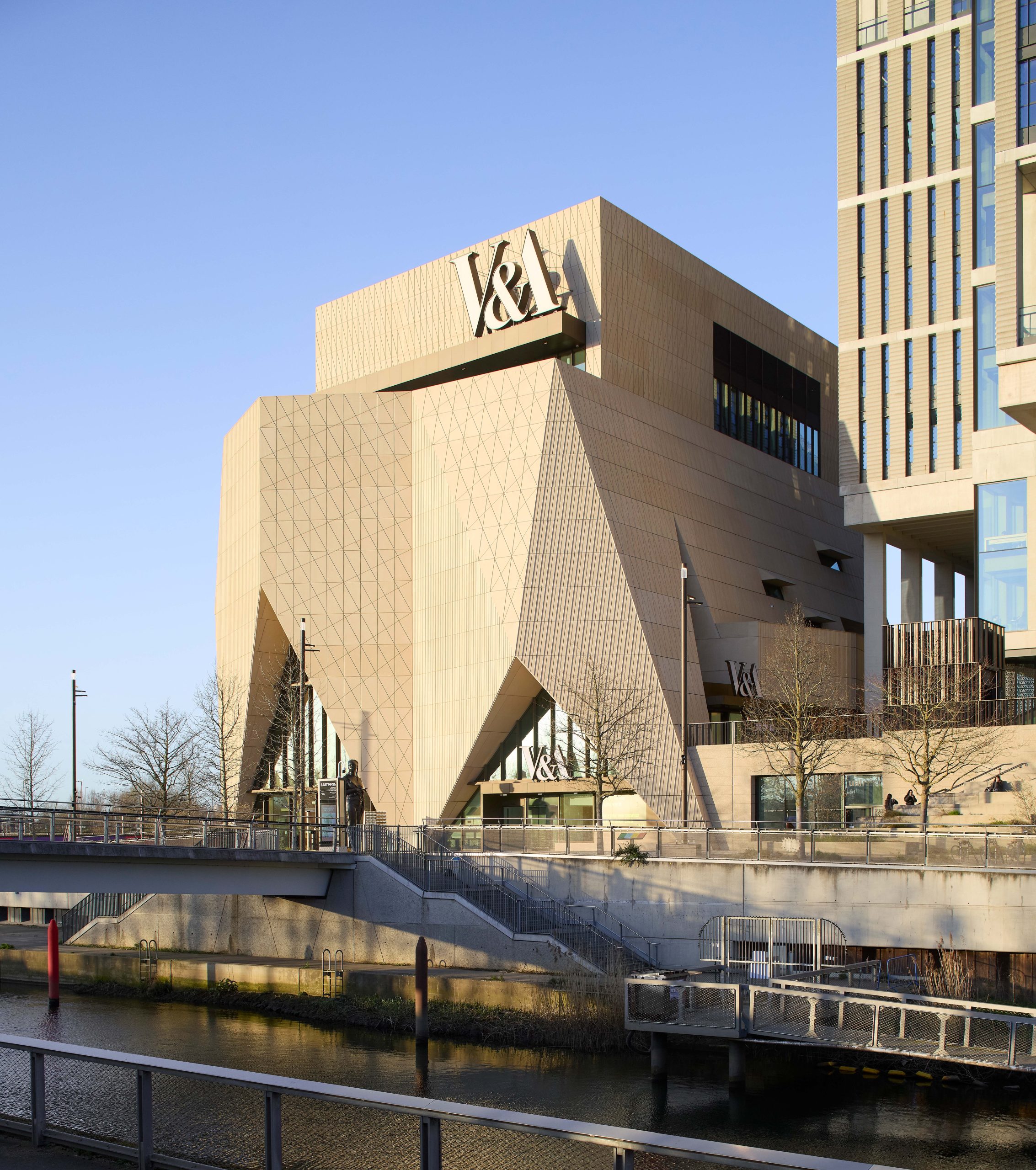
V&A East Museum on Stratford’s East Bank
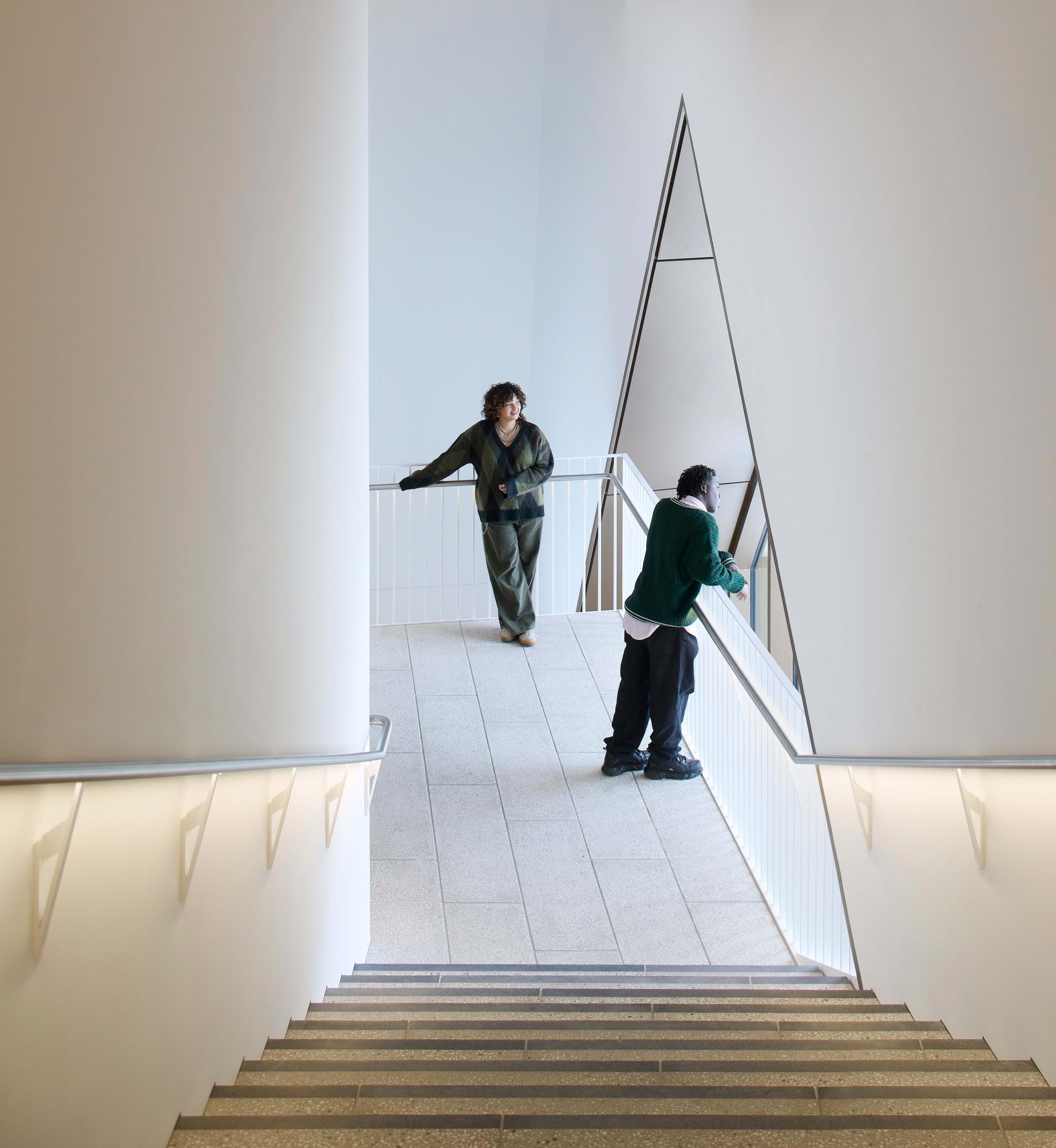
Internally, the architecture prioritises visual permeability and vertical connection. A series of galleries, terraces and circulation spaces are arranged to frame views across the Queen Elizabeth Olympic Park, all giving the impression of being ‘carved’ from the thickness of the external walls.
V&A East Museum completes the broader V&A East project, joining its sister building, V&A East Storehouse, at London’s Olympic Park. The Storehouse at Here East, the former Olympic broadcast centre, was designed by Diller Scofidio + Renfro and opened in May last year.
Together, the two sites represent one of the UK’s biggest new museum projects of the past decade. Both sites form part of the London 2012 Olympic and Paralympic Games legacy and sit within Allies and Morrison’s £1.1 billion wider masterplan for the East Bank, formerly known as Olympicopolis.
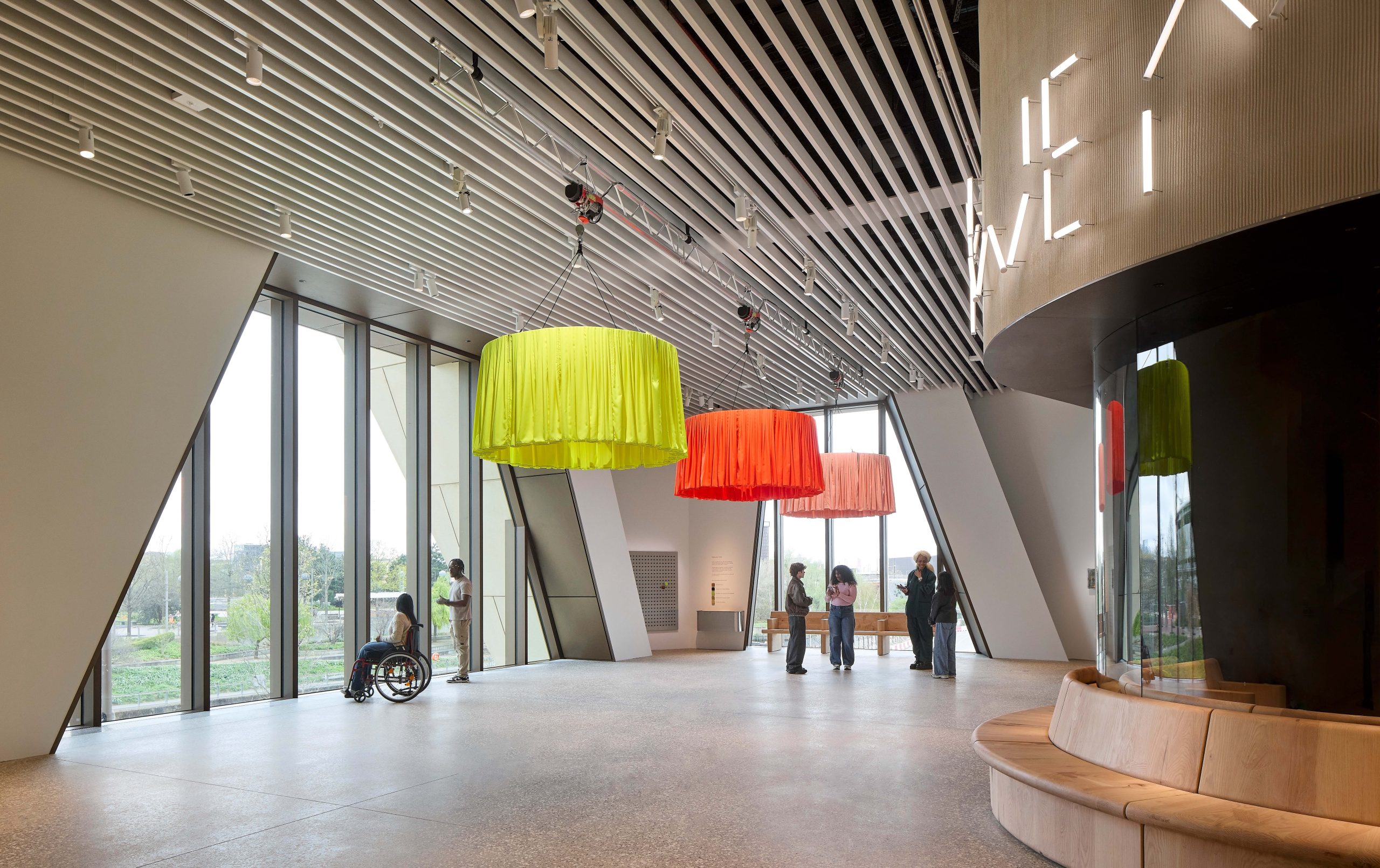
Public circulation spaces
Co-created with local young people, creatives and east London communities, the museum celebrates making and supports contemporary cultural production. Its two permanent Why We Make galleries are spread across two floors and showcase more than 500 objects from the V&A’s collections across 10 thematic sections. These ‘constellation-like’ displays artefacts addressing themes including identity, representation, social justice and environmental action.
The galleries, inspired by east London, were designed by JA Projects in collaboration with A Practice for Everyday Life and artist Larry Achiampong, following a 2022 competition. Liverpool-based Studio MUTT has designed the retail spaces.
The free-to-visit museum opens with The Music is Black: A British Story, an exhibition charting the influence of Black British music from 1900 to the present. Featuring objects such as Joan Armatrading’s childhood guitar and clothes worn by Little Simz, the show is developed in partnership with BBC Music and launches a wider summer festival across East Bank.
Beyond exhibition spaces, the museum includes outdoor terraces overlooking the park and a café operated by Jikoni, a group known for ‘cooking across borders’.
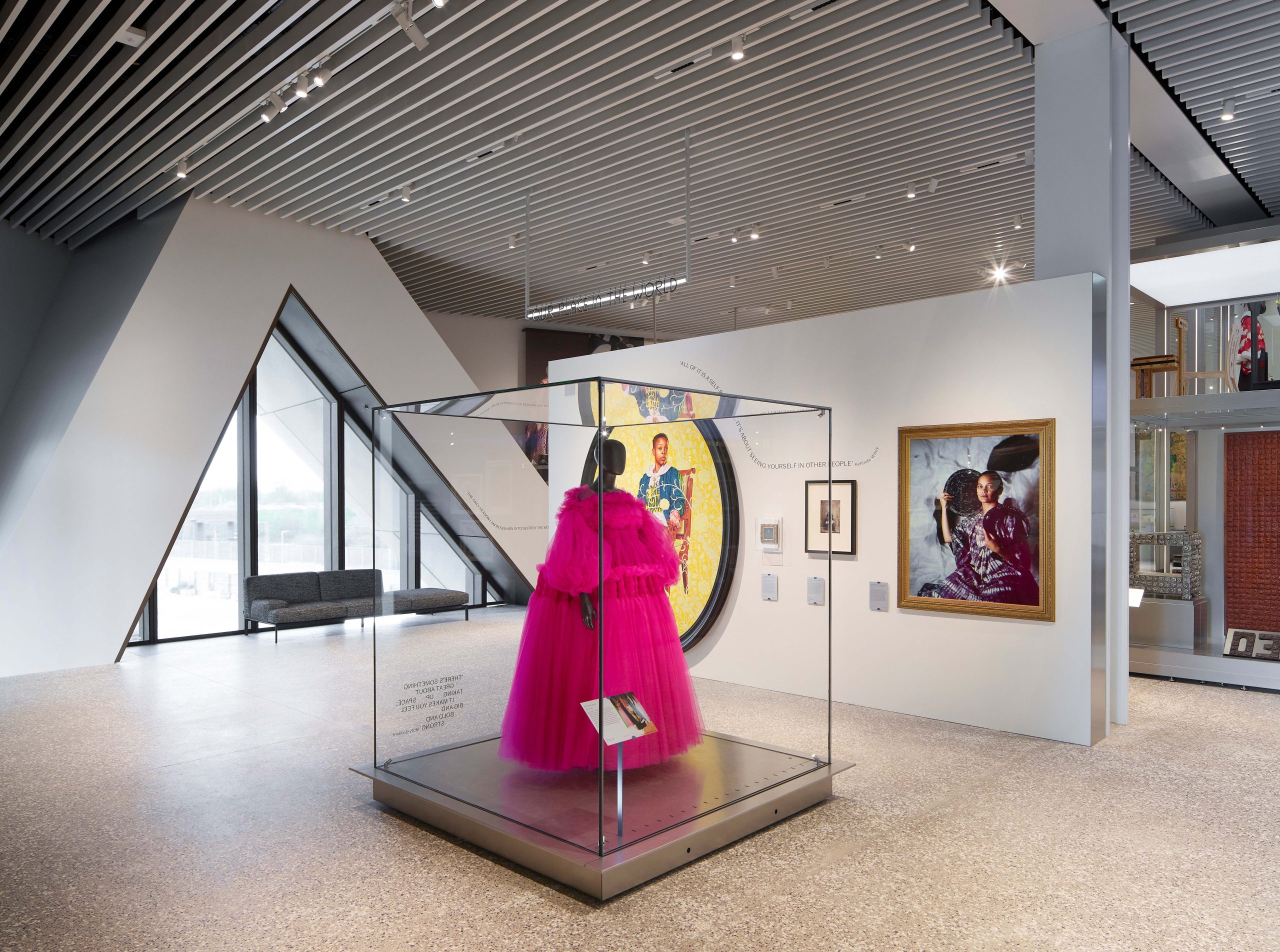
Permanent Why We Make gallery designed by JA Projects
The V&A is the world’s largest museum dedicated to design and the decorative arts, and it aims to use both East Bank buildings to broaden access to its 2.3 million-object collection.
East Bank includes the London College of Fashion and an outpost for University College London, both of which opened in 2023, Sadler’s Wells East, which opened in February 2025, and BBC Music Studios, which is set to open in late 2026/early 2027, along with some residential elements.
The development has been supported by the government and the four Olympic boroughs. London mayor Sadiq Khan described it as the UK’s largest cultural investment.
O’Donnell + Tuomey also designed Sadler’s Wells East, while Allies and Morrison carried out detailed design work on the buildings for the BBC and London College of Fashion, the latter being shortlisted for last year’s RIBA Stirling Prize last year.