
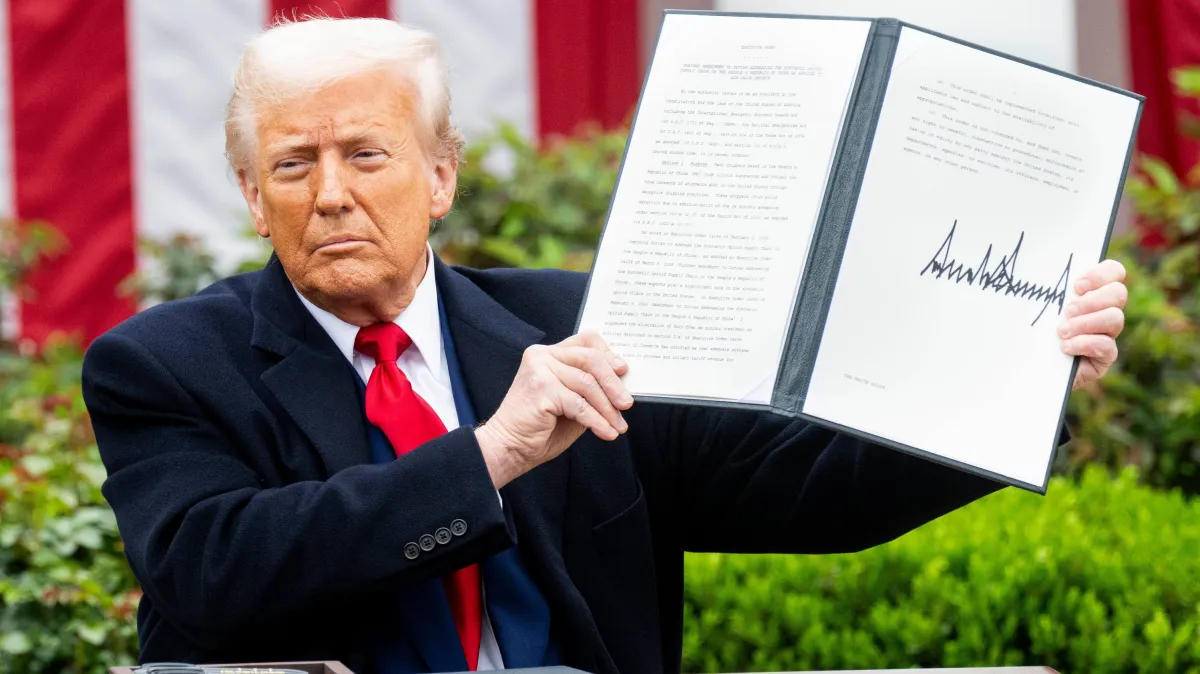
In the first few months of President Trump’s administration, there was a general sense among American chief executives that things were going to get easier. The mood was celebratory after a period of stricter regulations and complaints of poor business engagement under Joe Biden.
No longer. United States executives at the start of the year named the biggest risk to their businesses as “uncertainty” itself, ahead of issues such as economic downturn, inflation or financial market disruptions, according to a survey by The Conference Board. That was before Trump threatened to invade Greenland, slapped higher tariffs on trading partners, designated Anthropic a supply chain risk, and launched strikes on Iran. Perhaps it is not surprising that a Boston Consulting Group global survey of more than 500 chief executives released this month found that more than 70 per cent report clinically high stress levels.
Conversations with business leaders who descended on Washington this week for the International Monetary Forum spring meeting and Semafor World Economy conference offered further insight into their biggest concerns right now.
Rising energy costs and the risk of major supply chain disruption from a prolonged Iran war are high on the list of worries for many chief executives. Next week, Amazon will introduce a 3.5 per cent fuel and logistics surcharge on third-party US and Canadian sellers using its platform.
Patrick Pouyanné, chairman and chief executive of TotalEnergies, the biggest exporter of US liquified natural gas (LNG), told the Semafor conference: “We have more or less three months of inventories [in the western world]. But if this war and this blockade [of the Strait of Hormuz] last more than three months, we will begin to face some serious supply issues in some products like jet fuel. So planes will have to be rationed, or diesel and, of course, LNG.
“If it lasts, we have some serious impacts on supply of energy. I would say, almost a systemic risk,” he added. If energy costs rise, so do fertiliser costs, leading to food inflation. “So you have a number of supply chain [effects].”
A second major source of anxiety for chief executives is how to progress from adopting artificial intelligence tools to understanding how they can be deployed at scale to drive growth. As one business leader told me this week: “Piloting AI is relatively easy. Whereas scaling AI to a company level that can drive impact is very difficult.”
A BCG survey of global chief executives in January found that 72 per cent said they were now the main decision-makers on AI in their companies, double the share from the previous year. Meanwhile, half of chief executives believed their jobs were on the line if AI did not pay off.
Business newsletter
The business editor’s exclusive analysis of all the latest financial and economic news.
Sign up with one click
As public concerns around the effects of AI rise, including job losses, cyberrisks and the harmful effects of how we are using these tools, some leaders are thinking about whether they will soon be required to talk about “trust in AI” in the same way they were previously pressured to speak about how they were approaching workforce diversity and sustainability issues.
A third concern for chief executives is how they can spend more time on external engagement as they try to understand what’s around the corner in an age when the geopolitical and technological environment changes by the hour.
Running the day-to-day business is increasingly being left to other members of management teams, while corporate chiefs focus on predicting and preparing for future scenarios.
Senior business leaders in the city this week told me they were increasingly in Washington in part because the present Trump administration was far more willing to engage than the government had been under Biden, even if hobnobbing didn’t always result in the government pursuing advantageous policies for them.
Mark Ein, 61, a prominent Washington-based investor who owns stakes in the National Football League’s Washington Commanders as well as Leeds United, said: “I’ve never seen a time where more people from businesses, not just around the country but around the world, feel like they need to be here on a regular basis.”
Still, in an age of heightened uncertainty, chief executives are also expected to focus on the requirements that got them hired in the first place. Ein, who sits on the boards of Soho House and Custom Truck One Source, said: “I feel like, if anything, you have to double down on what’s always made great leadership effective.
“I think in a time of so much uncertainty, people look to people who have a clear vision and a clear plan to get their organisation to a good place. Whether you’re leading a business or you’re leading a government or leading a sports team, it really comes down to: do you have followership?”