
Wednesday 15 April 2026 10:06 am
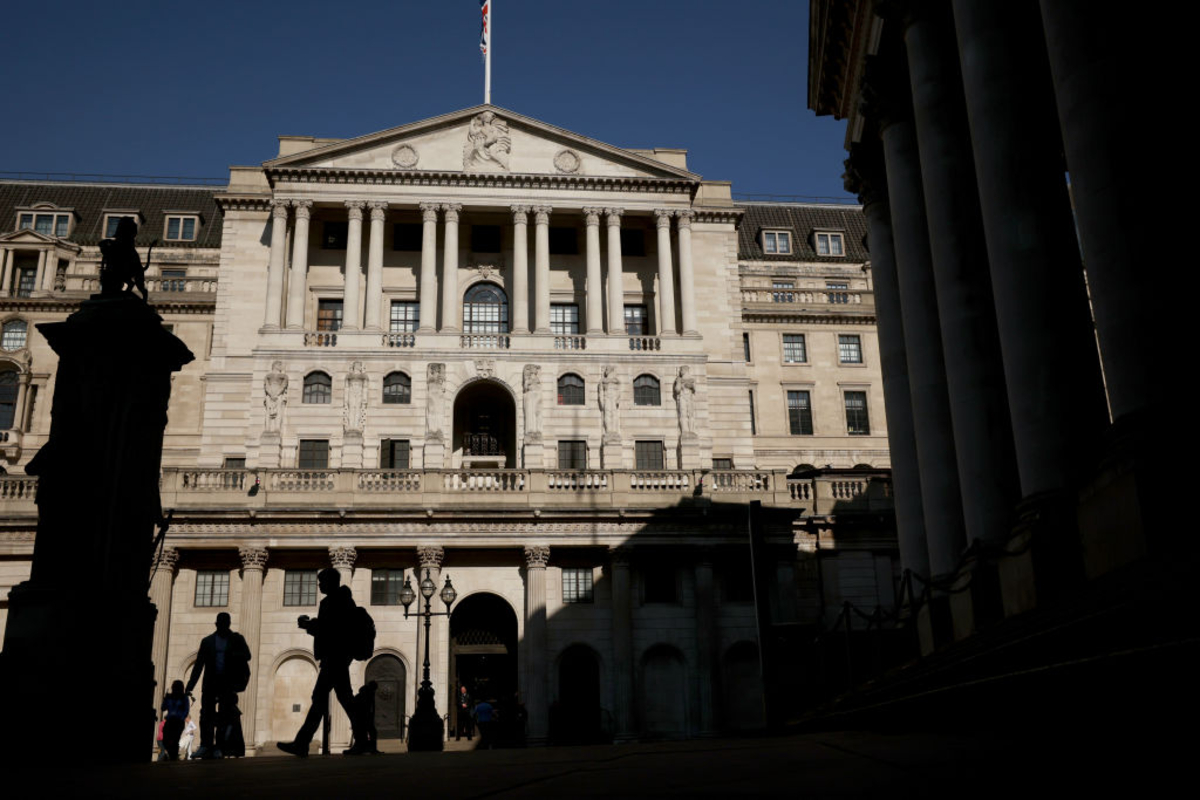
 The Bank of England faces a “judgment call” on interest rates.
The Bank of England could cut interest rates this year if the war in Iran ends and the Strait of Hormuz opens up within weeks, an economist at a City broker has said.
Peel Hunt’s chief economist Kallum Pickering’s current assumption is that the Bank makes two interest rate cuts at the end of this year on the basis that a resolution is found for trading routes in the Middle East.
Pickering said he found market pricing suggesting there would be one rate hike “odd” even as there was “increasing optimism” of a peace deal being struck to open up the Strait, where a hold-up in trade has heightened the risk of fuel shortages across the world.
He also suggested traders had begun to factor in a “more balanced view” of inflation and growth risks by changing expectations that there would be one hike instead of three.
Pickering, who is a member of City AM‘s Shadow Monetary Policy Committee, said: “I still find market pricing odd. One hike – what is the point in that? Chances are, this is among the least likely paths.”
However, the Peel Hunt deputy head of research said there were “two prevailing views” that could leave the Monetary Policy Committee (MPC) with a dilemma on monetary policy.
While an opening up of the Strait of Hormuz may be possible as a result of continued negotiations between Trump officials and Iranian leaders, he suggested a protracted conflict could force rate-setters to “take drastic action” in order to prevent a surge in inflation.
“In that scenario, we could not rule out significant rate hikes.”
City giants have taken contrasting views on the path of interest rates over the upcoming year. JP Morgan analysts believe that there will be one hike this year in June following a previous prediction of two hikes.
‘Judgment call’ on Trump-Iran negotiations
MPC members have largely avoided making clear pronouncements over their thinking on the economic effects of the war.
Read more
Bank of England chief economist: Interest rates can ‘contain’ inflation
External member Megan Greene told an event in Washington on Tuesday that the Bank would have to make a “judgment call” as it would be too late to wait for “definitive data”.
She said there were both downside risks to growth, which could weaken demand in the UK economy, as well as upside risks to people’s expectations, which could push wage growth higher and lead to a spike in inflation.
President Trump has suggested that talks between the US and Iran could take place over the next day, after the US implemented a blockade on Iranian ports.
Vice-president JD Vance is expected to lead another round of talks with Iranian officials, according to CNN.
Both US and Iranian officials, including Trump himself, have mooted the possibility of imposing a toll on ships passing through the Strait, but Gulf countries and European allies have signalled their opposition to the new tax.
Markets have remained wary of the status of negotiations, with the Brent crude oil price rising slightly since the ceasefire lasting a fortnight was first announced last week.
‘Pressure’ for interest rate hike
Thomas Pugh, the chief economist at the accountancy RSM, has said that there is “pressure” on the Bank of England to hike interest rates as inflation has been higher in the UK recently than elsewhere, making the economy more vulnerable to a wage-price spiral.
Bank of England governor Andrew Bailey has attempted to temper expectations across financial markets of further interest rate hikes.
The MPC’s next meeting will be on 30 April and it will feature the publication of the Bank’s latest monetary policy report, which could provide further context on economists’ thinking around the energy price shock and possible ramifications for the UK economy.
Read more
‘No one expects’ Bank of England to cut interest rates, says former MPC member
Similarly tagged content:
Sections
Categories
People & Organisations