
 Can the Scottish government cap food prices?published at 11:47 BST
11:47 BST
BBC Scotland: Phil Sim
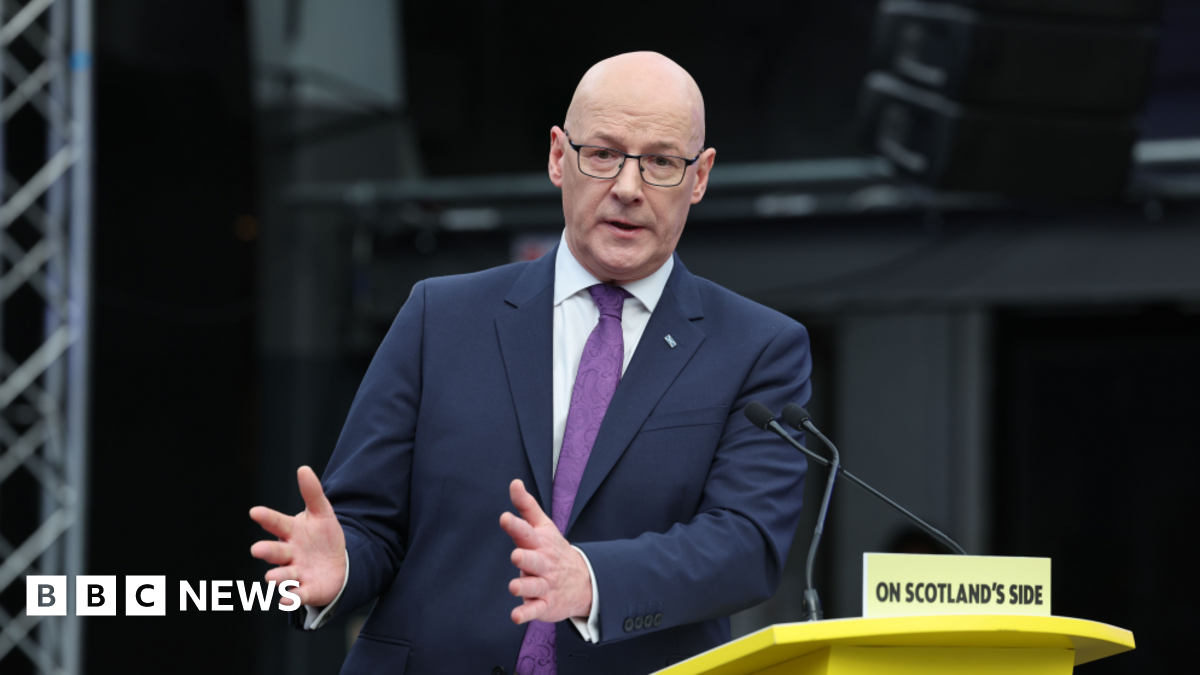
John Swinney says an SNP government would set up a
“maximum price for essential food items”, listing bread, milk, cheese,
eggs, rice and chicken as examples.
How would this work?
Mr Swinney believes the government can do this by using its public
health powers, in a similar fashion to their move to put a minimum price on
alcohol sold in shops.
It would work by requiring supermarkets to offer one example line
of a set group of essential items at a capped price. Shops could still sell
other varieties of the same item at higher prices.
The latest figures published by the Office
for National Statistics, external show the UK’s inflation rate (the annual
percentage change in prices) for food and non-alcoholic drinks was 3.3% – this
means food prices were 3.3% higher in February 2026 than they were in February
2025.
The UK government has been drawing up
worst-case scenario plans for potential food shortages if the Iran war
continues.
It is worth nothing that the minimum unit pricing system cited by
Mr Swinney took
six years to come into force, due to legal challenges in the courts.
He has acknowledged there is a “live issue” in terms of the
potential impact on farmers and food producers as well as owners of small
shops.
And there is a constitutional hurdle in the UK Internal Markets
Act, which seeks to maintain a level playing field for businesses north and
south of the border.
It means Scottish ministers would likely need an exemption from
internal market rules in order to set this system up.
There have been clashes over this before, with Scottish plans for
a deposit return scheme to promote recycling bottles and cans having to be kicked
into the long grass after a row over internal market rules with the
previous Conservative UK government.
The SNP has urged UK ministers not to “block” the plans.