
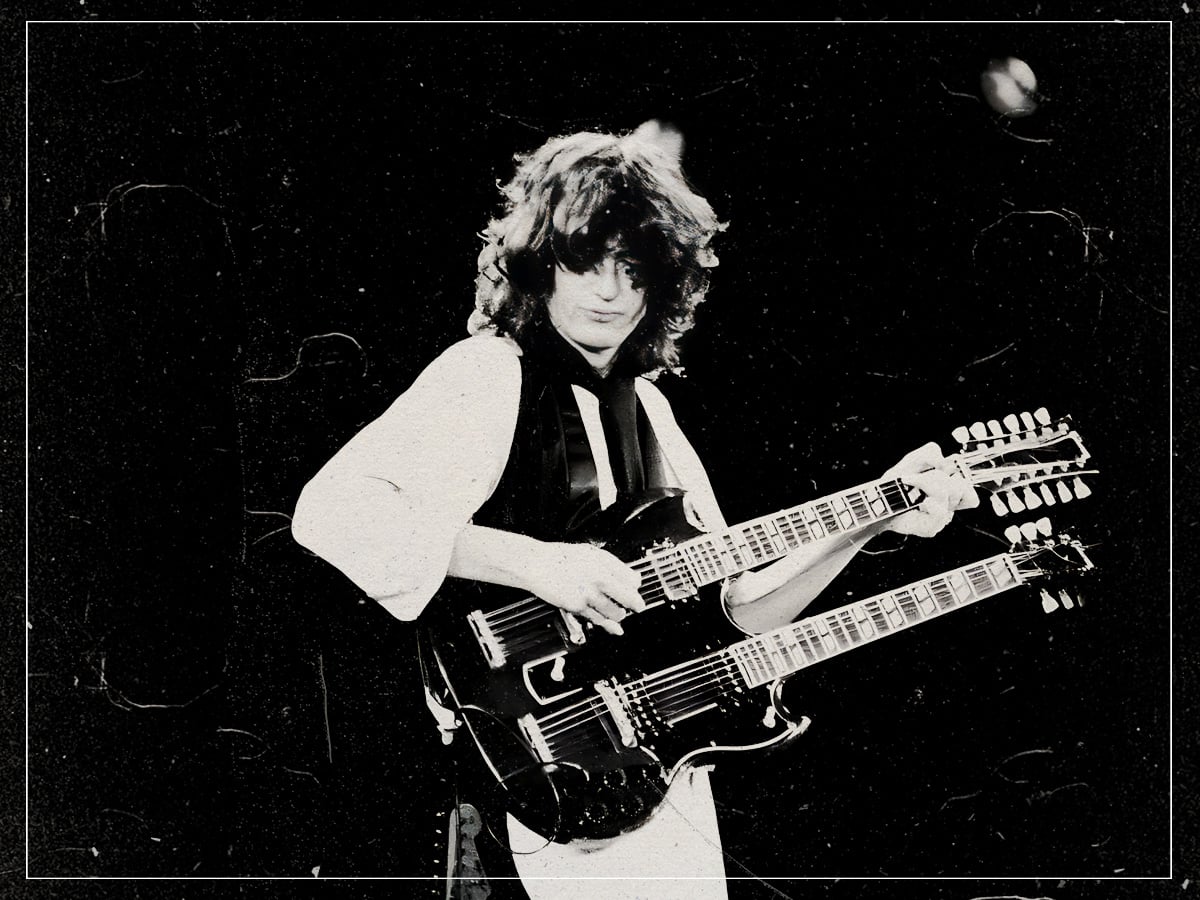
(Credits: Far Out / Andrew Smith)
Thu 16 April 2026 21:54, UK
Throughout the 1970s, Led Zeppelin was pumping out classics faster than most other bands could only dream of. Fresh off working in The Yardbirds, Jimmy Page had a vision to make a band bigger than any blues act on the scene, drafting in Robert Plant, John Paul Jones and John Bonham to create rock and roll history. Although the initial records came together like second nature, it wouldn’t get any easier as the years passed.
After the massive undertaking that went into the album Physical Graffiti, the wheels started to come off during the recording of Presence. With Plant confined to a wheelchair after a car accident, most of the record didn’t have the same bite that Zeppelin’s earlier albums were known for, with ‘Achilles Last Stand’ being one of the only highlights.
That kind of momentum is hard to sustain when everything around the band starts to shift. For years, Zeppelin had operated like a perfectly tuned machine, each member feeding off the other’s instincts, but the cracks that began to show were less about creativity and more about circumstance catching up with them.
The further they moved into the latter half of the decade, the less it felt like four musicians charging in the same direction and more like individuals trying to keep the whole thing from unravelling. Injuries, exhaustion, and the sheer weight of expectation all began to take their toll, making the studio feel less like a playground and more like a pressure cooker.
By the time they reached Presence, that tension had seeped into the music itself. The urgency was still there, but it came from a different place, not the thrill of discovery but the need to hold onto something that had once felt effortless, even as it threatened to slip through their fingers.
 (Credits: Far Out / Alamy)
That kind of momentum is hard to sustain when everything around the band starts to shift. For years, Zeppelin had operated like a perfectly tuned machine, each member feeding off the other’s instincts, but the cracks that began to show were less about creativity and more about circumstance catching up with them.
The further they moved into the latter half of the decade, the less it felt like four musicians charging in the same direction and more like individuals trying to keep the whole thing from unravelling. Injuries, exhaustion, and the sheer weight of expectation all began to take their toll, making the studio feel less like a playground and more like a pressure cooker.
By the time they reached Presence, that tension had seeped into the music itself. The urgency was still there, but it came from a different place, not the thrill of discovery but the need to hold onto something that had once felt effortless, even as it threatened to slip through their fingers.
As the band began working on their follow-up, In Through The Out Door, Page had problems with the additional instrumentation coming into the picture. While bringing in a synthesiser on tracks like ‘All My Love’ seemed novel then, Page would later call the song one of the lesser moments in Zeppelin’s catalogue.
When talking about the track, Page said: “I could just imagine people doing the wave and all of that. And I thought, ‘That is not us. That is not us’. In its place, it was fine, but I would not have wanted to pursue that direction in the future”. Unfortunately, Zeppelin would never know what a future past ‘All My Love’ would be.
After announcing their upcoming tour supporting the album, all activities regarding the band ended when John Bonham was found dead in Page’s home. During a night of heavy drinking, ‘Bonzo’ had fallen asleep and choked throughout the night, ruling his death to acute alcohol poisoning.
Not wanting to face a future without Bonham behind the kit, the band dissolved, with each member going their separate ways. Though Plant would work on his solo career and Page would team up with Paul Rodgers of Bad Company on the side project The Firm, there was still some unfinished business in the Zeppelin camp.
Needing one more record, Zeppelin went into the studio to create one final statement. Scraping together bits and pieces of what they had been working on before Bonham’s death, Coda served as an epitaph to rock’s heaviest band at the time, featuring alternate takes of blues staples like ‘I Can’t Quit You Baby’ and a track dedicated to Bonham’s playing called ‘Bonzo’s Montreux’.
Looking back on the record, Page would consider the album one of the most challenging endeavours of his professional career, telling The Guardian, “It was a difficult album. People say: ‘What was the most difficult album?’ and that was it.”
Since the band was pulling from different areas of their back catalogue, Page found it challenging to assemble a coherent record from the table scraps. Despite its lukewarm reception among fans, Page felt that it has earned its place in Zeppelin’s core catalogue, explaining, “It was what it was, but it wouldn’t have gone out if I hadn’t thought it had a place. But it was a difficult one to do and put together.”
ADD AS A PREFERRED SOURCE ON GOOGLE  The Far Out Led Zeppelin Newsletter
All the latest stories about Led Zeppelin from the independent voice of culture.
Straight to your inbox.