
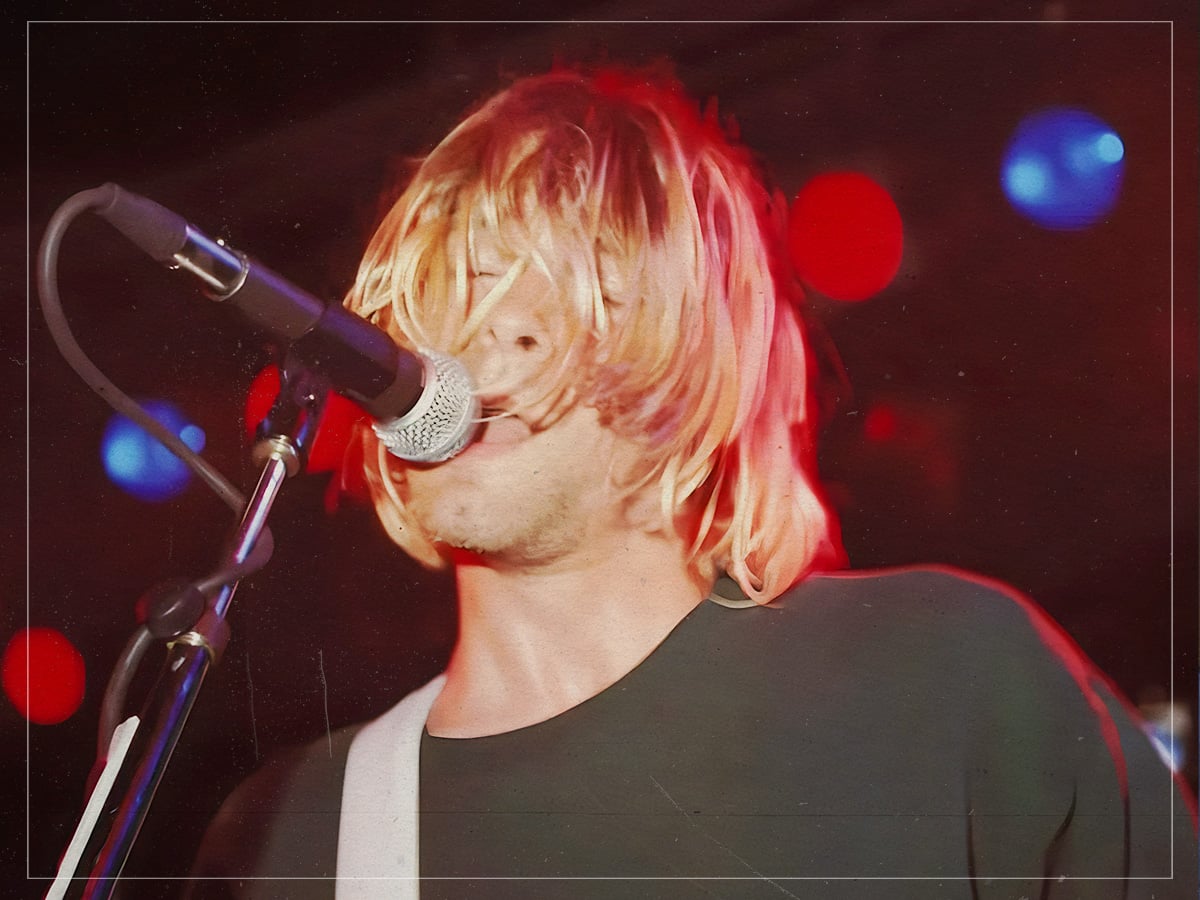
(Credits: Far Out / Alamy)
Fri 17 April 2026 11:02, UK
Rock bands and those who end up in the spotlight often leave a lot to be desired. Bathed in such incandescent public glare, it is easy to find foibles worth pointing out; Kurt Cobain knew that first-hand.
As Nirvana became a global hit, the spotlight trained on his every move. As he fell in love with his wife, Courtney Love, the light flickered, ready to pounce; the tabloids highlighted his notorious substance abuse issues. As they welcomed their child into the world, the scrutiny grew and grew.
The truth is, as someone in the limelight, it is insanely difficult to be a completely perfect person. It’s hard to do without the limelight. But, for the most part, not only did Kurt Cobain talk the talk of anti-establishment egalitarianism in a world that seemed intent on eating itself and selling the soft stool it produced, but he walked the walk.
That tension between expectation and reality is where Cobain seemed to exist most of the time. The more people projected their ideals onto him, the more impossible it became to live up to them, especially when he was already grappling with his own internal struggles.
Rather than retreat from that pressure, though, he leaned into it in a way that felt almost confrontational. If people were going to scrutinise him anyway, he might as well use that attention to say something that mattered, even if it meant exposing his own contradictions in the process.
It’s part of what made his voice resonate so strongly in the first place. Cobain wasn’t presenting himself as a finished article or a moral authority; he was figuring things out in real time, and that honesty gave weight to everything he chose to stand up for, even when the spotlight threatened to swallow him whole.
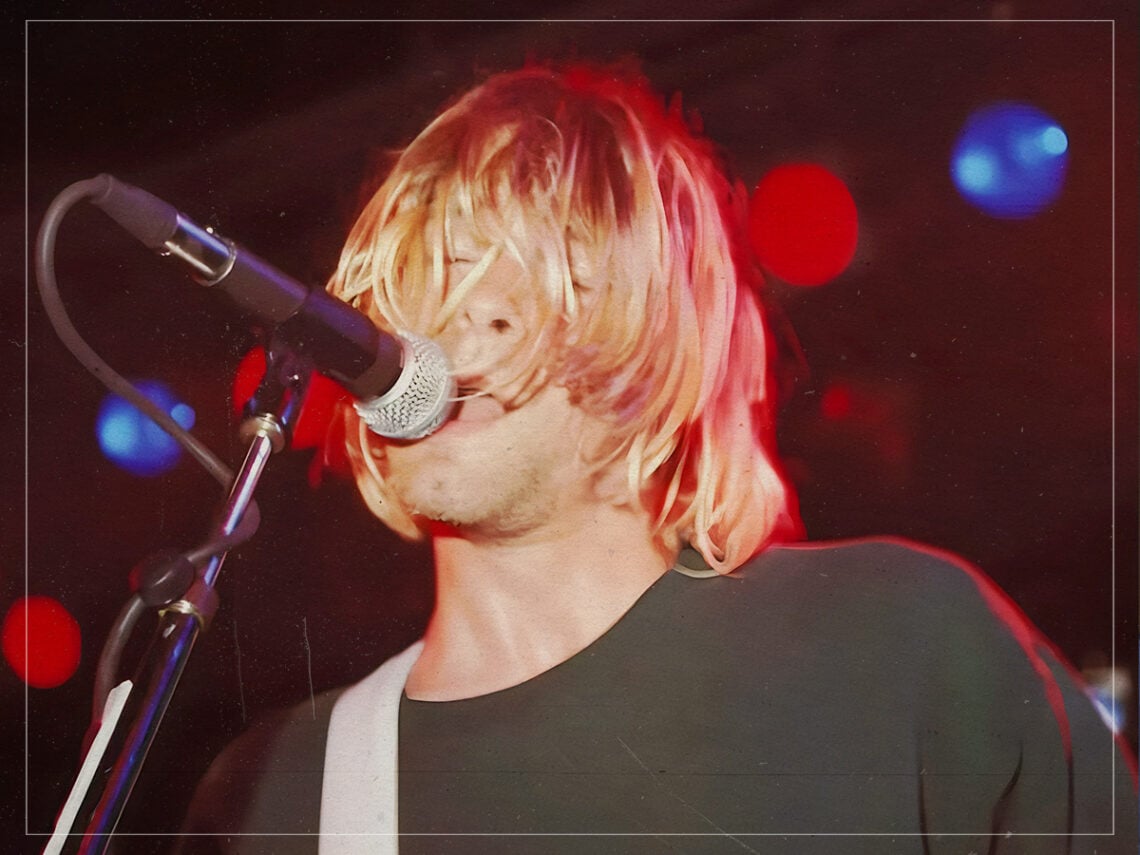
 (Credits: Far Out / Alamy)
“Rock ‘n’ roll has been exhausted,” Kurt Cobain said as Nirvana were rising to prominence, “But that was always male rock ‘n’ roll. There’s a lot of girl groups, just now, within the last few years. The Breeders and the Riot Grrrls all have a hand in it. People are finally accepting women in those kinds of roles.” In part, this was because Cobain used his platform to champion them to ensure that they got the share of the spotlight that they justly deserved.
The progressive frontman continued: “I am definitely a feminist. I’m f–king disgusted by the way women are still treated. It’s 1993, and some people still think we’re in 1950s. We need to make more progress. There needs to be more female musicians, more female artists, more female writers. Everything is dominated by f–king males, and I’m sick of it!”
Sadly, rock ‘n’ roll had proved part of the problem here. When you reconcile a lot of classic rock, there is an underlying current of sexism. Even when it comes to the seemingly well-meaning like Neil Young’s ‘A Man Needs a Maid’ or The Beatles’ ‘You Can’t Do That’, damaging notions are perpetuated. And then there is the brand of classic rock that purely sexualises women and simply positions them as the play-things of frontmen in trousers two sizes too tight.
Cobain was hoping to bring about a rather different viewpoint for rock when he spearheaded a considered brand of grunge. He considered morals to be an important tenet of good rock ‘n’ roll, and the Nirvana man thought that Led Zeppelin’s and Aerosmith’s were questionable.
“Although I listened to Aerosmith and Led Zeppelin, and I really did enjoy some of the melodies they’d written, it took me so many years to realise that a lot of it had to do with sexism,” Cobain remarked to Rolling Stone in 1992. “The way that they just wrote about their dicks and having sex. I was just starting to understand what really was pissing me off so much those last couple years of high school.”
Cobain thought that this compromised the music, and he was looking for something a little bit more inclusive, progressive and pointed. “And then punk rock was exposed, and then it all came together,” Cobain continued. “It just fit together like a puzzle. It expressed the way I felt socially and politically. Just everything. You know. It was the anger that I felt. The alienation.”
Previously, he had liked the energy of the classic rock bands he soon turned against when a greater education on the matter came his way. He figured that these acts were lacking when it came to profundity and purpose. When punk came along and illuminated another way, he distanced himself from the two bands he once admired and looked to propagate music with a sense of inclusivity at its core and an earnest view of introspection.
He wanted to use his music as an architect of change, vivifying the youth with a new revolution. “My generation’s apathy, I’m disgusted with it,” he said. “I’m disgusted with my own apathy too, for being spineless and not always standing up against racism, sexism and all those other -isms the counterculture has been whining about for years.”
ADD AS A PREFERRED SOURCE ON GOOGLE  The Far Out Led Zeppelin Newsletter
All the latest stories about Led Zeppelin from the independent voice of culture.
Straight to your inbox.