
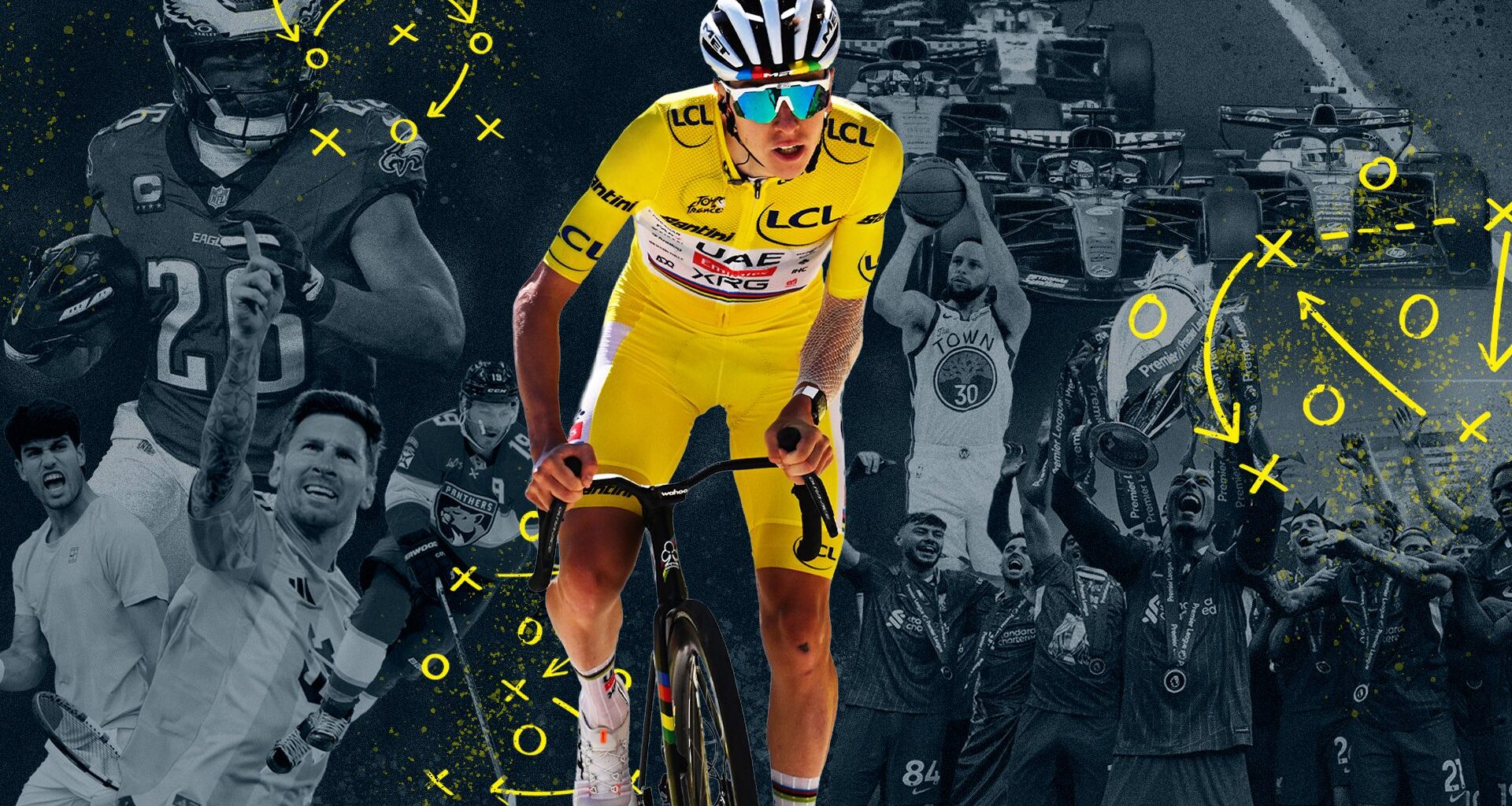
Professional cycling is a thrilling, entertaining sport, packed with drama and intrigue, contested by incredible athletes on spectacular roads and mountains around the world. Yet at the same time, it is often dangerous, financially precarious as a business and reluctant to innovate, living on its history rather than building a new future.
Many fans and those within the sport know that professional cycling must evolve or risk further decline. Various projects, ideas and reforms to every aspect of the sport have been proposed over the years, but divisions, power struggles and arguments have hindered change.
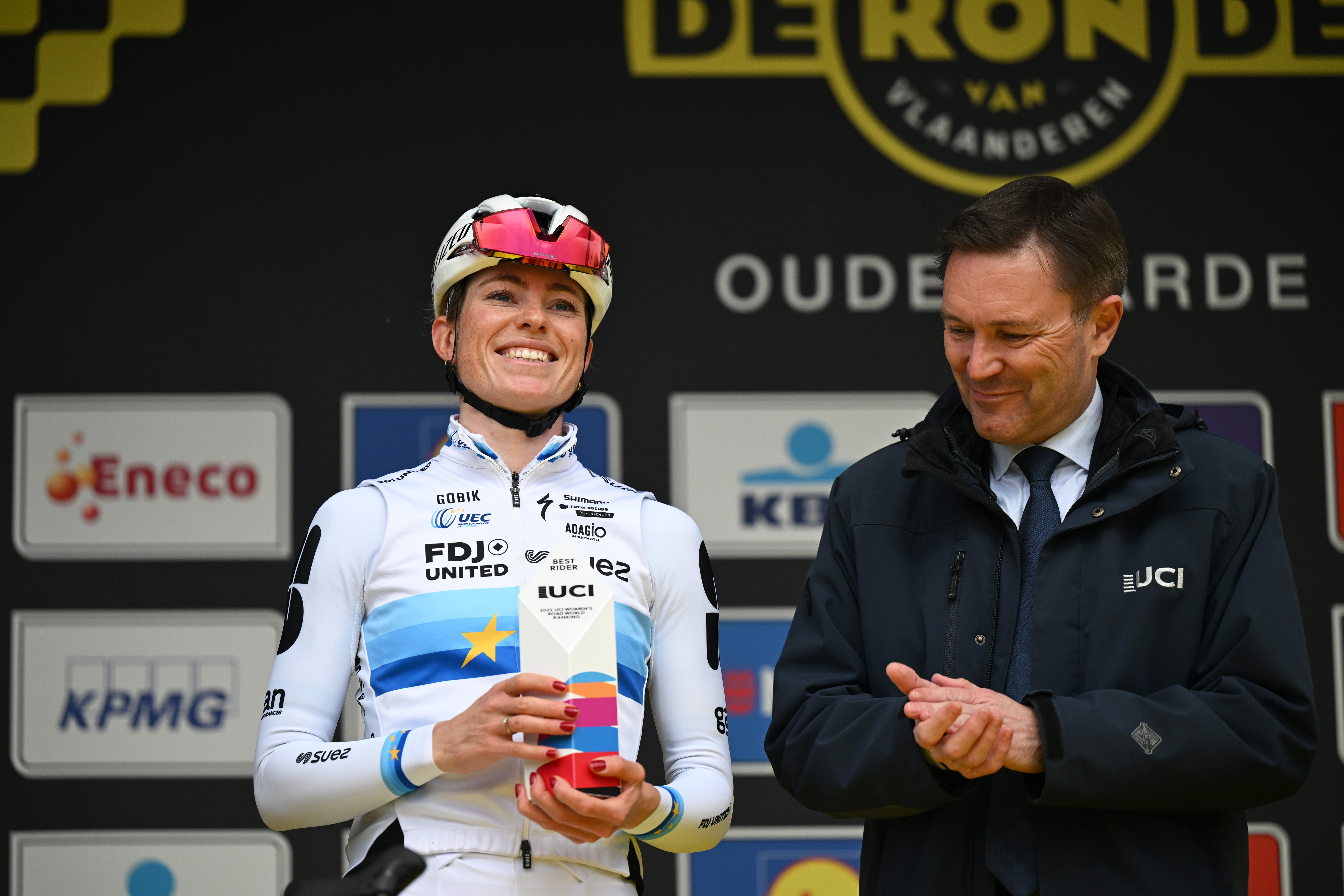
David Lappartient alongside Demi Vollering at the 2026 Tour of Flanders (Image credit: Luc Claessen/Getty Images)
Formula 1, North American sports like the NBA and NFL, professional tennis and soccer all have their own problems, but do not appear afraid of change. Importantly, they are run as sports-entertainment businesses, generating profits for their owners and generally satisfying the desire of new and old fans.
Of course, the pursuit of higher revenue and profit means someone has to pay, and that is usually the sport’s fans. Professional cycling is seen as a free spectator sport, with a general reluctance to charge fans to watch a race from the roadside. Instead, cycling fans indirectly ‘fund’ the sport through advertising, broadcasting, buying the tech that teams use, and spending money on the local economy at races. Other sports are becoming increasingly expensive to follow, but cycling’s business model and the power struggles slow the development of new revenue streams, while team budgets and riders’ salaries increase year on year.
To understand what might come from this consultation process and how pro cycling can learn from other sports, across a two-part in-depth feature, Cyclingnews spoke to several stakeholders within the sport, all of whom are adamant that cycling needs to evolve if it wants to avoid being left behind.
“Sports are constantly evolving. Anybody who’s a traditionalist and thinks we have to keep doing as we have always done is a fool,” former rider turned gravel privateer and respected blogger Michael Woods told Cyclingnews.
“We need to realise that everything constantly changes, so we as a sport have to change too. If we don’t evolve, then the sport will become a relic.”
The importance of good governance
People often ask me why I write about the governance of professional cycling for Cyclingnews, suggesting it is boring and that nobody really cares about the sport’s politics. “Nobody wants to see how the sausage is made” is an often-used idiom.
However, I believe they are the foundation on which the sport is built. If the sport’s principles and rules are weak, the whole sport loses out and will never reach its full potential.
The UCI – which is part of the International Olympic Committee and benefits from Olympic Games profits – governs the whole sport, including professional cycling, and sets rules and regulations on everything from team sizes and the race calendar to sock height, rider contracts, and the sport’s business model.
Most other major professional sports are run more like a business, with all key stakeholders serving as part-owners and investors in the project and commercial entity that runs the business. This includes sports with Olympic origins that have developed and grown commercially and economically over time, massively boosting the sport’s revenue and turnover.
However, cycling has developed a different, more fractional and frictional business model over the last 120 years, which has changed little, even as other sports boom. Long-standing race organisers like Tour de France owner, ASO, are especially influential, both economically because they own the biggest race in the sport and politically because they dominate the AIOCC race organisers association.
The teams come and go and are largely funded by sponsorship from brands seeking a return on investment, or, more recently, from state entities and their sovereign-fund-controlled companies. Riders usually sign short-term contracts with teams and so have a precarious, almost mercenary role in the sport.
“The UCI is not really designed to govern a professional team sport. The UCI president is elected by national governing bodies worldwide, many of whom have never been to a true high-level professional bike race,” EF Education Pro Cycling team manager Jonathan Vaughters told Cyclingnews.
“It’s not that the UCI is bad at what they were built to do. It’s that they are not purposely built for professional team sports.
“The teams don’t elect the president, we don’t really have legislative power, we don’t have the power to vote. We’re just like a little kid screaming in the corner. That’s why David doesn’t like us very much…”
In the early 1990s, the leading English football clubs sparked a revolution by breaking away from the Football League, the traditional governing body in Britain, and launching the Premier League. They agreed to follow the national and international rules of the sport, but created a commercially independent company, agreed a revolutionary broadcasting deal with Sky television and have since grown exponentially. It was British soccer’s big bang moment.
The Premier League has become the wealthiest division in the world, attracting the best players, with its top teams regularly fighting for the biggest trophies, allowing them to generate more wealth and offer higher salaries. These clubs have also been able to invest in new stadiums, offering better facilities to their fans. However, some supporters argue that their love of the sport and their club loyalty have been squeezed for every penny of possible revenue by the teams, sponsors and broadcasters.
Premier League football is now watched and followed around the world and generates huge global revenues. The division’s 20 clubs generated an aggregate revenue of approximately £6.3 billion in the 2023/24 season, with Gross Value Added to the UK economy (the value of goods and services of a sector) calculated at £9.8 billion.
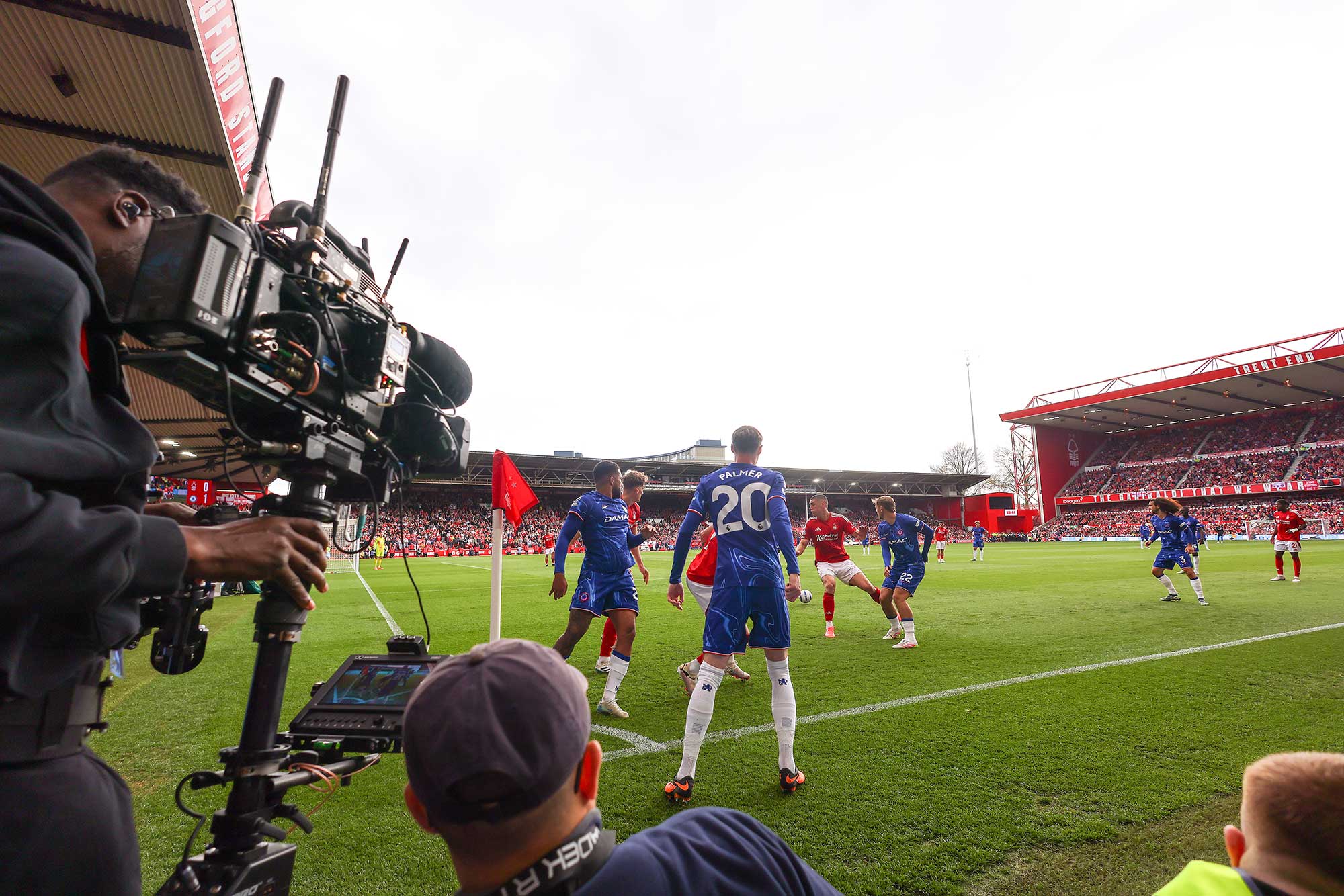
Between 2025 and 2029, the domestic television rights deal for the Premier League is £6.7 billion, with the international rights deal not far behind (Image credit: Robbie Jay Barratt – AMA/Getty Images)
Vaughters is a former president of the AIGCP teams association and has been a team manager for 20 years. He is convinced that professional cycling needs to be run by an independent company, like the Premier League and the NFL, with every stakeholder a shareholder, working together for the good of the sport, or at least to grow the revenue of the sport.
However, that has never happened in professional cycling.
“The UCI doesn’t want that to happen. They don’t like it, and ASO certainly doesn’t like that,” Vaughters said. “The UCI should realise that they would be much more financially healthy if they created a separate arm or body to deal with the professional side of the sport.”
A change in the governance of professional cycling and the creation of a new, commercially driven company to manage the business of pro cycling could spark a new era and create a new business model. However, that is the least likely to happen in the coming months under the UCI’s reform process.
Making a billion-dollar business benefit everyone
Professional cycling is a billion-dollar business built on sand, as the tide rises and the global economy whips up the waves.
The biggest race organisers are profitable companies, with ASO, which also runs non-cycling events such as the Dakar Rally, generating at least €250 million per year from cycling and posting a profit margin of close to 40%. Smaller organisers struggle and often only survive thanks to state and regional funding, volunteers and the grassroots love for the sport.
The average team budget has risen to €33 million for 2026, with the median salary for a self-employed WorldTour rider up to €350,000. However, teams do not generate a profit and often overspend as they try to win races, score UCI ranking points, and retain their three-year WorldTour licences.
The biggest North American professional sports, such as the NBA, the NFL, and the NHL, are collectively owned by the teams, with a CEO or Commissioner to manage the business. A new business model for professional cycling could be similar, with race organisers and teams working together as investors and shareholders, leaving the UCI to play a regulatory role.
European sports are historically rooted in sporting merit, promotion and relegation and the inherent financial risks of that system. North American sports have permanent franchises, salary caps and are run as profitable businesses. They are two very different business models.
Formula 1 also has a franchise structure, with team values surging in recent years, with the average team valuation at $3.4 billion. In comparison, Ralph Denk reportedly sold his successful WorldTour team to Red Bull for just €10 million.
“There’s no intrinsic value to the asset in cycling because the asset is only a three-year license, controlled by the UCI and their rules. It’s worth nothing,” Vaughters said.
“Some of the biggest franchises have negative cash flow and debt. Yet, they are worth billions. Why? Because the franchise itself has value. It has permanency.
“In pro cycling, we seem to think that we are all in competition with each other. The teams are fighting each other on the road, the organisers are fighting the teams, the teams are fighting with the UCI, it’s just a constant battle. But we are not each other’s competition.
“Fighting for victory out on the road is healthy. Where it’s not healthy is on the business side, in the boardroom. Our competition is F1, our competition is Netflix. Our competition is any other sport and any other form of entertainment. Competing against each other is stupid and short-sighted.”
F1 has boomed under the ownership of US company Liberty Media, doubling revenue to $3.41 billion in 2024, with reported profits of $791 million, according to sports business media reports. As revenue increased, Liberty Media convinced the teams to accept a budget cap to try to limit spending and level the playing field.
Top constructors like Ferrari were historically paid a higher share of television rights, but the F1 budget cap limited that, with exceptions for driver salaries, engine costs and some other costs. The 2026 cap is €199 million. New rules on car design and racing have sparked debate and push-back from drivers and die-hard fans, but F1 continues to innovate and modernise, growing its profitability and wider appeal.

Formula 1’s revenue has doubled since Liberty Media took over 2017 (Image credit: Clive Rose – Formula 1/Getty Images)
The UCI said in 2024 that it was considering some form of budget cap to level the playing field between the so-called super teams, like UAE Team Emirates-XRG, with budgets close to €50 million per season, and those who struggle to compete on half that figure.
The biggest, wealthiest team and their riders are against a budget cap because they do not want any limitations on their spending and the dominance it brings. They claim the sport should welcome more major sponsors, not limit spending, often forgetting that they were once a small team struggling to compete or desperately looking for sponsors to cover their budget.
Late last year, Lappartient claimed that the teams voted against the idea of a pro cycling budget cap, saying they demanded a better ‘model’ for the sport before accepting any change.
It was another example of the power struggle and how the fight for control of the sport slows business development. Like in a hectic, high-speed sprint finish, nobody is willing to give an inch, fearful of helping a rival find a way through to victory.
The Tour de France dominance
It is widely acknowledged that the Tour de France generates 80% of a team’s television exposure and sponsor visibility. A team’s annual sponsor visibility, and so the funding is justified based on their results each July.
The Tour de France is what Wimbledon is to tennis: the Super Bowl of cycling. Without the global visibility of the Tour de France, pro cycling would be a niche sport. But that imbalance and near-monopoly over the sport’s wealth have shackled the growth of professional cycling.
“Let them eat cake,” Tour de France race director Christian Prudhomme and ASO CEO Yann Le Moenner perhaps say whenever teams ask about revenue sharing and complain about rising costs. ASO believes they created the current revenue and value of professional cycling and so deserve to control the business model.
Vaughters accepts that a shake-up of pro cycling and the adoption of a more commercially driven, franchise model would have to involve ASO, perhaps even giving them a majority stake.
It would be more revolutionary than the storming of the Bastille, but it could see the sport grow commercially and compete against other sports and forms of entertainment.
“Fundamentally, if you’re going to change the entire business model of cycling, it really needs the Tour de France to be part of that,” Vaughters admitted.
“Sadly, I don’t see it happening. Nobody is getting along, but that’s a really dumb place to be, and unfortunately, the sport has pretty much been in that dumb place since about 2006.”
Despite the UCI blocking the One Cycling project, Vaughters believes in the underlying strategy of cycling’s stakeholders working together.
“Essentially, there have to be enough teams to just come together, create a corporation and put on a race and sort of demonstrate that the unified model works, then we might see some changes,” he concluded.