
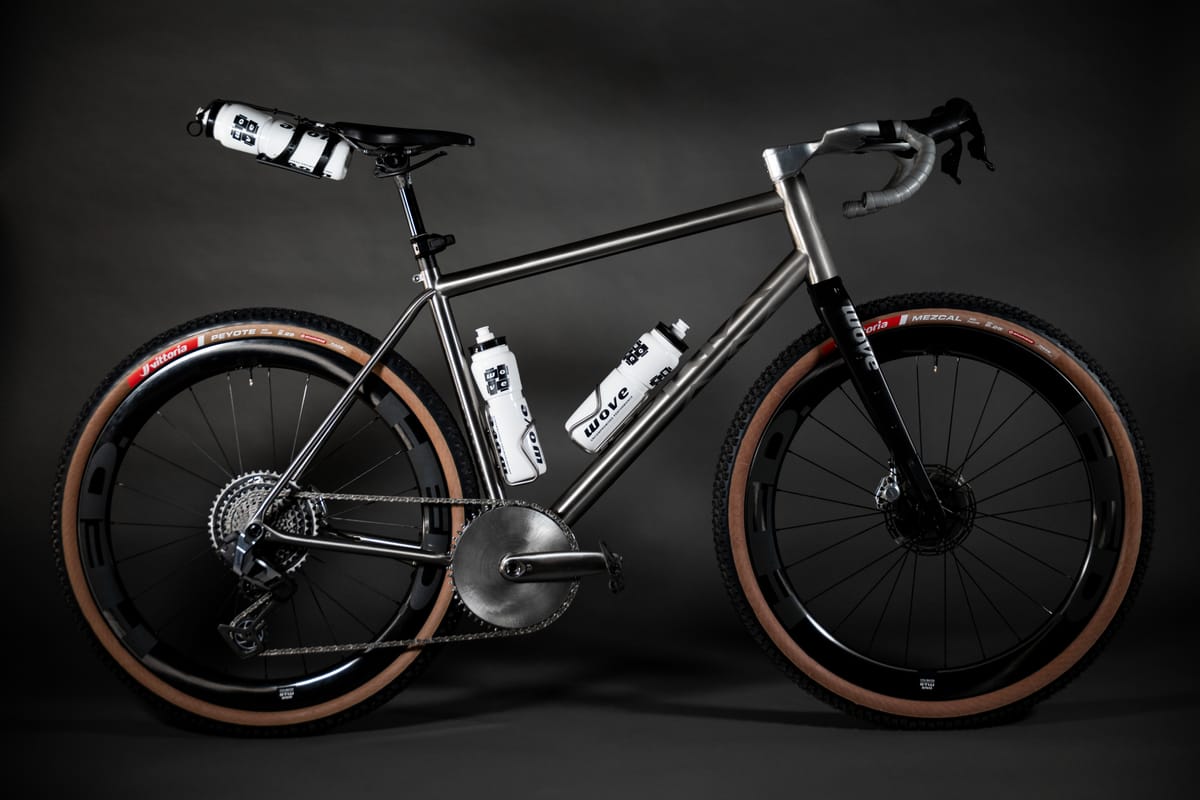
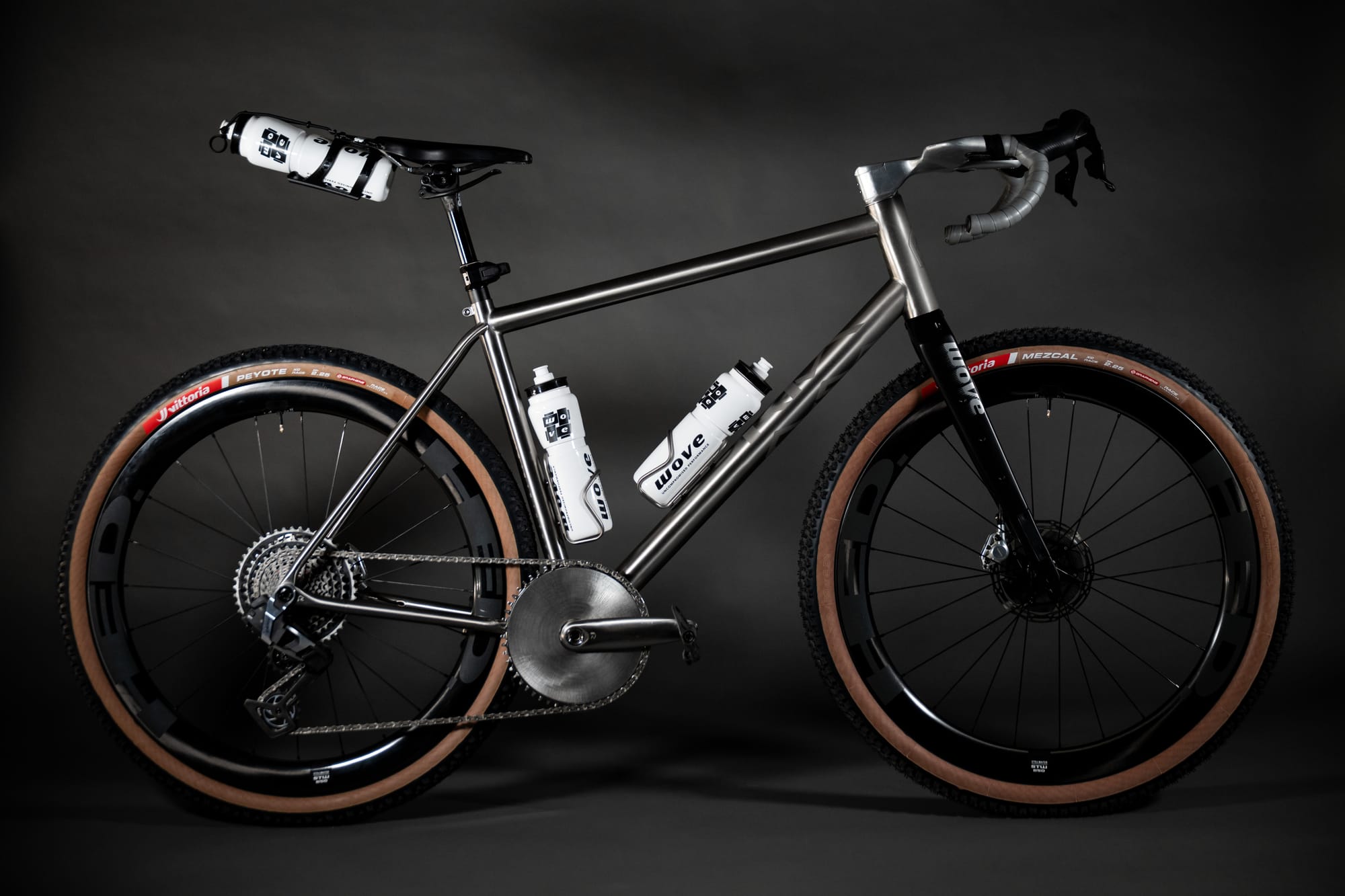
Rethinking road+gravel bike geometry through a collaborative build between Wove, Rise Bikes, Speeco, HED, and Simmons Racing.

Wove Bike, Cor Vos
Disclosure: All the voices in the article, including that of the author (founder of Wove), represent or are affiliated with commercial brands in cycling. Given the number of voices involved we elected not to assign a single byline to it.
The Joy Rides series on Escape Collective remains a place to share enriching stories through the bike, or in cases like these, simply giving a platform to show off a nice bike and/or interesting tech from the point of view of its creator. As always, Escape remains free from sponsored content or the like.
I’m Nick from Wove, and this year’s Joy Ride bike build is a continuation of the Joy Ride I wrote about last year. With that build, I took a stock frame and used a forward-offset dropper seatpost, and a set of Speeco bars with a 200 mm long stem to accomplish a sustainably powerful and aero position that also happened to earn that bike some love from bicyclepubes.
This year, the Joy Ride bike I built for myself goes a step further with a geometry that serves as a call to action for road+gravel bike geometry to progress. Escape Collective’s Ronan Mc Laughlin recently wrote about the major overhauls a minority of bike manufacturers have made to their road frame geometries and he concludes, “The combination of a focus on outright aero and progressive geometry will become the new benchmark.” I agree.
My little company’s ethos has been to create a product that allows the rider to be comfortable in any position, at any speed. I feel that’s being accomplished with the products I make, but the bike frames my saddles are mounted to are lagging behind with antiquated geometries. The motivation behind my Joy Ride is to show a bike that, like my saddles, allows the rider to be comfortable in any position, at any speed.
Before I jump into the specifics of our Joy Ride build, check out the video below where Olympic cyclist Grant Koontz tests my Joy Ride bike. You’ll see the geometry in motion, and get a front row seat into the type of thinking that is behind the current zeitgeist shift in road+gravel bike geometry.
With this year’s build, I use a suspension-corrected fork to add space over the front wheel and reduce headtube height. The bike has a trail of 63 mm which has been great when riding at speeds over 15 mph – I’ve never been a fan of trail and wheel flop being assessed at parking lot speeds. That’s like assessing a Ferrari in a parking lot. I’m 6’ 1” and chose a wheelbase for this Joy Ride bike of 1,143 mm. That’s significant considering today’s manufacturers don’t seem willing to go over a wheelbase of 1,080 mm for performance road/gravel bikes. The thing is, I feel I could have extended the front center 10 mm further. That would bring the total bike length to 7 mm under the UCI limit of 1,850 mm.
Last year I used a dropper post for on-the-fly knee angle adjustability, and this year I’ve gone a step further and added a mechanism for on-the-fly saddle angle adjustability because I believe that the rider’s position on the bike can be adjusted throughout the effort to maximize performance.
From last year’s to this year’s build, I shortened the stem from 200 mm to 120 mm, steepened the seat tube angle to 75°, extended the frame reach to 474 mm and placed the bottom bracket drop at 75 mm to get our body a touch more out of the wind and for good cornering ability. I also brought the bar stack height down 55 mm from last year with a frame stack of 638 mm and a stem angle of -10°. This bar stack allows for a high hand position that closes the gap between the hands and the face when the rider’s forearms are horizontal. Last, I retained the ability to run 2.25” tires with a 1x 54T chainring and narrow Q-factor of 148 mm – see last year’s article to read how this impossible combo was accomplished.
While this bike can get rowdy, this is a progressive road bike geometry, as indicated by the bottom bracket drop discussed above. The narrow width and flare of the Speeco bars are not UCI-legal, but the remainder of the bike is within UCI regulations. I outfitted this bike with two sets of wheels – for the road, I focused on maximizing aerodynamics with the HED Vanquish Pro V62 wheels which have a 22.4 mm internal diameter, paired with 32 mm Vittoria Corsa Pro tires. For gravel, I kept it aero and went wide with HED Stillwater G50 wheels that have a 28.5 mm internal diameter. I’m using 29 x 2.25″ Vittoria Mezcal front and Peyote rear tire yielding to the findings in Escape’s rolling resistance testing.
Like last year, this article is a collection of voices with a focus on the thinking behind this progressive road/gravel bike geometry and the parts that make this position possible.
Enjoy!
This post is for subscribers only
Subscribe now
Already have an account? Sign in
Did we do a good job with this story?
👍Yep
👎Nope