
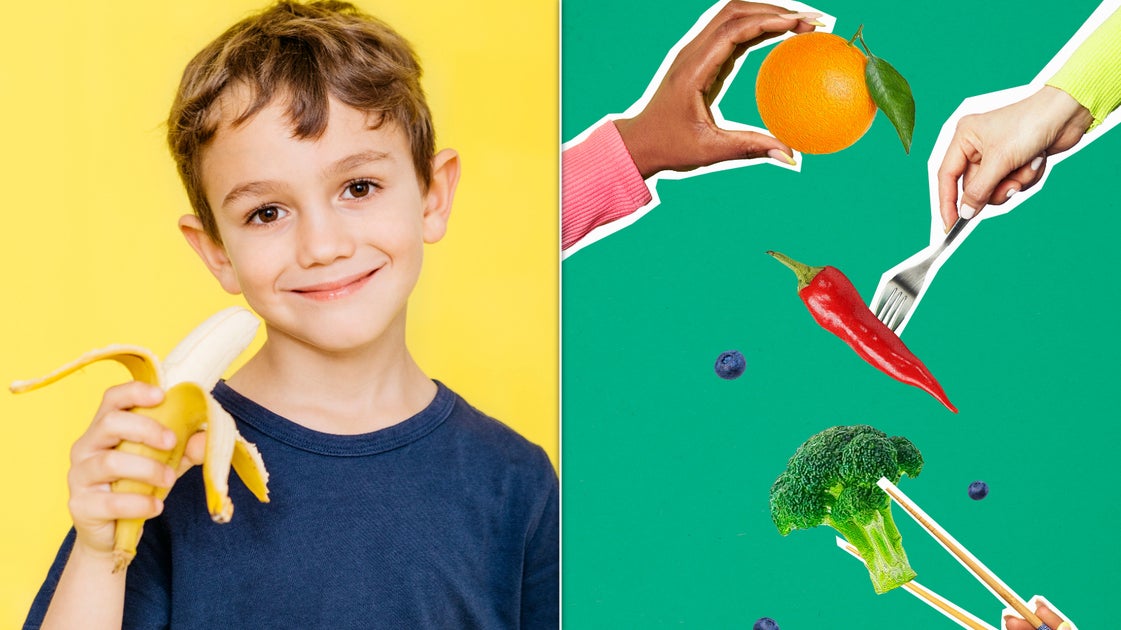
While the previous federal dietary guidelines specified how many fruits and vegetables kids and adults should consume, the new ones released by the U.S. Department of Agriculture are a little more vague. Some nutrition experts say they take away some of the specific guidance that could help parents know how much produce to feed their children.
About half of children under 5 already struggle with this — they don’t consume fruits or vegetables every day, according to a 2024 study. Daily fruits and vegetables are essential for “healthy growth and brain development,” and encouraging kids to eat them can influence how much produce they consume as they get older and promote lifelong health, according to the Centers for Disease Control and Prevention.
“Fruits and vegetables are critical for not only brain development, but also immune function, growth and development,” Stephanie Hanne, a clinical dietitian at Children’s Hospital Los Angeles, told HuffPost.
“Inadequate fruit and vegetable intake is certainly an issue, especially in children and adolescents who are undergoing rapid growth and development, because not only does the body need the nutrients to grow and develop, but also to learn, remember what was taught, and expand upon education,” she added.
Here’s what to know about how this could affect children’s brain (and overall) health, how many fruits and vegetables they should eat each day, and how to encourage kids to eat these foods.
What the new dietary guidelines say about fruits and vegetables for kids
The new dietary guidelines recommend that children ages 5 to 10 “focus on whole, nutrient-dense foods such as protein foods, dairy, vegetables, fruits, healthy fats and whole grains.” They also encourage fruits and vegetables, full-fat yogurt and cheese, and legumes for kids under 5, and leafy greens, dairy, and “iron-rich animal foods” for adolescents ages 11 to 18.
These recommendations are “great and are what is desired for all children and the population in general,” Hanne said. “However, the new guidelines took away the specifics that previous MyPlate guidelines used to provide, and this is challenging for families because they do not have a good, science-based reference to go to when they are unsure about what and how much to feed their child.”

The previous MyPlate recommendations, released in 2011, suggested that half of your plate at each meal should be filled with fruits and vegetables.
The new recommendations may not work as well for families who “like definitive guidelines,” Jennifer Nasser, a registered dietitian and spokesperson for The Obesity Society, told HuffPost. But others, who “don’t like being preached to,” may appreciate them, she added.
Another issue, pointed out by John E. Lewis, a nutrition scientist and founder of Dr Lewis Nutrition, is that the new guidelines put too much emphasis on meat and full-fat dairy, and not enough on fruits and vegetables.
How many fruits and vegetables should kids eat?
Children ages 5-10 should eat 1 to 2 cups of fruits and vegetables a day, Hanne said.
One cup of fruit equates to an average-sized piece of fruit, a cup of chopped fruit, a half cup of dried fruit, or a cup of 100% fruit juice, she said. But the preference is for whole fruit or fruit pieces over dried fruit or juice.
A cup of vegetables is one average-sized whole veggie, a cup of cut vegetables, 2 cups of raw leafy greens, or a cup of 100% vegetable juice — also with a preference on whole veggies over juice, Hanne added.
Fruits and vegetables have a real impact on kids’ brain health and development
Fruits and vegetables contain many nutrients, including antioxidants, B vitamins, vitamins A, C, and K, folate, iron and more, which support healthy brain development for kids, according to Harvard Medical School.
“These nutrients promote better mood, memory, immunity and cognitive function overall,” Hanne said. “Inadequate or poor consumption of fruits, particularly berries, and vegetables, especially when also linked with an increased intake of processed foods and fast foods, has been linked to poor cognitive function and scholastic performance.”
Specifically, Nasser said certain B vitamins, found in green vegetables, can “directly affect neuron functions and thus cognitive ability.”
While fruits and vegetables are crucial for children’s brain and overall health, Nasser said omega-3 fatty acids, found in oily fish, are also essential. Other nutrients that are important for brain health, such as protein, zinc, vitamin D, and choline, are found in meat, poultry, fish, and dairy, according to Harvard.
Overall, consuming more plant-based foods in childhood, including fruits, vegetables, legumes, nuts, and whole grains, could potentially prevent heart disease and other chronic health conditions later in life, Nasser added.
The CDC suggests introducing kids to healthy foods, including fruits and vegetables, early, which could encourage lifelong healthy eating habits.
“Get them started on many different fruits and vegetables as young as possible,” Lewis said, adding that it will “positively influence their taste buds and preferences.”
Often, when kids’ fruit and vegetable intake is low, they rely on less-healthy options such as ultra-processed snacks (like chips and cookies), high-sugar beverages (like sodas), and fast foods, Hanne said.
How to get your kids to eat more fruits and vegetables
Encouraging kids to eat more fruits and vegetables can sometimes be challenging, but research suggests simply introducing these foods can help.
A 2021 study published in Current Developments in Nutrition found that adding 50% more fruit and vegetables to kids’ side dishes at meals throughout the day led to a 24% higher veggie intake and 33% increase in fruit intake. And, substituting 50% more fruits and vegetables for other foods led to kids eating 41% more vegetables and 38% more fruits.
Here are some tips for increasing exposure to fruits and vegetables:
Play with your food. Hanne suggested creating designs with fruits and veggies — like banana-and-berry smiley faces or a rainbow. Or cut them into shapes like stars or hearts. Pair them with flavors kids like. For instance, Hanne said, if your child likes sour flavors, squeeze a lemon on veggies. Involve them. “Engage kids in food preparation of vegetable dishes,” Nasser said. Emphasize the sweetness. Lewis said blending fruits and vegetables into smoothies will feel like a “treat.” Nasser added that pureeing vegetables or cooking them in ways that bring out the natural sweetness can make them more palatable. Read books or watch videos where characters eat fruits and vegetables, Hanne suggested. Don’t cook separate foods for kids. Show them the same plate you make for yourself to continue exposing kids to a variety of foods, Hanne said. “Even if they do not try it the first time, it does not mean that they will never try it. Touching, smelling, or licking a fruit or vegetable is a step in the right direction.”
Adults (including parents, older siblings or cousins, and peers) should also model healthy-eating behaviors, Hanne said. “Show children that you like to eat fruits and vegetables, and they may want to try fruits and vegetables.”