
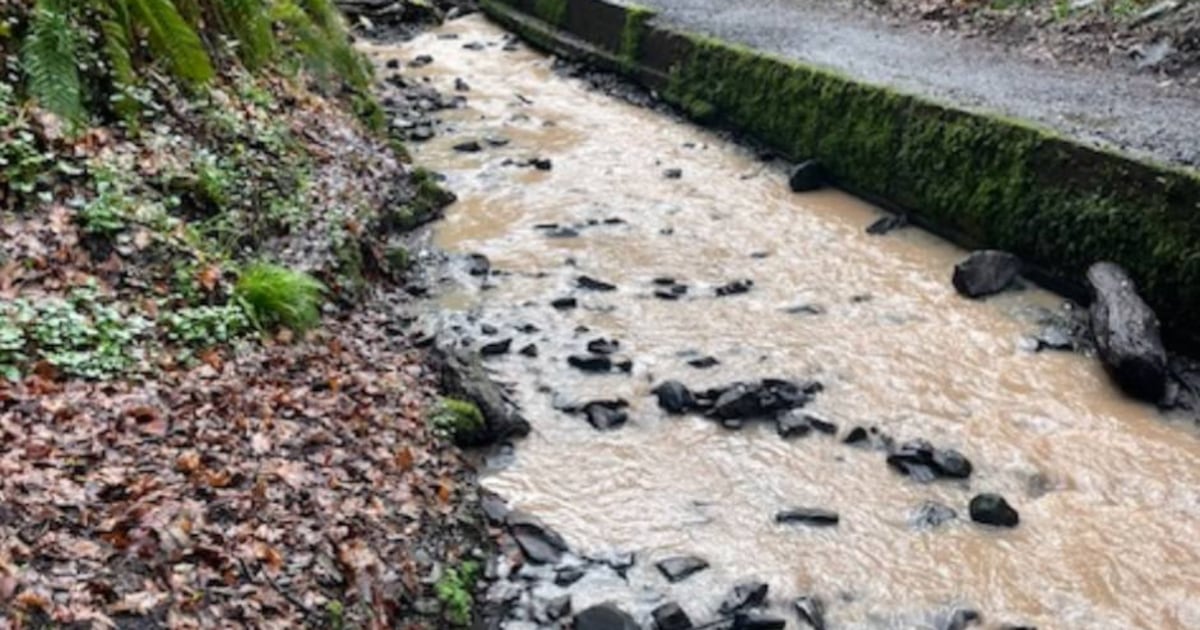
Belfast City Council is to seek legal advice in a bid to crack down on polluters at one of east Belfast’s most-loved beauty spots.
Representatives at a City Hall committee meeting this week backed a Green Party proposal to commission a report on pollution incidents at Cregagh Glen over the past two years, and to explore new legal enforcement measures that could be taken against offenders, including “cease and desist” powers.
The decision goes before the full council next month for ratification, where it is expected to pass.
Cregagh Glen, a publicly owned woodland in east Belfast managed jointly by Belfast City Council and the Woodland Trust, is home to a waterfall and an ancient fort, and sits beside a former cemetery for American servicemen who died during the Second World War.


Locals believe pollution incidents are worsening and have linked them to housing development in the surrounding area.
Green Party Councillor Brian Smyth, who brought the proposal, said he had spoken directly with the National Trust about the problem.
“There have been ongoing pollution incidents at Cregagh in the last couple of years. I have spoken to the National Trust who have shared their frustrations and their anger at this,” he told the People and Communities Committee.
He called for the report to cover any investigations dating back to January 2024, the responses of the Department of Agriculture, Environment and Rural Affairs (DAERA) and the Northern Ireland Environment Agency, environmental damage to the river and aquatic life, and any required clean-up measures.
Councillor Smyth said he had already submitted a significant FOI request on 27 March, and expressed frustration at what he characterised as a reactive approach from authorities.
“We are dealing with water pollution incidents right across Northern Ireland, whether it is at Lough Neagh, where everybody can see, or at this local level,” he said.
Alliance Councillor Micky Murray pushed back on suggestions that DAERA had been slow to act, pointing to an announcement by Environment Minister Andrew Muir on March 3, outlining plans to strengthen enforcement of pollution incidents.
These include a new fisheries and water environment bill, modernised enforcement powers, an ecosystem-based approach, and increasing maximum fines for water pollution to £50,000.
“I think it is untrue to say DAERA haven’t been proactive on this,” Councillor Murray said, adding that he understood there was an active legal case related to the Cregagh incident.
Councillor Smyth acknowledged the minister’s proposals but said they did not go far enough.
“I welcome measures that Andrew Muir is bringing, but I think there should be more,” he said.
“There should be cease and desist powers if we identify polluters quickly. These investigations take a long time, and the power is still in the polluters’ hands. What Andrew is bringing in is not fast enough.”