
The timing was peculiar, maybe actually unfortunate, but anyway, this is how it played out: on Tuesday night the story broke about the Saudis possibly pulling their funding of LIV Golf; on Wednesday it spread like wildfire, and then on Thursday morning a podcast dropped containing an hour’s interview with Danny Townsend, chief executive of the Saudi government’s sports investment fund, in which he gave as reassuring and persuasive an explanation as you’ve ever heard about the legitimacy and authenticity of what Saudi Arabia is up to.
But you can’t be both, can you? You can’t be an authentic investor in sport and, at the same time, be pulling out of your biggest and most public project and leaving it dead on the floor.
Townsend is the chief executive of SURJ, the Riyadh-based sports investment firm owned by the PIF, Saudi Arabia’s Public Investment Fund. His mandate is aligned to the national sports strategy, which has 20 priority sports. One of the 20 we don’t know much about is camel racing; one of the other investments that we are starting to learn a bit more about is tennis, and that’s an intriguing case study too.
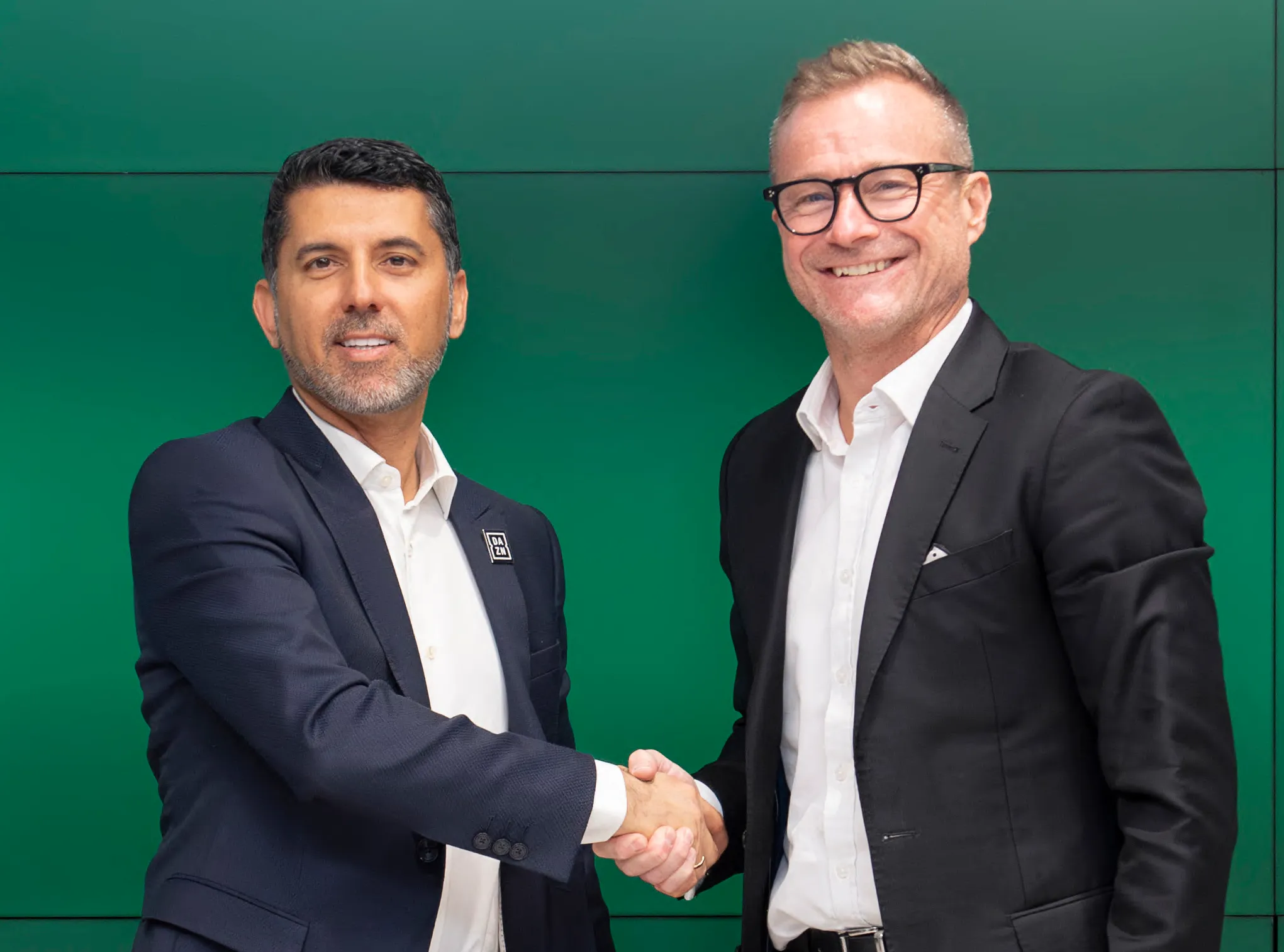 The assurances made this week by Townsend, right, are already ringing hollow Sofya Grebenkina/DAZN
Townsend’s interview took place on the Money Maze Podcast, which attracts a lot of heavy hitters in business and industry. The crucial point about the timing, here, is that the interview was conducted before the American invasion of Iran, before global economies became obliged to return to their respective drawing boards and certainly before LIV Golf was being reported as a dead duck.
What Townsend said in the interview was that “what you’re going to see over the next decade is a sustained commitment to sport for [financial] return reasons, for social changes reasons, for gender equality”.
The point he repeated was that this was a long-term thing. “This is not a ten-year flash in the pan,” he said. “It is a 50-year commitment to changing the country. What we’ve achieved in the last ten [years] will continue to evolve and accelerate over the next 40 because we have leadership with a long-term vision that is impatient.”
That long-term vision for the next 40 years apparently didn’t last 40 days.
Some points need to be made here. First, the end of LIV is unconfirmed, though it remains a matter of informed speculation. Second, LIV Golf started before SURJ was formed so it does not sit under its investment umbrella.
However, the investment in men’s tennis does sit in the SURJ portfolio and that is interesting because, as reported by The Athletic, a deal with women’s tennis is simultaneously coming to an end.
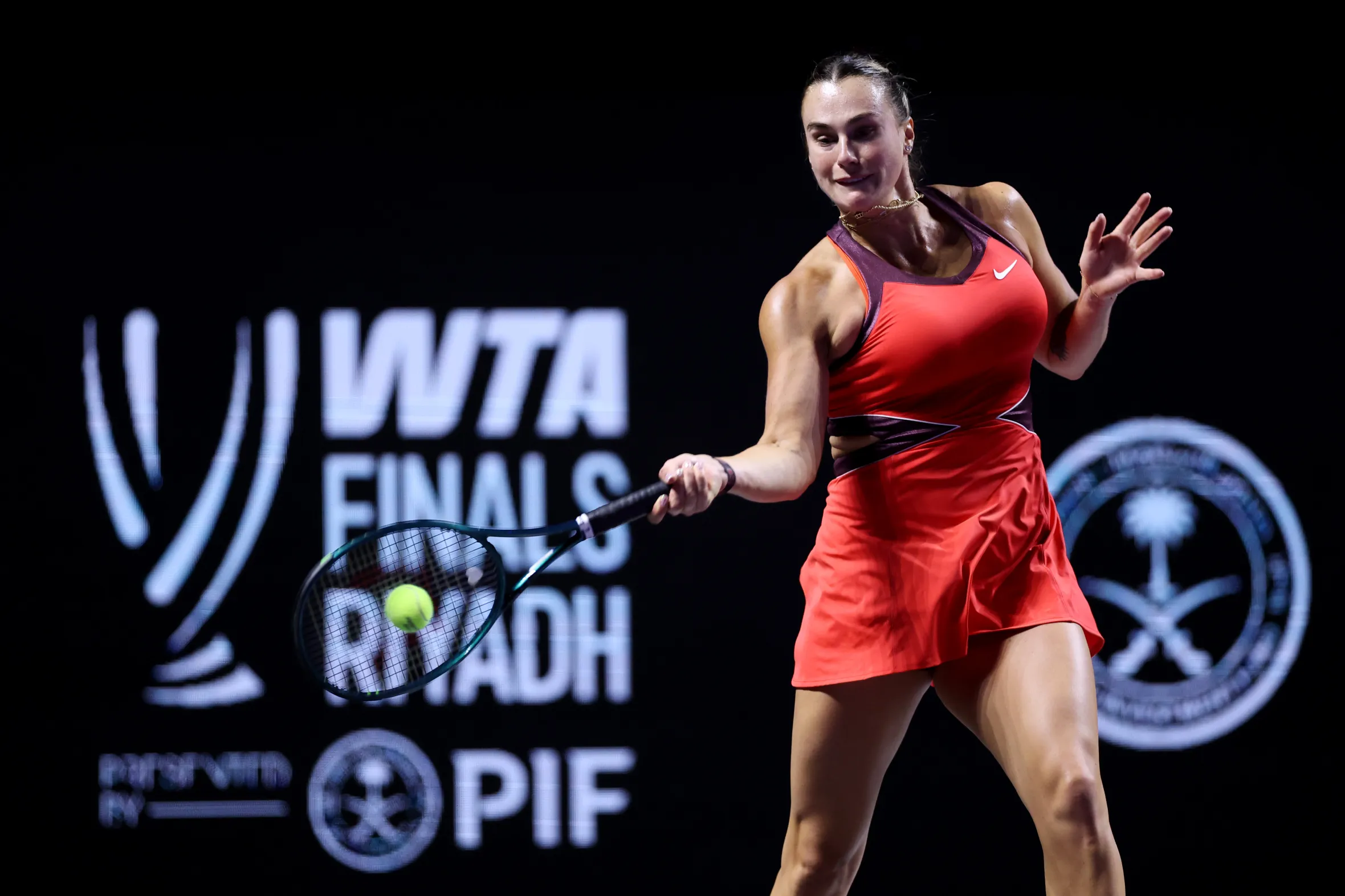 Aryna Sabalenka in action at the WTA Finals, which will be held in Riyadh for the final time this yearMatthew Stockman/Getty Images for WTA
The WTA Finals have been held in Riyadh for the past two years; this November will bring the end of a three-year deal. The WTA had hoped to extend; the answer was no.
Back to Townsend. In the interview he explained why his sports investment plan is related to social change.
“You don’t change your behaviour, unless there is something that inspires you to do something different,” he said. And that’s fine, I can buy that. But not if it’s three years of women’s tennis and then over and out. That’s three years when the world’s leading women tennis players were on Saudi turf and saying nice things about it. You could say that that’s three years of buying PR and legitimacy, but what you can’t say is that it’s a long-term strategy for social change.
The WTA Finals were played out in a 3,500-seat university campus arena that was sometimes half empty. That doesn’t sound like an effort to trigger social change either. The Athletic reported that recouping the investment — $25million (about £18.5million) a year — “was never likely”, which leads to the conclusion that a return on investment is a priority above having girls on tennis courts.
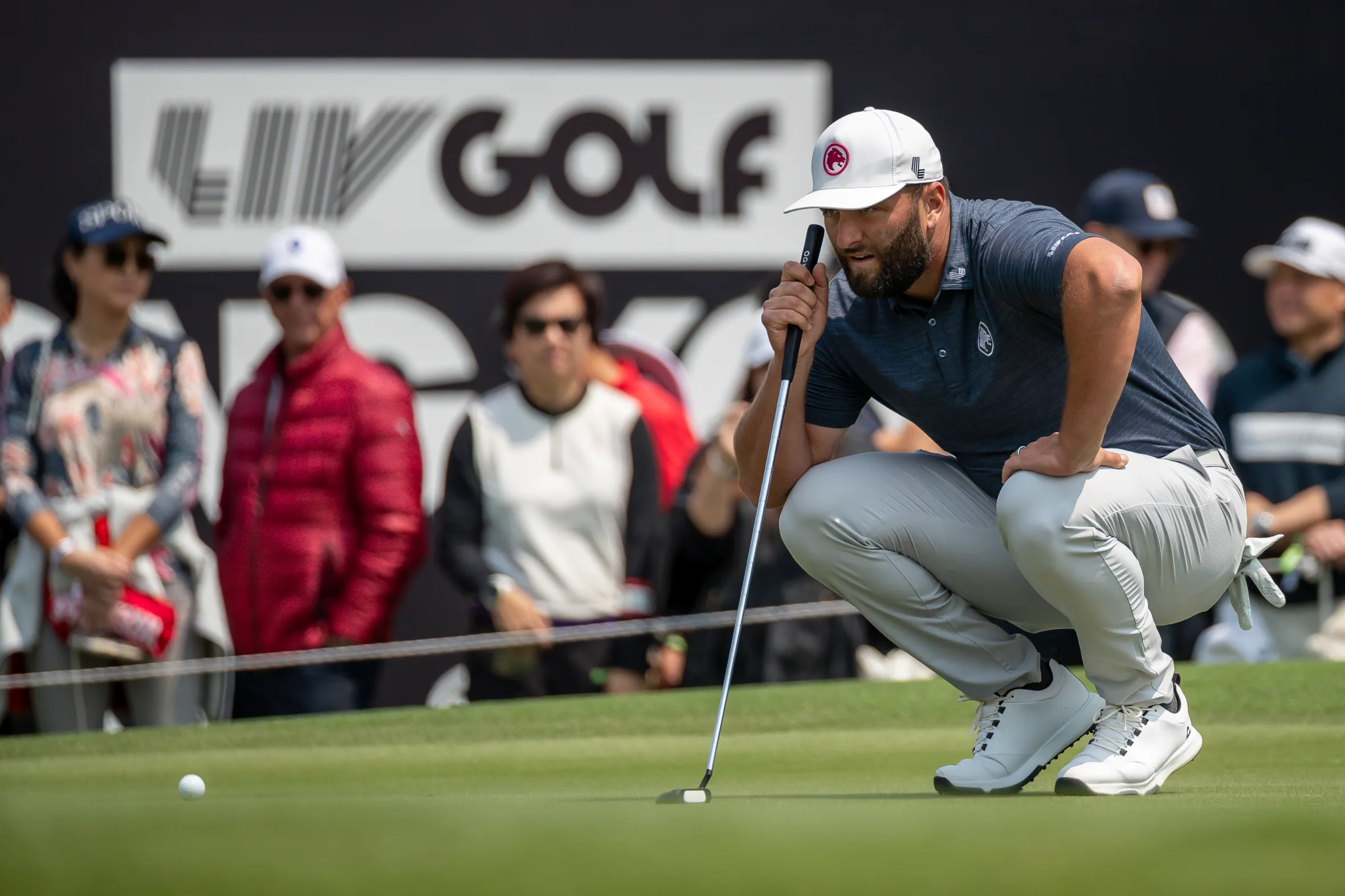 Despite the presence of luminaries like Jon Rahm, LIV Golf’s losses exceed £1billionYu Chun Christopher Wong/Getty
Of course there has been no investment more outrageously foolish than LIV Golf. Its losses thus far have exceeded £1billion and, even from within, it has admitted that it won’t be turning a profit for another five to ten years.
One day soon LIV will be a case study in failure for business studies students. For now, it is an intriguing PR exercise. How do you back out of it and simultaneously minimise the blow to your legitimacy and authenticity?
It’s not as if it can sell off a slice of the shareholding, as it has just done with Al-Hilal, the Riyadh-based football club. I strongly suspect this is where it also wants to go with Newcastle United, another project that hasn’t delivered on expectations.
The other significant date in the Saudi diary this week was Wednesday’s announcement of the PIF’s new five-year strategy. The key point was that investment was now going to be aimed more domestically and only 20 per cent internationally. That sounds sensible but it doesn’t sound great for LIV Golf.
Some observers have noted that there was no mention of “sport” in the strategy plan. I’m not sure if that’s really significant or if “sport” comes under “entertainment”.
Either way, it leads to a conclusion that we are at the end of an era of Saudi Arabia chucking preposterous money at sport, unbalancing the marketplace and putting untenable price tags on the likes of golfers and thirtysomething footballers.
And that makes you wonder: what happens next? The answer would be that sport again finds its level. I wonder if boxing, which has become so reliant on Saudi cash, is set to be the biggest loser here.
That’s all a bit crystal ball. For now, what we have is the closest thing to an acknowledgment that the Saudi PIF is a professional investor, not a benefactor, and that to whatever extent there is a commitment to either reputation building (also known as sportswashing) or social change in all this — and that is not easy to gauge — then they come a distant second to return on investment.
Is brash Aussie Open better than genteel Masters?
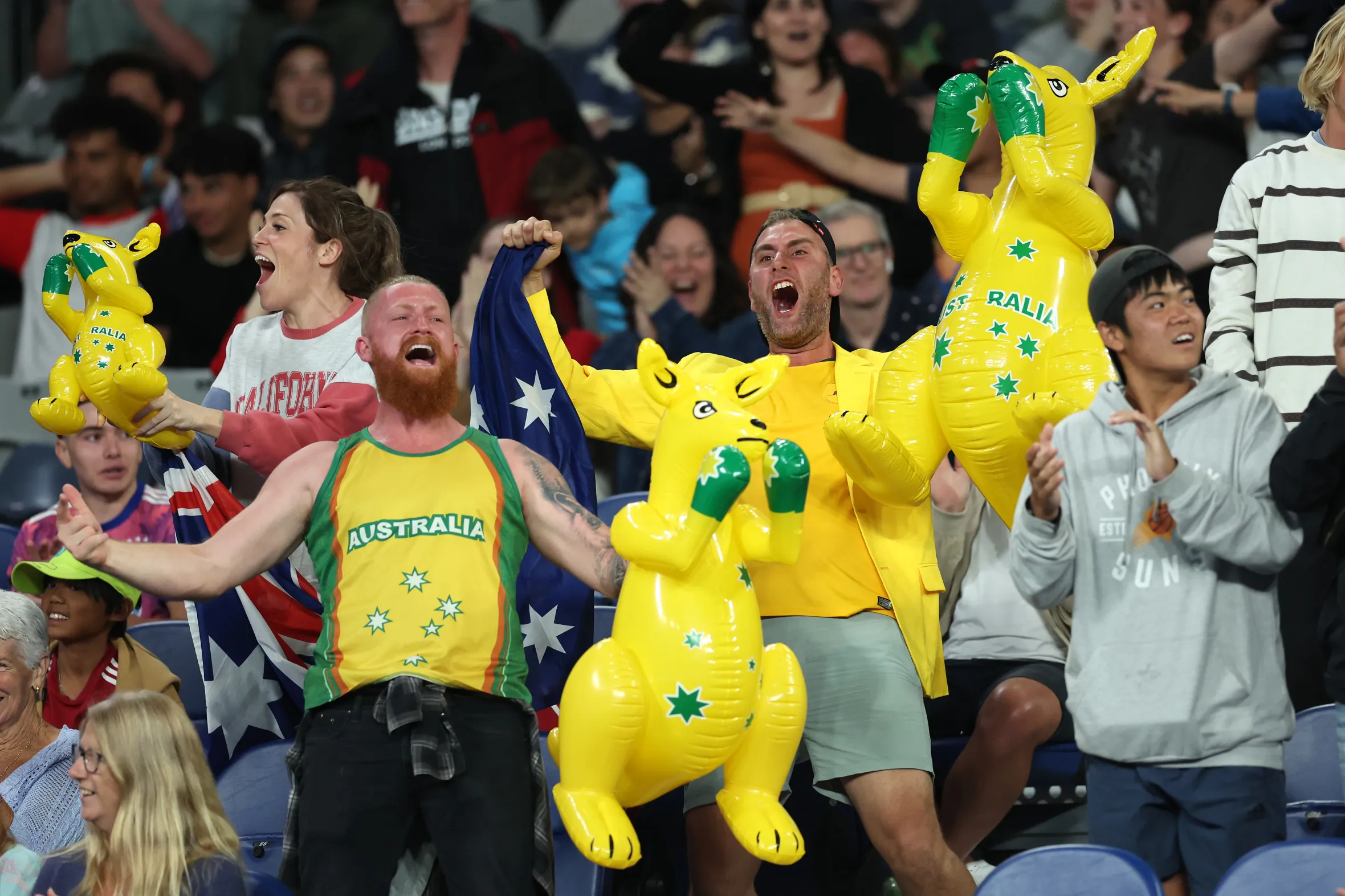 Fans get into the spirit of it at Melbourne ParkGetty
What is the best sports event ever? This is a question often tossed around after the Masters, and we were doing it again this year.
My answer was that the Masters is not even the best event in golf (which is the Ryder Cup), but that’s by the by. In the Townsend interview on the Money Maze Podcast I was intrigued by the section where the Australian Open tennis was being held up as a challenger. The Aussie Open is such a great event, so good at the food, the music and the entertainment, that people just want to be there, the killer stat being that 40 per cent of its attendees don’t even get to see any tennis.
Townsend is an Aussie so he knows this story. He said that Aussie Open organisers had “optimised that event to an inch of its life” and that they had found a way to make money “everywhere you can”.
I am interested in the contrast. On the one hand you have the Aussie Open as a market leader in sport as an entertainment event, on the other you have the Masters, which is the polar opposite and which would never countenance anything as gauche as live music; which, for instance, limits the food options down to the sandwich fillings and the colour of the sandwich wrapping.
One event’s appeal is pushing to be cutting-edge modern, the other is pushing to retain everything that feels old-fashioned. Both are regarded as market leaders.
Readers are encouraged to give their opinion below. Best-ever sports event, please.
We’re so lucky that Rory rises above tittle-tattlers
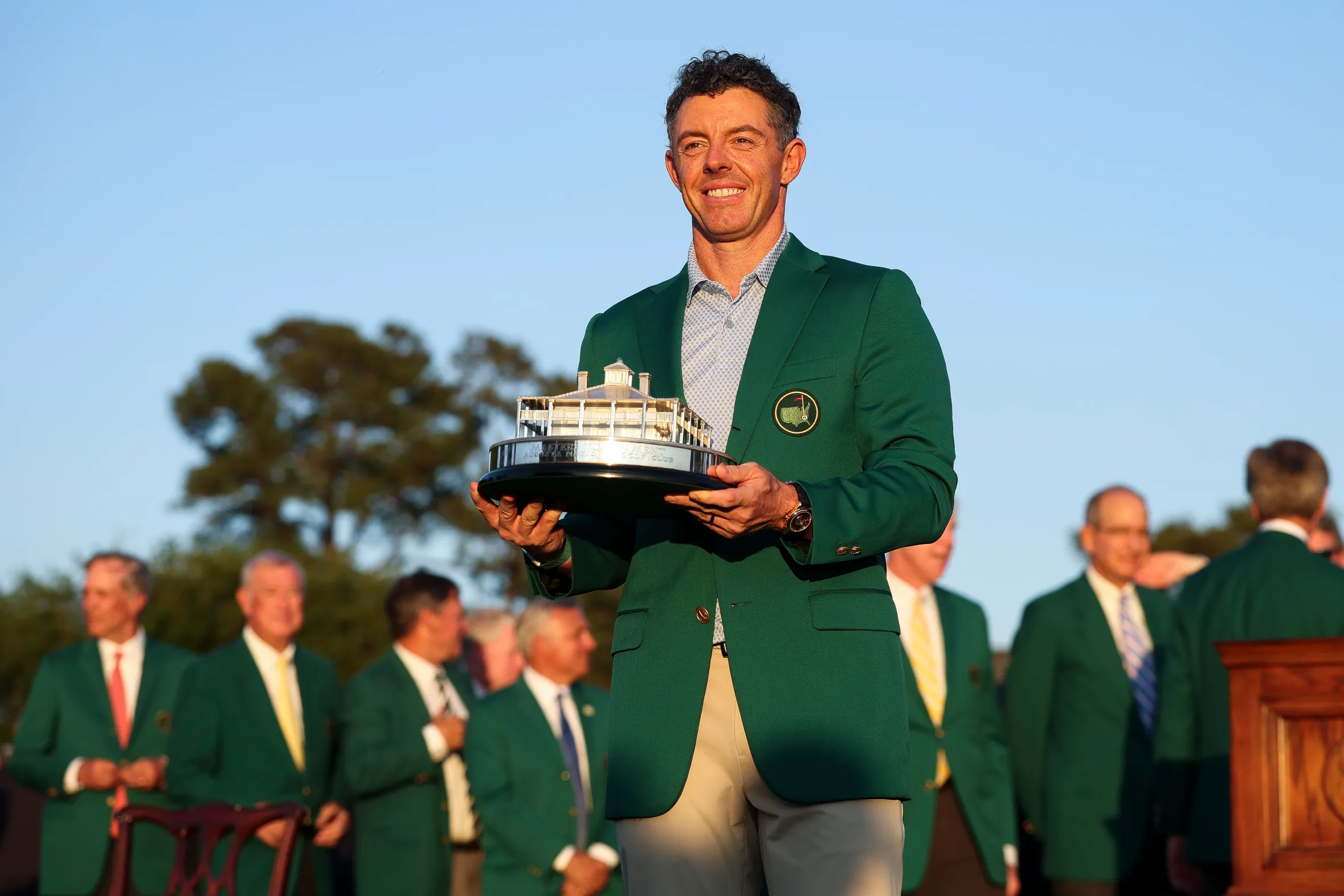 McIlroy, looking resplendent in his second Green Jacket, upholds a great Masters traditionHector Vivas/Getty
Predictable, maybe, but not a great reflection on my industry. What accompanied Rory McIlroy’s stirring Masters victory last weekend was the amount of reporting about his private life, marital problems past and domestic issues. Almost all of it was rehashed from a new book that was itself mostly rehashed from years gone by, though striking was the Belfast Telegraph, which reported that: “You don’t need to look too far to find those from this island that don’t care for the former Sullivan Upper pupil.”
What is also striking is how generous McIlroy nevertheless remains as a public figure. He is the most open of books, he converses at length and shares thoughts and feelings even when he would be entitled to do the opposite. And that is one of many reasons why golf and sport is lucky to have him.