
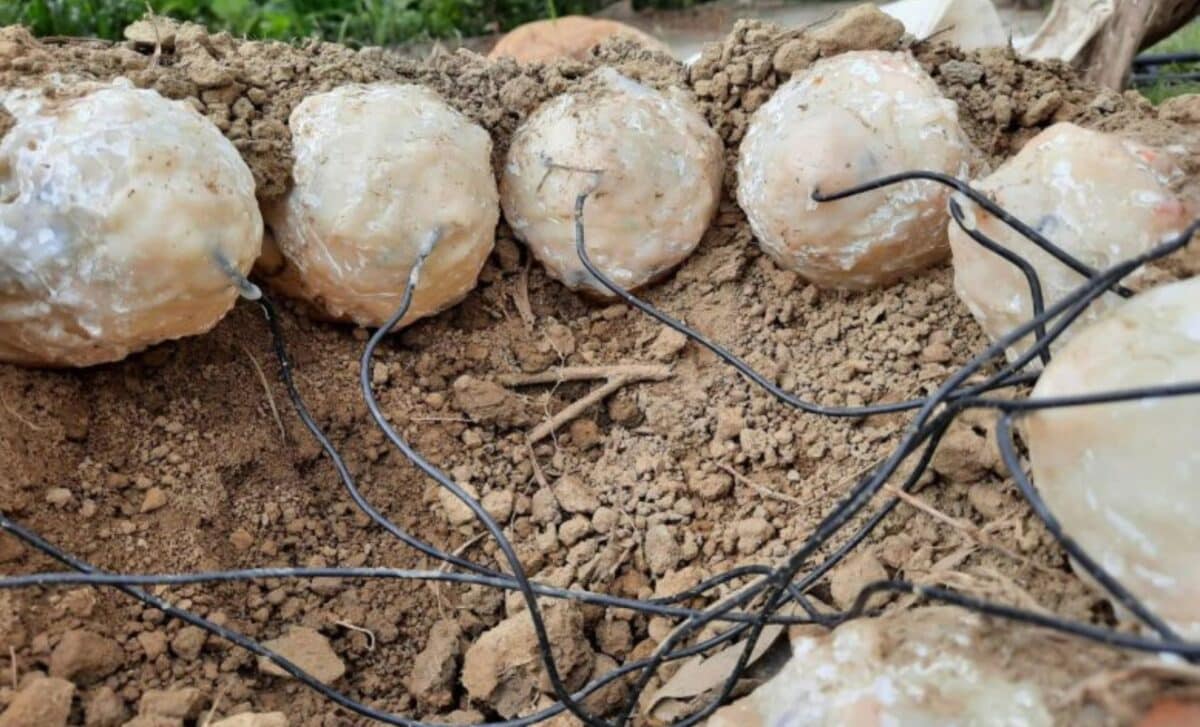
Scientists recently built a life-sized oviraptor nest to crack the mystery of how these ancient dinosaurs hatched their eggs. The results were unexpected: it turns out that oviraptors, unlike modern birds, likely relied more on environmental heat than their own body warmth to incubate their eggs.
The study, published in Frontiers in Ecology and Evolution, looks at whether they brooded their eggs like birds do today or whether they relied more on heat from their surroundings, much like reptiles. To get answers, researchers in Taiwan recreated a real-life oviraptor nest and ran heat transfer simulations to explore how egg incubation patterns might have worked.
A New Way to Study Dinosaur Behavior
Oviraptors lived around 70 to 66 million years ago, and their exact nesting behaviors have long been a topic of debate. Scientists weren’t sure whether these dinosaurs used their body heat to incubate eggs like modern birds or if they relied on environmental heat, such as sunlight or warm soil, like reptiles. Fossil evidence has been limited, leaving researchers to guess.
To answer this, the Taiwanese team built a life-sized model of an oviraptor using foam, wood, and other materials to mimic its body. They also recreated the nest based on fossilized nests, which had multiple rings of eggs.
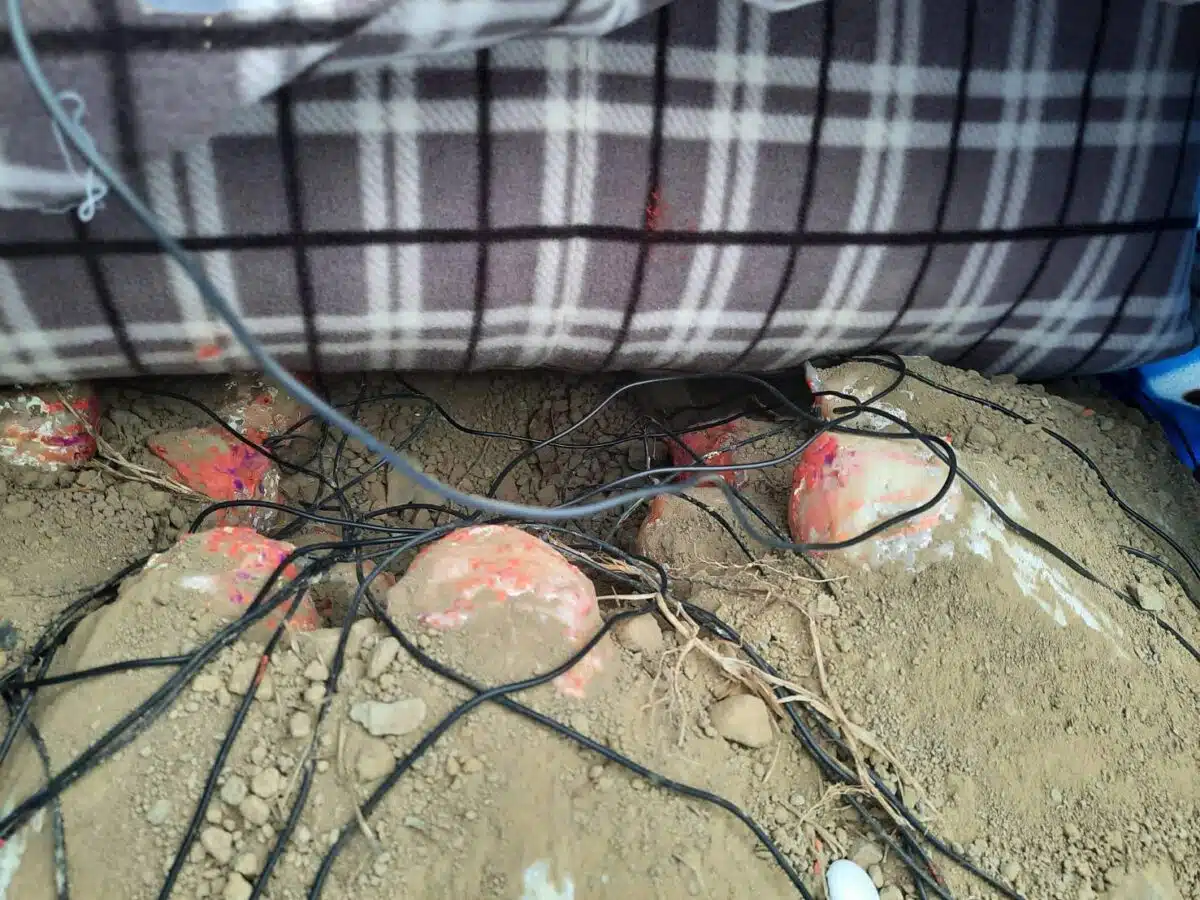 Side view of the clutch with the incubator placed on top. Credit: Chun-Yu Su
According to Dr. Tzu-Ruei Yang, an associate curator of vertebrate paleontology at the National Museum of Natural Science, based in Taiwan :
“We show the difference in oviraptor hatching patterns was induced by the relative position of the incubating adult to the eggs.”
How Heat Affected Egg Incubation
The researchers tested how different temperatures and the presence of a brooding adult influenced how the eggs warmed up. As showed in the latest research, the results showed that in colder conditions, eggs in the outer ring of the nest could be up to 6°C colder than the inner ones. This difference could lead to asynchronous hatching, meaning that some eggs would hatch earlier than others.
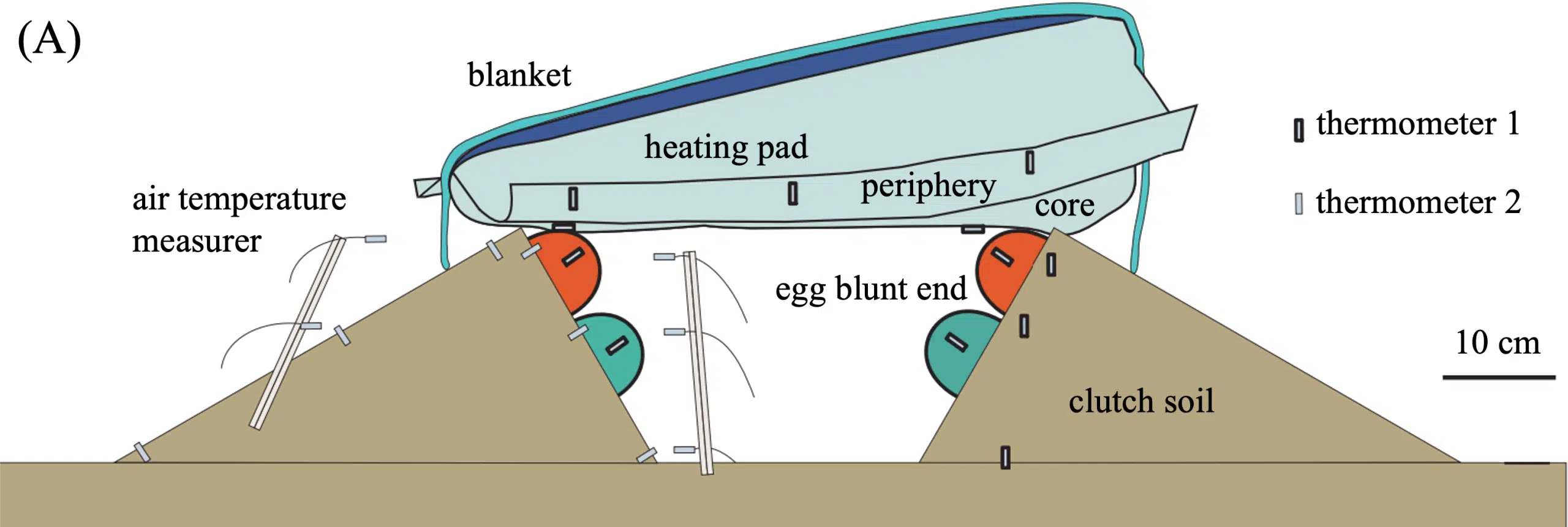 This diagram shows the setup of a life-size dinosaur nest, with the heating pad, thermometers, and air temperature measurer to simulate oviraptor egg incubation. Credit: Frontiers in Ecology and Evolution.
When the conditions were warmer, the temperature difference between the eggs was much smaller, only about 0.6°C. As reported by Dr. Yang, this suggests that in warmer environments, oviraptors might have relied more on the heat from the sun or the ground.
“It’s unlikely that large dinosaurs sat atop their clutches. Supposedly, they used the heat of the sun or soil to hatch their eggs, like turtles. Since oviraptor clutches are open to the air, heat from the sun likely mattered much more than heat from the soil.”
A Less Efficient Way to Hatch Eggs
One of the biggest takeaways from this study is how this kind of dinosaur egg incubation compares to modern birds. Today’s birds use a method called thermoregulatory contact incubation (TCI), where the parent sits directly on the eggs to warm them. However, oviraptors had circular nests that didn’t allow the parent to touch every egg. As a result, their incubation method was much less efficient.
The researchers found that they likely depended on both body warmth and environmental heat to incubate their eggs. This hybrid method wasn’t as effective as the direct contact incubation used by modern birds.
“Oviraptors couldn’t incubate like birds do,” said first author Chun-Yu Su. “Instead, they used a mix of sunlight and their own warmth, which worked well for their environment.”
Dinosaur Parents: More Like Birds or Reptiles?
By combining physical experiments with heat simulations, scientists were able to recreate real-world conditions that would be impossible to infer from fossils alone. Dr. Yang emphasized that there is no “better” way and he added that:
“Birds living today and oviraptors have a very different way of incubation or, more specifically, brooding. Nothing is better or worse. It just depends on the environment,” he concluded by saying: “There are no dinosaur fossils in Taiwan, but that does not mean that we cannot do dinosaur studies.”
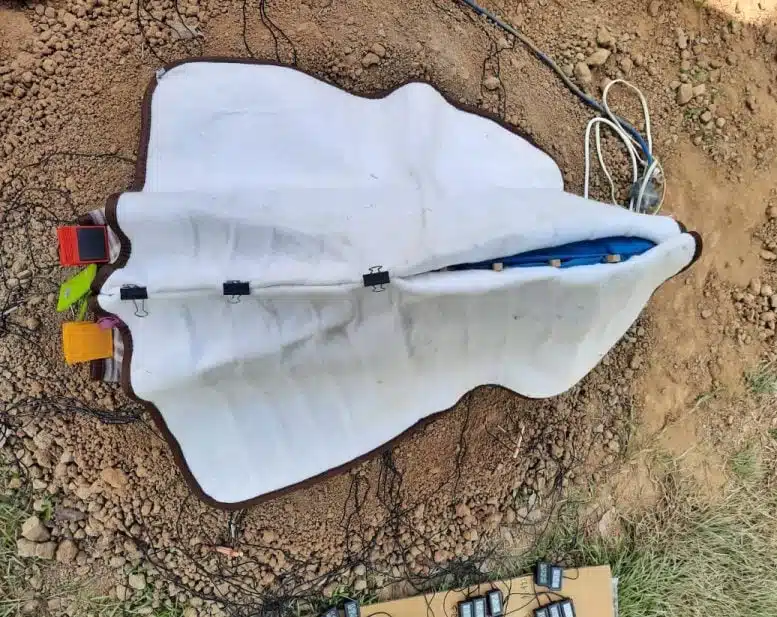 The incubator setup with sensors for monitoring a life-size dinosaur nest experiment. Credit: Chun-Yu Su