
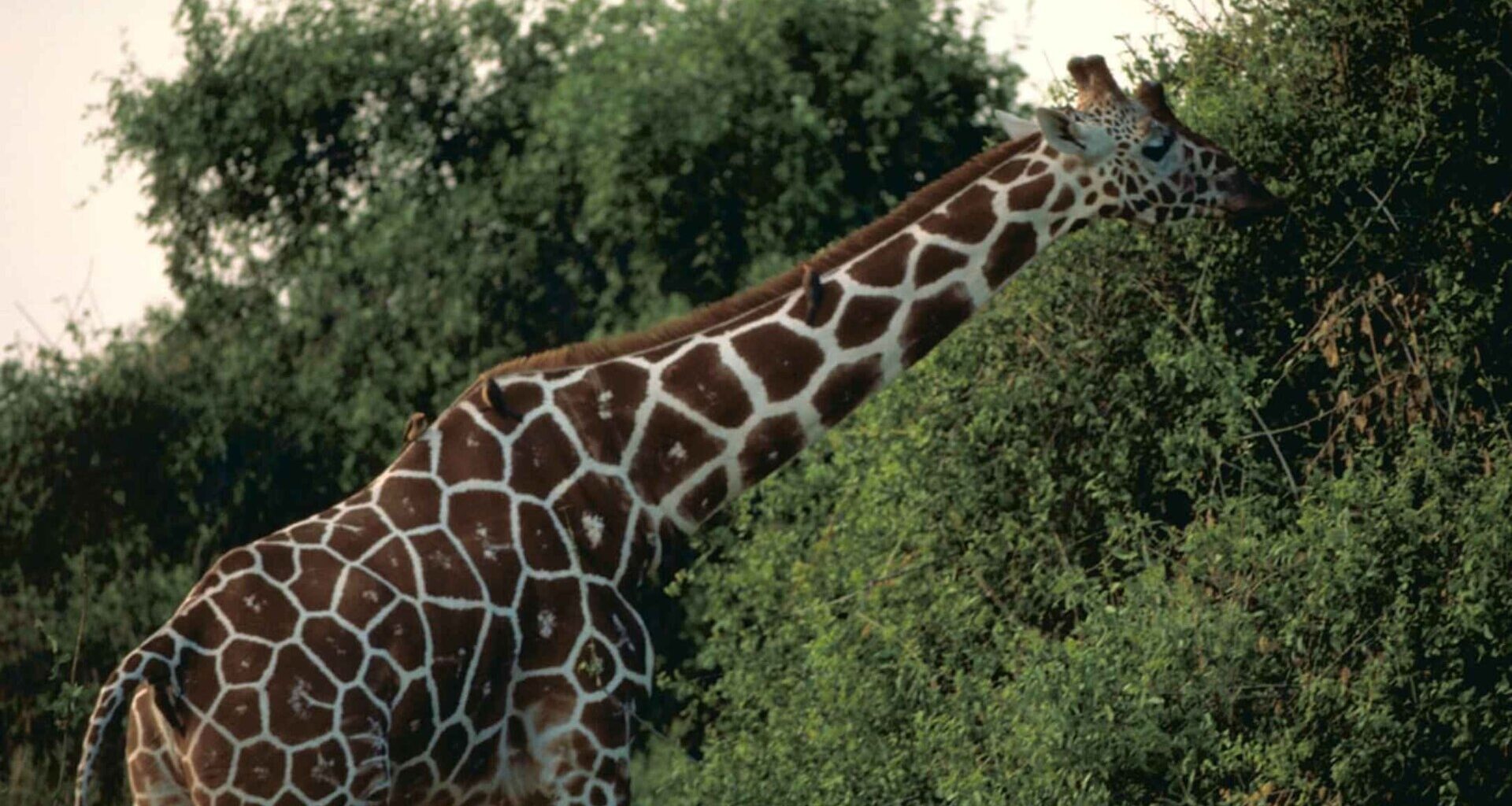
Reticulated giraffes are an endangered species across their primary range in Kenya, most commonly threatened by habitat loss and illegal hunting. Conflicts with people are also rising as giraffes sometimes eat crops like mangos and compete with local people for water. A group of researchers investigated emerging human-giraffe conflict (HGC) in northeastern Kenya found that, despite tension, there is widespread local support for giraffes by local people, and opportunities to reduce conflict.
Fewer than 20,000 reticulated giraffes (Giraffa reticulata) are estimated to remain in the wild, roughly a 56% population decline over the last 30 years, according to the IUCN, the global wildlife conservation authority.
The research team worked in the Bour-Algy Giraffe Sanctuary, which was created along the Tana River in northeastern Kenya to protect the local population of reticulated giraffes. The sanctuary was created by volunteers from Bour-Algy village in 1995, but before this study there was little formal understanding of how local people felt about the giraffes and what impact giraffes had on their lives.
The researchers conducted 400 interviews with households around the sanctuary. Their goal was to learn about local attitudes toward giraffes — whether people perceived them as a risk, what caused conflicts with giraffes and determine local strategies for coexistence.
The team found that there was a relatively high tolerance for giraffes in the community. “Most respondents viewed giraffes as low-risk and over half reported no damage to land or property,” Abdullahi Ali, first author of the study, told Mongabay in an email. “Importantly, the concerns raised were largely indirect, particularly competition for water, habitat encroachment, and broader livelihood pressures, rather than giraffes themselves.”
Ali said negative perceptions of giraffes were largely limited to farmers who occasionally lose crops to the animals. “In contrast,” Ali noted “individuals engaged in other socio-economic activities such as pastoralism, trade, or government employment tend to have no issues with giraffes.”
He added that the findings highlight the need for community-based coexistence strategies. “Key priorities include improving awareness, reducing competition over critical resources such as water and supporting locally relevant livelihood initiatives.”
Ali is also part of the Somali Giraffe Project, a conservation group in the same area. Ali said the group is working to address the main sources of human-giraffe conflict.
“The Somali Giraffe Project is addressing water scarcity by providing alternative water sources for giraffes and other wildlife, helping to reduce pressure on shared resources like the Tana River,” Ali said. “The project has established the region’s first wildlife education center, where schoolchildren, farmers, youth and elders are educated about giraffe conservation.”
Monica Bond, a giraffe biologist in neighboring Tanzania, who wasn’t involved with the study, said the findings provide “a useful model for how to quantify conflicts and risks, and to understand what people require to live safely and peacefully with giraffes.”
Banner image: A reticulated giraffe in a national park in Kenya. Image by Stolz Gary M, U.S. Fish and Wildlife Service via Wikimedia Commons (Public domain).
