
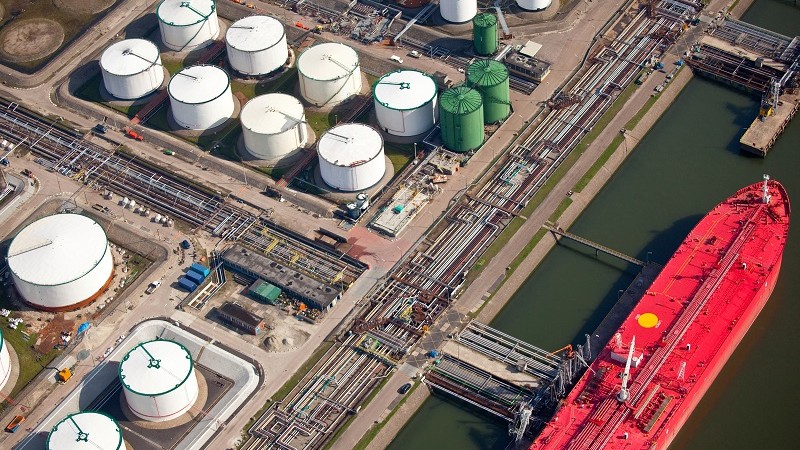
Oil markets are hanging on U.S.–Iran talks as hopes for reopening the Strait of Hormuz push prices lower—but failure could trigger shortages and a new price spike.
Friday, April 17, 2026
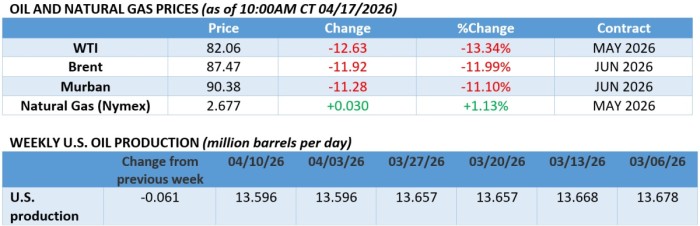
Oil markets are fixated on this weekend’s second round of US-Iran talks, with hopes rising for a negotiated end to the Strait of Hormuz’s 45-day blockade. Iran’s announcements that navigation through Hormuz is open come after Trump managed to seal a shaky Israel-Lebanon ceasefire, sending ICE Brent below $90 per barrel again. The negotiations in Islamabad will be oil’s ‘make it or break it’ moment, as any failure would amplify the IEA’s warnings of impending fuel shortages and demand collapse.
Iran Swings Hormuz Open, or Not. Iran’s foreign minister Abbas Araghchi announced that the passage of all commercial vessels through the Strait of Hormuz is ‘completely open for the remaining period of the ceasefire’, only for the IRGC to reiterate that any tankers would still need to coordinate with them.
US Warns Chinese Banks Against Iran Oil Deals. The US Treasury Department has sent letters to two Chinese banks, warning them of sanctions in case they discover Iranian oil payments transferred through their accounts, calling any potential actions against Iran’s banks ‘Operation Economic Fury’.
Chinese Oil Production Reaches All-Time High. Faced with Gulf supply disruptions, Chinese oil producers hiked crude output in the country to 4.51 million b/d in March, according to China’s National Bureau of Statistics, up 1.3% year-over-year and marking the highest ever monthly production.
Australia’s Fuel Supply Goes from Bad to Worse. Australia’s 120,000 b/d Geelong refinery, operated by Viva Energy, suffered a devastating fire this week, with the plant’s gasoline-producing units impacted by the blaze and potentially leading to a 45,000 b/d gasoline supply loss over the upcoming weeks.
Pakistan-Flagged Ship Clears US Hormuz Counter-blockade. Shalamar, a Pakistani-owned crude tanker, became the first tanker to ship crude out of the Strait of Hormuz and the Arabian Sea, en route to Karachi after loading a 450,000-barrel cargo at the UAE’s Das Island, paving the way for other shippers.
Traders Vie for Africa’s Billion Dollar Deal. Global trading house Trafigura has agreed a $1 billion oil-backed loan deal with OPEC member Gabon, providing the funds upfront in return for exclusive rights to market the country’s profit oil for the next 7 years, furthering Gabon’s dependence on oil traders.
Iran Can Last Several Months Without Exports. Iran’s oil producers can withstand a complete halt in oil exports for up to 2 months before they’d be forced to shut in crude output, according to oil analysts, thanks to 90 million barrels of available storage, as oil flows through the Arabian Sea halted this week.
Beijing Mulls US Export Curbs on Solar Equipment. Chinese authorities have held initial talks with the country’s solar equipment producers as Beijing is considering limiting exports of most advanced solar technologies to the US, throwing its weight around as it controls 80% of global component production.
Angola Neighbours Eye Stake in Upcoming Refinery. Angola’s national oil company Sonangol has started negotiations with the government of Botswana on the sale of a stake in the $5.6 billion Lobito refinery, potentially wielding a capacity of 200,000 b/d once it comes online towards the end of 2027.
Golden Pass Stumbles at the Start. US oil major ExxonMobil (NYSE:XOM) has withdrawn an offer to sell its initial two cargoes from the Golden Pass LNG project, even though the plant has been reportedly running at a third of its capacity since late March, taking in on average 290 million cf/day this week.
IEA Warns Middle East Would Need Years to Recover. Fatih Birol, the head of the International Energy Agency, has warned that the Middle East would take at least two years to recover and reach pre-war levels of production in both oil and gas, particularly for cash-strapped countries such as Iraq.
OPEC Posts Steepest Production Drop in History. OPEC crude output plunged by a hefty 7.88 million b/d last month, according to the oil producers’ organization, reaching 20.79 million b/d and marking the steepest monthly drop ever, with Iraq posting the largest production cuts (-2.56 million b/d).
Indian Refiners Stop Iranian Oil Imports. Having imported two VLCC cargoes of crude from Iran during Trump’s 30-day sanctions waiver on purchases from NIOC, India’s refiners have rejected any further imports with private refiner Reliance refusing to discharge two cargoes, citing unmet compliance.
Nigerian Airlines Threaten Immediate Flight Cancellations. Nigeria’s airline industry group Aon has threatened to suspend all domestic flights from April 20 onwards in protest at the tripling of jet fuel prices in the country, with kerosene prices rising to 3,000 naira ($2.23 per litre) as of mid-April.
Oil Majors Suffer Kazakhstan Sulphur Defeat. Oil majors that operate Kazakhstan’s giant Kashagan oil field lost another court appeal against an environmental fine of some $5 billion for storing excessive amounts of sulphur, leaving international arbitration as the only way out for Eni, TotalEnergies and Shell.
By Tom Kool for Oilprice.com