
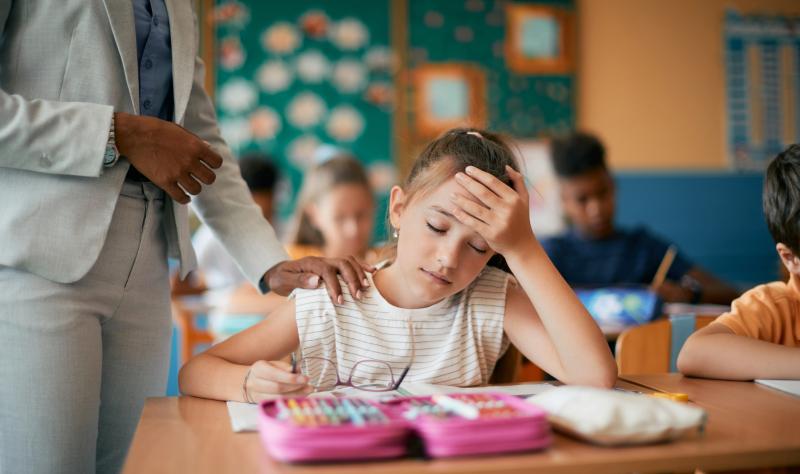
Children and adolescents with long COVID are significantly more likely to experience worsening grades, difficulty concentrating, and having limited fun with friends, according to a new study published in Academic Pediatrics.
The findings, drawn from the National Institutes of Health–funded Researching COVID to Enhance Recovery (RECOVER) observational pediatric cohort, suggest that the impacts of long COVID in kids and adolescents extend beyond physical symptoms and may disrupt key aspects of learning and social development.
Poorer grades, shorter attention span
Researchers led by a team at Massachusetts General Hospital analyzed data from 1,976 participants ages six to 17 years, including 406 school-aged children (ages six to 11) and 1,570 adolescents (12 to 17), comparing school and social outcomes for those with and without long COVID.
Among school-aged children, 18% of those with long COVID had worse grades than before the pandemic, compared with 7% of those without—more than double the risk of decreased academic performance (adjusted risk ratio [aRR], 2.18).
The difference in pre- and post-pandemic grades was even more striking in adolescents: 29% of those with long COVID experienced worse grades post-pandemic, versus 11% without long COVID (aRR, 2.39).
Both school-aged children and adolescents with long COVID reported more difficulty paying attention in class. Moderate or severe problems concentrating were reported in 38% of younger children with long COVID, versus 14% without (aRR, 2.52). Among adolescents, 37% of those with long COVID reported trouble focusing, versus 11% of those without (aRR, 3.26).
Children and adolescents with long COVID were also more likely to seek out individualized education programs (IEPs)—35% of affected school-aged children were in the process of obtaining an IEP, compared with 22% in the control group (RR, 1.30). Among teens with the condition, 27% with long COVID were seeking an IEP, versus 15% without (aRR, 1.66).
Long COVID appeared to have social consequences, too—28% of elementary school children with long COVID reported “sometimes, rarely, or never having fun with peers,” compared with 9% without (aRR, 2.77), while 43% of teens with long COVID said the same thing, compared with 21% in the control group (aRR, 1.95).
Social interactions may suffer a variety of reasons, write the researchers, including “symptoms preventing typical interactions, such as shared experiences on the playground, or even the cafeteria (e.g., due to change in smell or taste), or withdrawal due to a changed sense of self.”
Effects may extend into adulthood
The researchers emphasize that disruptions in school performance, attention, and peer relationships may have long-term consequences.
“Given that both educational performance and positive peer interactions are key developmental tasks among both school-age children and adolescents, our findings demonstrate important functional impairments that extend beyond the clinical symptomatology that has been described to date,” the researchers write. “Such impairments of desirable child developmental experiences may have long-term implications well into adulthood.”
The authors call for expanded school-based services and targeted interventions to support children with long COVID, such as occupational and speech therapy, extended time for tests and class assignments, exceptions from some physical education requirements, and coaching and counseling.
“Efforts are needed to develop and evaluate interventions to mediate these negative effects of LC [long COVID] that could last through adulthood,” write the researchers. “Ongoing study will be needed to assess future recovery and deterioration of the health, functional, and even economic impacts of LC on children and their families.”