


New research has found that approximately 15% of people will experience withdrawal symptoms after coming off of mental health medication (Picture: Getty)
Coming off of anti-anxiety medication and antidepressants is not something to be taken lightly.
Even when its done gradually, under medical supervision, it can cause confusion, irritability, nausea, and in some cases, vivid dreams.
Recently, a user going by the name of @wwapiti took to Reddit to share their experience with withdrawal symptoms after making the decision to stop taking sertraline — a selective serotonin reuptake inhibitor (SSRI) used to treat depression and anxiety disorders.
The ‘brain zaps’ (brief, electric shock-like sensations in the head) and ‘dizziness’ didn’t cause them concern. But the persistence of ‘weird and vivid dreams’ were apparently becoming extremely distressing.
Describing the dreams as ‘upsetting’ and emotionally lingering, the user revealed that these nightly-occurrences were having a lasting impact.
So, why is this happening?
Why are vivid dreams a symptom of coming off of sertraline?
Psychologist Dr Nikita Amin tells Metro that the key factor in why this occurs is because of one particular chemical: serotonin.
She explains: ‘Sertraline is a SSRI which works by increasing serotonin.’
This chemical plays a crucial role in regulating sleep, Dr Amin continues, including REM sleep, the stage most closely associated with dreams.
It might sound counterintuitive, but while serotonin is involved in sleep regulation, increased serotonin activity can suppress REM sleep. As a result, dreams may become less vivid or harder to remember while taking the medication.
Then, when people begin to reduce or stop taking sertraline, this effect can reverse.
As serotonin activity decreases, the brain may temporarily experience more REM sleep — a phenomenon referred to as ‘REM rebound.’
Dr Amin explains that this can lead to more intense or vivid dreams as sleep patterns readjust.
The psychologist adds: ‘Sertraline works on neurotransmitters like serotonin, norepinephrine, and dopamine. Suddenly reducing these levels forces your brain to try and rebalance itself.’
How long do vivid dreams last after coming off of sertraline?
According to Dr Amin, the amount of time it takes for vivid dreams to wear off as a withdrawal symptoms ‘differs from person to person.’
However, she notes that typically they peak between four and 14 days after stopping the medication.
‘They can last for a few weeks. During this time, the brain is trying to adjust to the new levels of sertraline in the body,’ she adds. ‘Within three to six weeks symptoms tend to subside.’

Vivid dreams can be overwhelming and anxiety-inducing at times (Picture: Getty Images)
Are vivid dreams always frightening?
Words such as ‘absurd’, ‘horrible’, ‘random’, and ‘shocking’ have all been used online by people who’ve experienced this symptom, with some even describing their vivid dreams as ‘night terrors’.
However, while this may be true for some individuals, Dr Amin emphasises that not all withdrawal dreams are frightening.
She shares: ‘Vivid dreams can be blissful. But due to the intensity of them, they can cause confusion upon waking as they feel very real.
‘Vivid dreams will only become nightmares when they evoke a negative emotion such as fear, anxiety, distress. But they can range from delightful to unsettling.’
One user on Reddit, @whenitrainzz, shared that she thinks about her vivid dreams as a way for her brain to ‘make sense of what’s going on in [her] subconscious mind’.
She adds: ‘The dreams are very useful for me to arrange my ideas and many times they answer the questions I have in my mind.’
How many people experience withdrawal symptoms?
In 2024, NHS data revealed that Sertraline had been prescribed more than 24 million times in England.
Previously, research had indicated that over half of patients who stopped taking mental health medication would experience withdrawal symptoms.
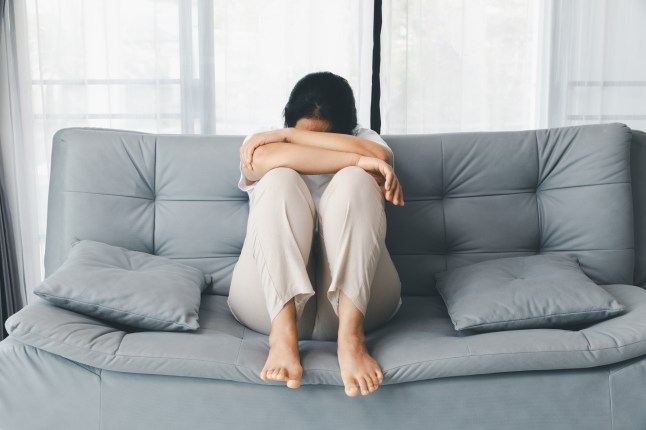
Withdrawal symptoms tend to last for between three to six weeks (Picture: Getty Images)
However, this year new analysis of randomised controlled trials published in The Lancet Psychiatry, found that only 15% of patients will experience one or more discontinuation symptoms that are directly caused by stopping the drugs, while around 2-3% will suffer severe symptoms.
Because of this mental health professionals urge patients to gradually taper your dose to minimise any potential negative fall-out.
A tapering schedule will be dependent on your current dose, how long you’ve been taking Sertraline, and your individual response.
Doctors also encourage individuals to track your symptoms daily.
What do you think is the most common withdrawal symptom?
Sign up to Metro’s The Slice newsletter for your guide to what’s on in London, with trusted reviews, offers and giveaways.
Arrow
MORE: This is what you dream about right before you die, according to scientists
Arrow
MORE: I was hit by a truck – then my wife noticed something about my beard
Arrow
MORE: Nicola Coughlan is an actress of a generation – Big Mood season 2 proves it
Comments
Add Metro as a Preferred Source on Google
Add as preferred source
The Slice
Your free newsletter guide to the best London has on offer, from drinks deals to restaurant reviews.