

If the Artemis II astronauts had made their re-entry from space a few months earlier they may have spotted out of their capsule window an eerily human-shaped figure hovering in the stratosphere.
It was not an extraterrestrial being, or a ghostly apparition or a blue Dementor. It was a sculpture sent into the upper atmosphere, about a third of the height needed to reach space, beneath a balloon to investigate the emotional impact of seeing a work of art suspended high above our planet.
Its creators were hoping to provoke the “overview effect” in viewers, the name for the awe-inspiring and sometimes overwhelming experience reported by astronauts and others lucky enough to have gazed down on the beauty and fragility of the Earth from high above.

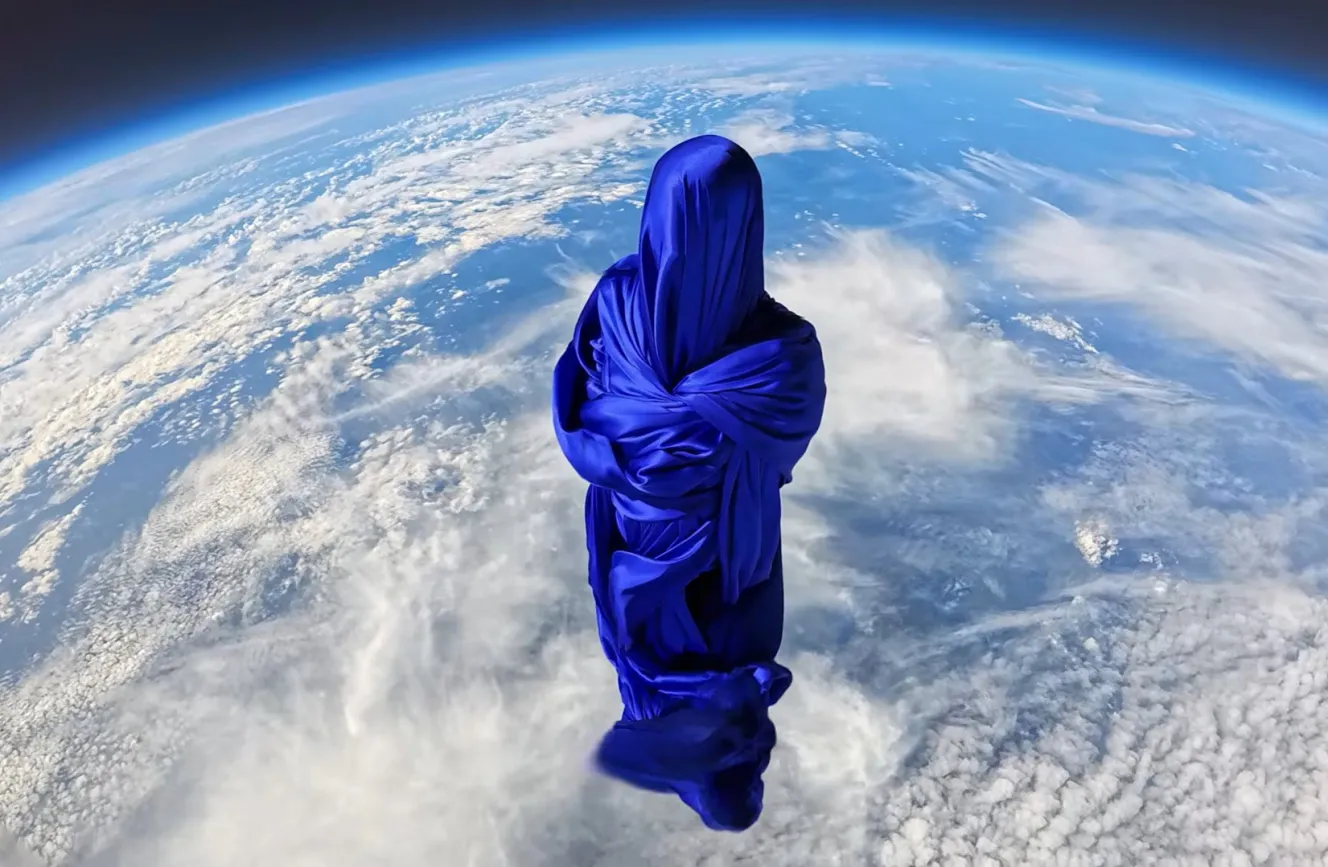
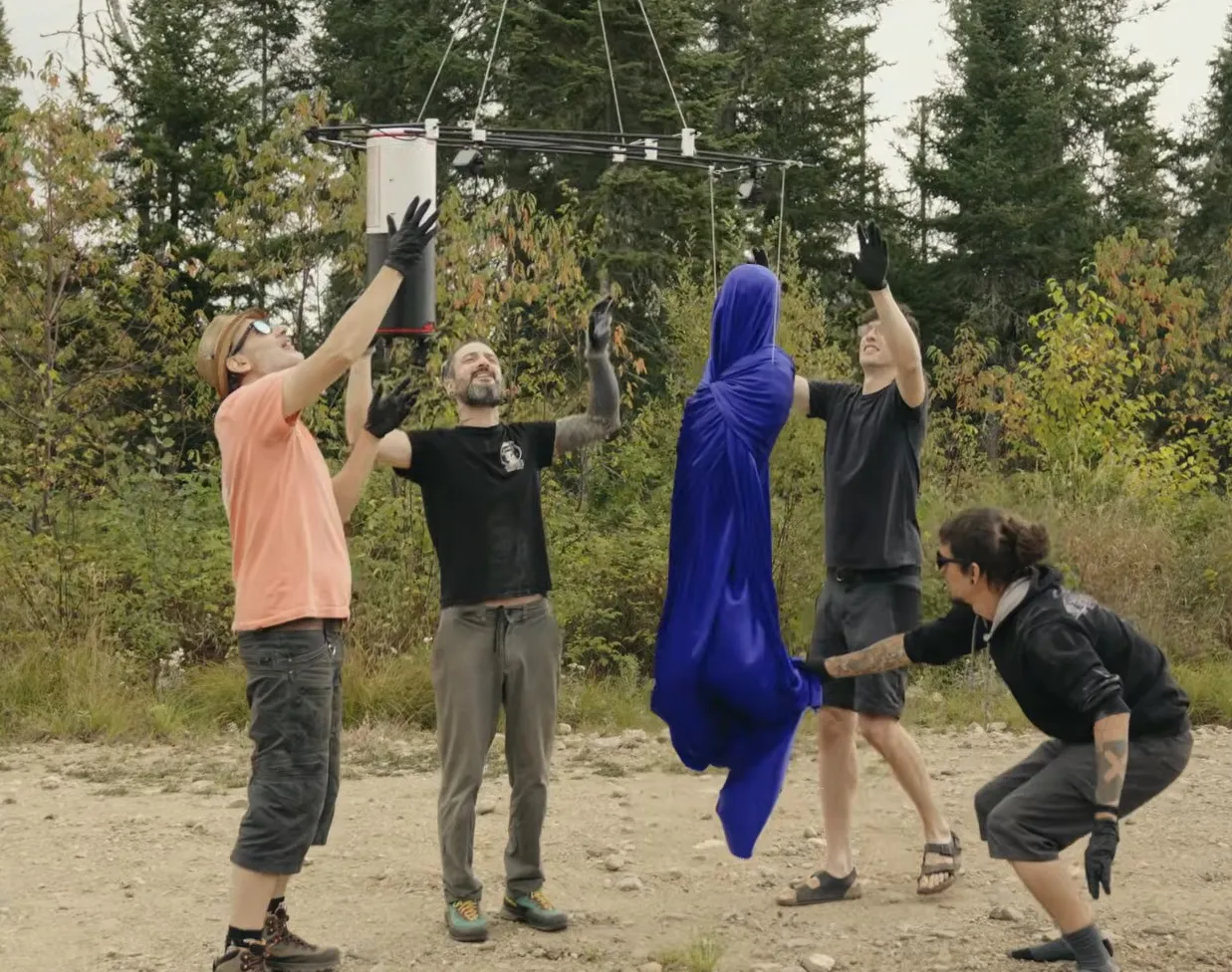
Created by a Canadian collective of artists, scientists and engineers known as the Dorothy Project, a lightweight mannequin was created and wrapped in bright blue Italian silk. Using a weather balloon made of biodegradable latex, which measured two metres across at ground level but expanded to many times this size as it ascended into the sky, the team filled it with hydrogen and affixed the sculpture as well as a radio transmitter and a GPS tracker. They also attached an Insta360 camera painted with a thermal coating to protect it from the sun’s rays and the cold conditions.
The balloon ultimately reached an altitude of 20.5 miles, almost exactly a third of the way to space, which is commonly agreed to begin at about 60 miles.
Although weather balloons can only reach about a third of the way to space, the sky still appears black above them because 99 per cent of the atmosphere’s air molecules are below them, with only the thinnest layers remaining between them and outer space. They reach about three times higher than an average commercial passenger plane.
The mannequin and its silk wrappings weighed only 700 grams in total, not only to ease its flight, but also to comply with safety regulations over items hoisted into the upper atmosphere to minimise the risks if they plummet to earth.
 dorothy project
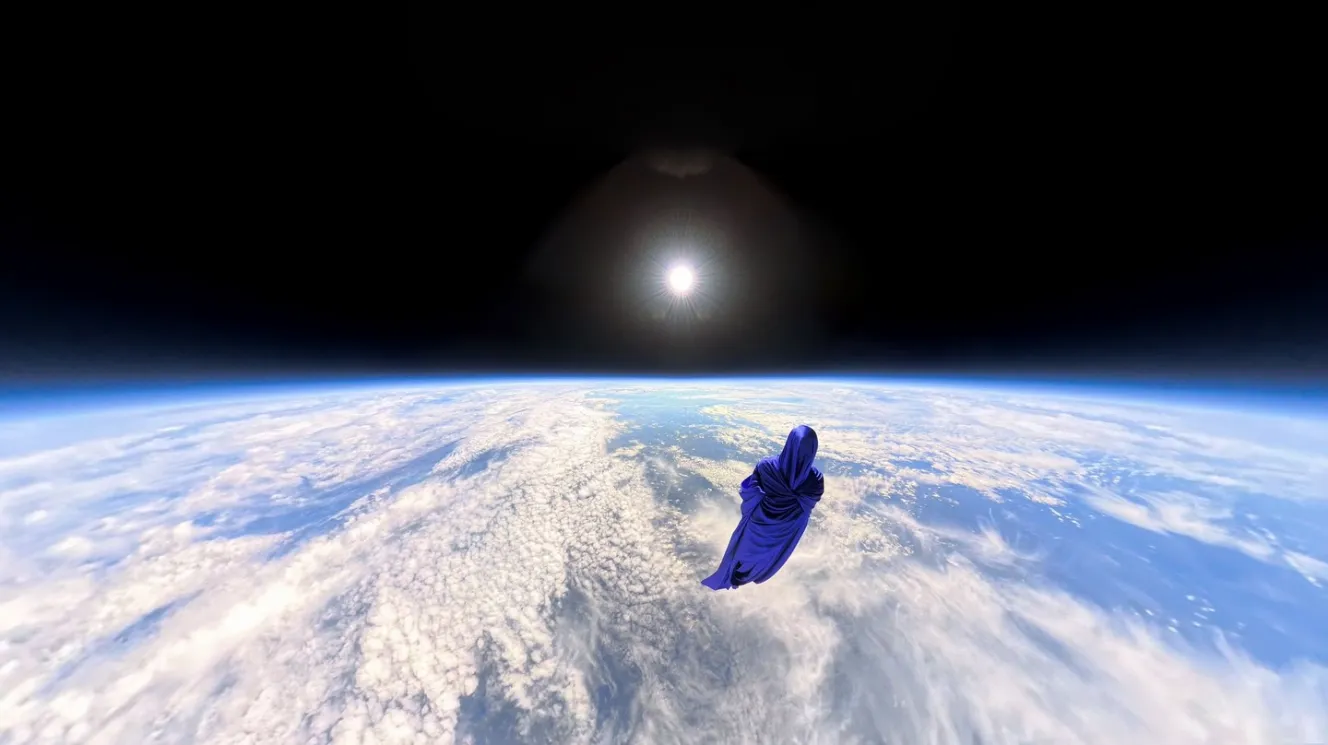
Once in the stratosphere the camera captured footage of the mannequin’s silk covering dancing in the winds of the upper atmosphere. The wires and rigging holding the mannequin were rendered invisible in the footage, making it appear as if the ghostly blue figure was swirling on its own above the Earth, the curvature of which can clearly be seen below.
“Through a stratospheric ascent silk becomes a sensor of light, gravity and time, transforming a symbol of luxury into a metaphor of responsibility,” the project’s creators said.
“By superimposing this ghostly silhouette onto the planet, our only habitat, and the infinite blackness of space, we create an image that transcends aesthetics and invites reflection on our place in the universe.
“This dizzying contrast between the ephemeral nature of the body and the Earth, the result of 3.5 billion years of evolution, reminds us of our cosmic insignificance as well as our collective responsibility toward living beings.”
 The project took place last November and footage of it was released last month
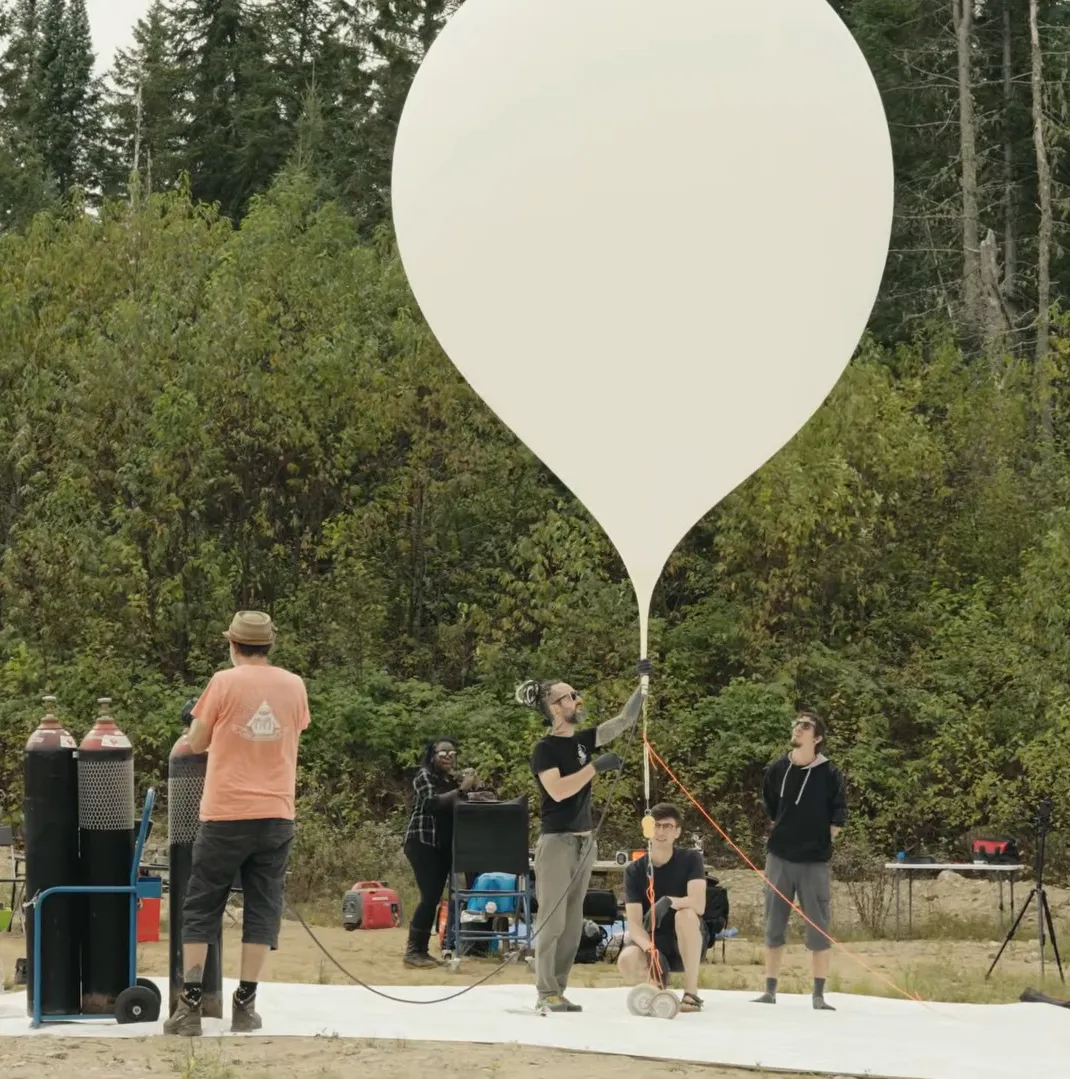
Once the balloon burst the camera parachuted back to Earth for the footage to be recovered.
It is thought that the flight itself took place late last year, with the footage only recently shared online.
The Dorothy Project has undertaken other missions including one called Mission Stratos last year, which had backing from the Canadian Space Agency and the Centre National d’Études Spatiales (CNES), the French space agency. That mission captured high-definition 360-degree video from the stratosphere using a camera set within a 24kg structure called Dorothy 8 that was fitted within a 700kg “gondola” operated by CNES.
The creators said that “during the Renaissance, art and science were intrinsically linked”, citing figures like Leonardo da Vinci as leading figures in both.
“From the 17th century onward the scientific revolution gradually formalised knowledge into distinct disciplines. Over the following centuries, specialisation accelerated progress but also fractured the dialogue between art and science. Yet these two worlds have never ceased to reflect one another.”
The Dorothy Project was founded in 2017 by the artist and engineer Mathieu Baptista.