
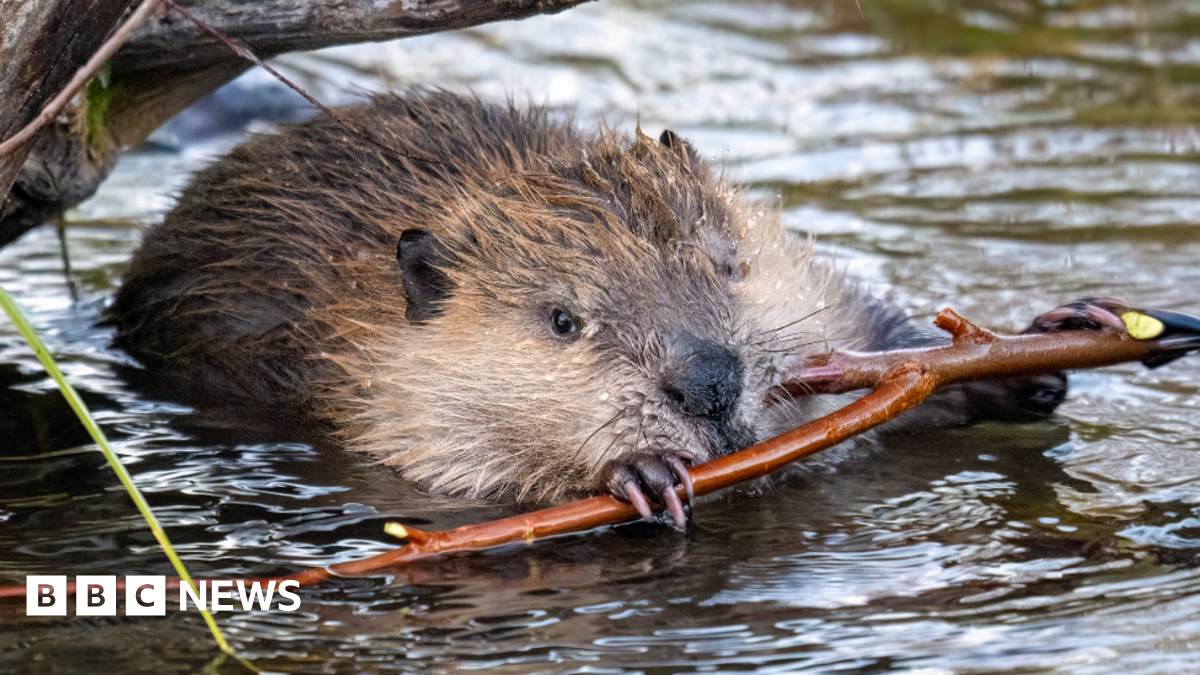
By the beginning of the 16th Century, beavers were all-but extinct from Britain, having been hunted for their fur and scent glands that produce a substance called castoreum.
Supporters of their reintroduction refer to them as “ecosystem engineers” who act as a nature-based solution to environmental challenges and help meet national recovery targets.
The semiaquatic mammals have the ability to restore wetlands, reduce flood risk, improve water quality and boost biodiversity.
“Nothing can replicate what a beaver can do,” said Oliver.
“They’re very much known as a keystone species, so relative to their abundance, they can have a really dramatic influence on other wildlife.”
Their dam-building activity creates diverse habitats, slows water flow, filters pollutants, and supports other wildlife.
This is said to make landscapes more resilient to impacts of climate change such as drought and flooding.
Oliver added: “We need a healthy, functioning ecosystem around us in order to survive ourselves.
“If the environment’s doing well and it’s full of a lot of different wildlife and lots of biodiversity, it’s good for humans.”