
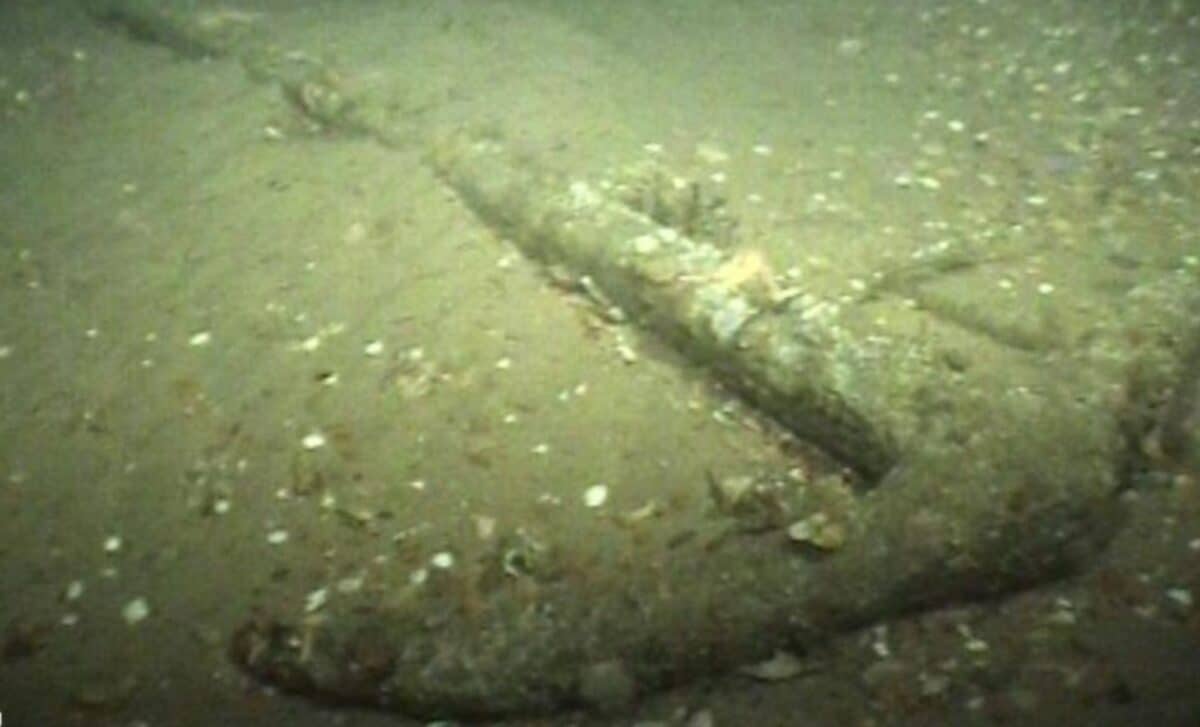
A 2,000-year-old anchor has been discovered beneath the North Sea. Hidden under layers of sand, it survived far longer than most objects of its kind, protected from currents and oxygen that usually accelerate decay.
The find was made off the coast of the UK during a seabed survey. As reported by Arkeonews, the anchor is built from wood and iron, a mix that typically deteriorates quickly underwater, which makes this level of preservation especially unusual.
A Surprisingly Well-Preserved object
What makes this anchor stand out is its condition. Wood normally breaks down quickly in the sea, but here, thick layers of sand helped protect it. Information shared by Arkeonews suggests that low oxygen levels played a key role in slowing decay.
“Everything points to this being a Roman anchor of almost 2,000 years old, which is an incredibly rare piece of history. If this date is confirmed, it would be hard to overstate its significance – we only know about three pre-Viking anchors from northern European waters outside the Mediterranean region and only two actually survived,” Brandon Mason, a maritime archaeologist at Maritime Archaeology.
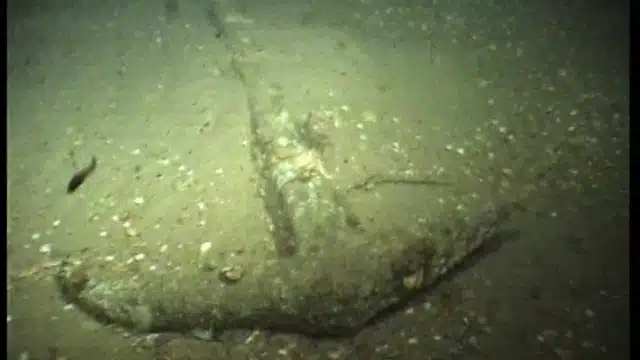 Anchor on the seabed, covered in sediment and marine life. Credit: Scottish Power
The design itself is pretty straightforward but effective. The iron parts added weight, while the wooden structure kept everything together, showing how practical Roman engineering could be.
A Clue To Busy Ancient Sea Routes
This anchor likely belonged to a ship involved in trade. Coverage from BBC Newsround mentions that vessels in the area carried goods like metal and pottery across the North Sea.
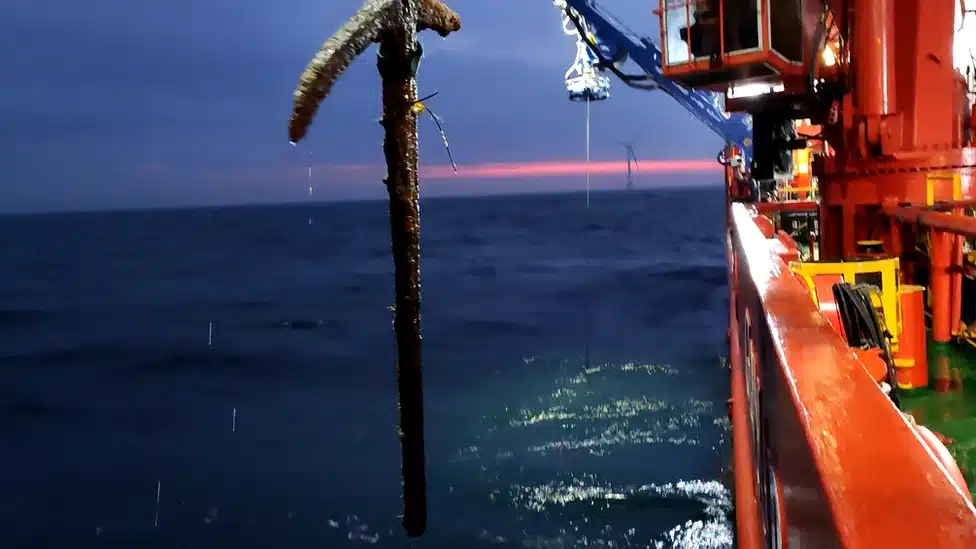 First found in 2018, the anchor was removed from the sea in 2021. Credit: Scottish Power
This shows that these waters were not isolated or rarely used. Ships were already moving between regions long before modern shipping routes existed. As Mason said in a statement published by Scottish Power:
“We believe this find could be the oldest and one of the largest surviving examples, giving us hard evidence of the incredible amount of activity that must have been going on in the waters in Roman times, but that we know relatively little about.” He added that: “It’s an absolute privilege to bring the anchor to the surface and to share its story with people not just across the East of England, but right around the world.”
Modern Tech Helps Uncover The Past
The anchor was found using sonar scanning, which can spot objects buried beneath layers of sand. Details from the same source show how this kind of technology is changing the way underwater archaeology works.
“The discovery of such a potentially significant anchor of this date, among the vast seafloor expanse of the southern North Sea, is testament to the careful and methodical steps taken by the East Anglia ONE project. This area of the North Sea has been mapped and investigated in a way not completed before,” added Stuart Churchley, Historic England’s Marine Planning Archaeological Officer.
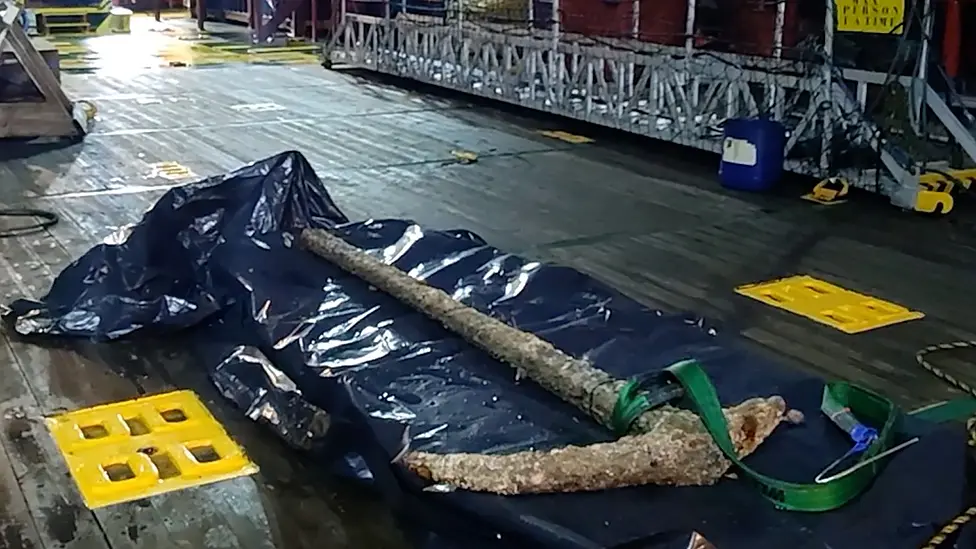 A Roman-era anchor lies on deck after its discovery in the North Sea. Credit: Scottish Power
After being located, the anchor was studied to better understand how it was made and how old it is. Discoveries like this show there’s still a lot left to find beneath the ocean surface, just waiting to be uncovered.