
According to the company’s latest financial accounts or the year ending 31 December 2025, the Old Street-based practice saw its turnover edge up from £11.2 million in 2024 to £12.7 million.
Profit before taxation was also higher, increasing from £1.1 million in 2024 to £1.4 million this time.
The newly published figures also reveal that the average monthly number of employees, including directors, reached 112 – including 99 architects. In the accounts for the year ending 31 December 2023 the average number of employees was 60, including 51 architects.
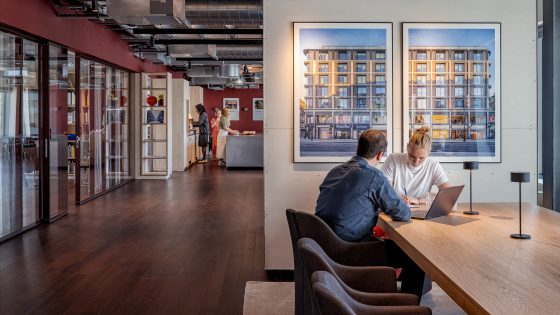
Known for its pioneering reuse projects across London, in July 2024 Orms moved from its former 1 Oliver Yard Place base into one of its own earlier retrofits, a former Royal Mail building at 160 Old Street (2018).
In a statement released with the 2025 accounts, the practice said: ‘The steady increase in staff numbers means the business is nearing maximum utilisation of the [1,000m2] space without compromising the benefits to our teams working within the office in terms of the quality of work, team morale, assistance of younger employees, control of project output and effectiveness of work.’
The practice is 80 per cent-owned by an Employee Owned Trust (EOT) and distributes profits among qualifying staff. In an interview last year, the AJ100 champion said that it had introduced a policy limiting working hours to 37.5 hours a week, ‘actively trying to discourage’ anyone from going beyond that.
During the reporting period practice founder Oliver Richards stepped down as a director of the company, though, the accounts say, he continued to ‘provide support to the directors and staff’.
The company said that operational costs continued to rise and the rises were ‘specifically the case with the specialist software’ the practice used.
However, it claimed it had mitigated annual prices rise in this area after negotiating a three-year subscription deal.
In terms of future workload and market strength, the financial statement written by director John McCrae adds: ‘[We] are dependent on the confidence of our clients continuing to invest in real estate. In particular we are dependent on the viability and attractiveness of prime central London, which is our core market and the flexibility of use for alternative opportunities such as mixed-use, hospitality and living [residential and hotel] projects.
‘There continues to be evidence in the strength in demand and strong rental levels for prime quality office buildings, despite questions about whether companies will return to offices. New enquiries for the redesign or repositioning of major, high-profile properties have continued either as commercial or alternative uses as demand increases within other sectors.’
The highest-paid director – one of five at the company – took home £275,714, down from £295,861 in 2024.
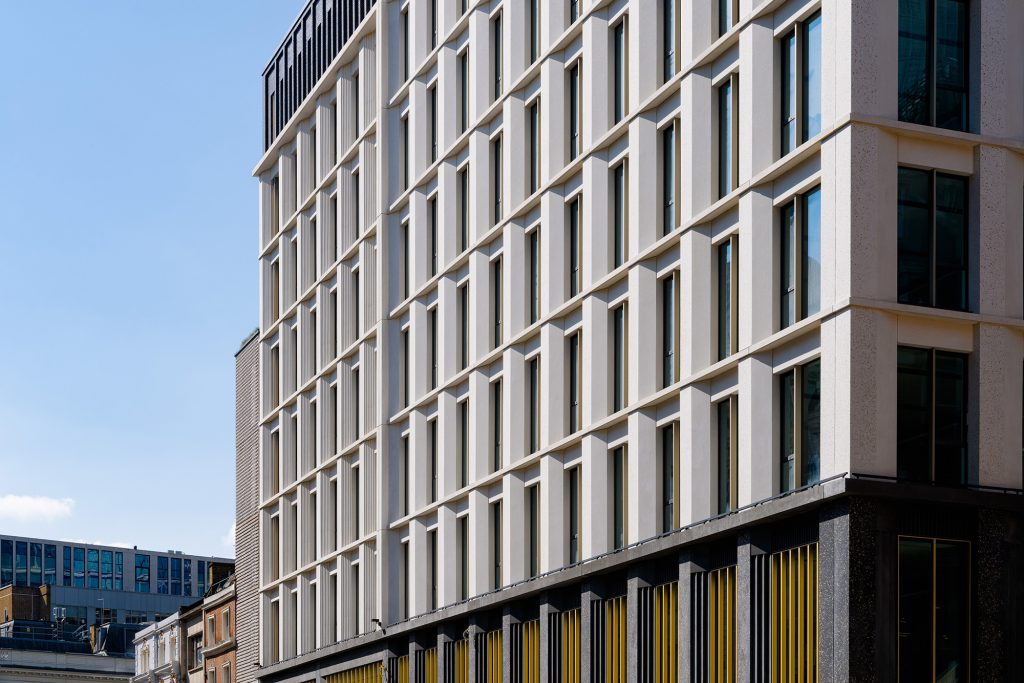
Orms’ 101 Moorgate mixed-use development in central London. Photo: Tim Soar