
An investigation has found that in the last six years (between 2019 and 2025), six people have taken their own life as an in-patient across Hairmyres, Monklands and Wishaw hospitals.
06:45, 20 Apr 2026Updated 09:40, 20 Apr 2026
Mental health patients say there is a “failure” of support from local NHS services at desperate times of crisis (stock image)(Image: Getty Images)
In-patient suicide cases, crippling “13-hour A&E waits” and “cold” psychiatric wards are just a small fraction of worrying cases from across Lanarkshire as mental health patients slam what they claim is a “failure” of support from local NHS services at desperate times of crisis.
An investigation by Glasgow Live has found that in the last six years (between 2019 and 2025), six people have taken their own life as an in-patient across Hairmyres, Monklands and Wishaw hospitals.
We also asked how many patients took their own life within 48 hours of being discharged, however, these figures were not available as NHS Lanarkshire “does not capture” them.
The probe follows the tragic death of Kerry Ann Finnigan, who passed away at University Hospital Wishaw on December 21, in 2019. We previously told how the 26-year-old spent three days waiting for specialist care and for a treatment plan to be put in place, after admission to the mental health ward, before tragically taking her own life.
The English Literature graduate, who studied at the University of Glasgow, previously made four attempts on her life.
On December 15, 2019, she was discharged from Monklands hospital. However, her medical records, specifically relating to her previous attempts, were “absent” on the electronic system when she was admitted into University Hospital Wishaw two days later, on December 17.
This, ultimately, led to staff reducing her observations from constant to general, as she was viewed as being a “medium risk” instead of high. A Fatal Accident Inquiry (FAI) heard how records from Monklands Hospital were “often unclear and contained insufficient detail regarding important aspects of the care” of Ms Finnigan.
Sheriff Colin Dunipace made four recommendations:
that all patients admitted to a psychiatric ward in NHS Lanarkshire should be reviewed by a senior clinician within 24 hours of admissiona review of policy should take place to ensure sufficient oversight of patients with mental health issues being treated within a medical settinga review of policy and guidance set out by NHS Lanarkshire to clearly define the role of the Psychiatric Liaison Nursing Service (PLNS) in transfers between wards or hospitalsa review by NHS Lanarkshire of the duty Approved Medical Practitioner (AMP) role with consideration given to expanding the role so AMPs can develop care plans where appropriate and particularly for patients who may otherwise wait days to be seen by a senior clinician
You can read Ms Finnigan’s gut-wrenching story here.
Several Lanarkshire residents have since reached out to Glasgow Live to share their harrowing experiences with the NHS services, there to provide care at times of need.
*To protect their anonymity, we have changed names where requested.
‘I begged doctors to section her the day before she killed herself’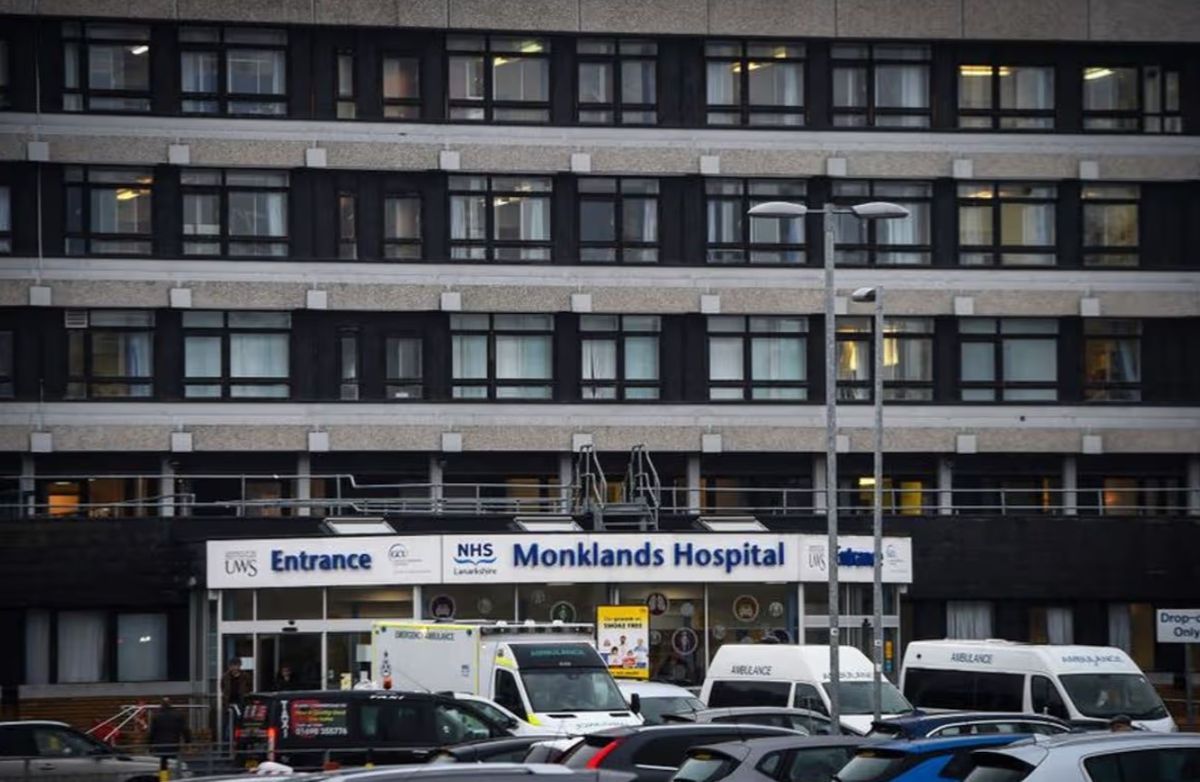
She was taken to Monklands but discharged soon after.
Jessica*, from Cumbernauld, suffered from bipolar disorder and was taken to Monklands hospital after an “attempted overdose” incident. Her partner, Tim*, claims she was “in fear for her life” and that he “begged for her to be sectioned”.
However, after a night in hospital, she was discharged and given a follow up appointment for the next day. Sadly, she took her own life before that, on September 16, in 2024.
Tim said: “If she had got help, she would still be alive. If she got sectioned she would still be alive. She was failed by the services.
“There’s no mental health support for anybody in Cumbernauld. I’m angry about it all.”
‘I was suicidal and told there’s a 13-hour wait at A&E – I walked out because I couldn’t take it’
Sharon* has suffered with her mental health since she was just 16 years old. In January this year, during a time of crisis and “feeling suicidal”, the former healthcare worker rang NHS 24 for support and was put through to Lanarkshire mental health services.
She believes her mental health crisis spiralled after an appointment – which she says to have waited five years for – was cancelled at the last minute. After opening up about her concerns, she claims to have been advised to “go to bed and sleep”.
“At that point, I couldn’t keep myself safe and that’s why I was contacting them in the first place,” she added.
“I said I can’t do this and hung up the phone. I had to go into Monklands A&E because I didn’t know what else to do.
“There was a 13-hour wait so I waited three hours and felt really bad as I was on my own and isolated, I had nobody to speak to. The first person who took me in for observation was really helpful but then couldn’t assist me further. I waited three hours then ended up leaving.
“I had to ask my partner to stay home from work with me that evening because I couldn’t wait 13 hours in the hospital. I felt I didn’t have 13 hours left in me at that point.”
Sharon was lucky enough to go home to her partner – but what happens to people without loved ones to intervene?
She added: “I’ve lost lots of friends through suicide and feel like no wonder. There’s no help right there and then. They do tell you to phone NHS 24 or visit A&E when in crisis but I did that and didn’t get any help whatsoever.
“There should be more training put in place for staff. I used to work as a healthcare support worker within the hospital so there is the staff. It’s not like a staffing issue, it’s more the fact that staff don’t know how to deal with certain situations.
“They say there is help but there isn’t when it actually comes to being in crisis. They say you need to wait for weeks for someone to contact you. There’s nothing set in place for people in crisis, at that moment in time.
“I feel like I was let down by the mental health services.”
‘Sometimes I just sit and cry because doctors tell me my eating disorder is all in my head’
Anna*, 22, from Cumbernauld, claims her GP isn’t taking her eating disorder seriously enough, and alleges that she was told it’s “all in my head”.
After a distressing incident at home, which she has not disclosed, her mental health took a nosedive, causing her eating disorder to worsen, she says.
Anna continued: “I eat once a day, sometimes not at all, which is affecting my health. I am bruising all up my skin and they tell me it could be an iron or liver issue, I’m getting bloods done for that. [GPs] deal with that because it’s a physical issue they could see.
“They kept referring me back to community mental health nurses who just sent me information on eating disorders and PTSD, leaving it at that. Nobody would help me beyond that.
“I’m constantly feeling dizzy and the sight of food makes me physically sick. The GP isn’t taking my mental health seriously. I’m stuck in the same endless cycle.
“They need to listen to young people because people are killing themselves.
“Sometimes I just sit and cry. It’s affected my relationship with my partner. She has tried to get me to go to my doctor, I go and they don’t listen.
“Services are letting down young people and they use the excuse that resources are stretched thin.”
‘I’m an NHS worker and mental health appointments are wasted because people don’t turn up’
Julie*, who lives in Uddingston, is an NHS worker and says that when she worked in mental health services, appointments were “wasted” because people failed to attend.
She also believes there is “a lack of empathy when it comes to mental health, in our society”.
Julie said: “If you go in for physio and they ask you to do the exercises, you need to do them. Everybody has to engage with the services.
“I worked in GP surgeries for years and people would phone up for Calpol and for the silliest things. That’s not what these services are there for. If it’s not urgent, don’t go into A&E.
“People need to be educated on when and when not to use the NHS.”
She added: “There should be somebody there in A&E to triage people with mental health crises.
“I don’t think funding is the solution. It’s all our responsibility. As a society, everybody has to take responsibility and speak to people.”
‘Ward two at Wishaw was absolutely freezing and the blankets are like things you would get in a prison cell’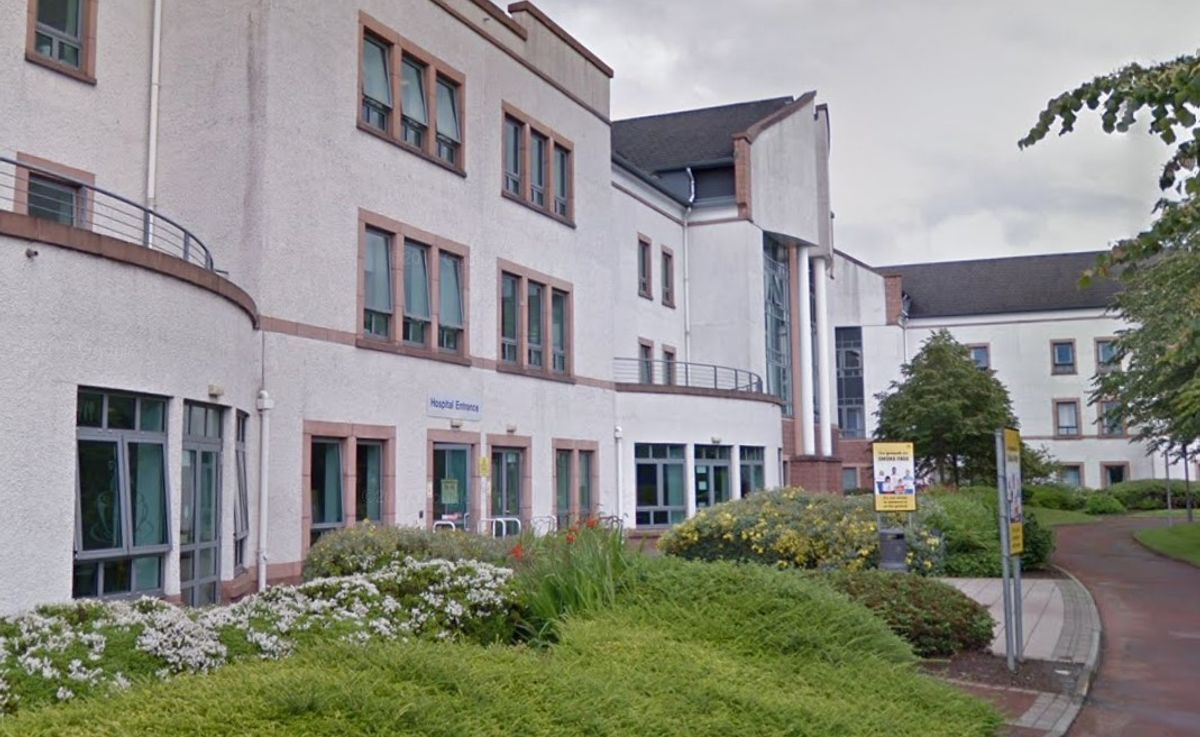
University Hospital Wishaw. (Image: Google )
Jeremy*, 41, from Coatbridge, was admitted twice to ward two at Wishaw hospital for a detox, following issues with alcoholism. On the first occasion, he claims there was “no heating” in the lounge area.
“The lounge area is so cold you can actually see your breath. I had to wear an outdoor jacket to stay warm,” he explained.
He added: “One night I had to sleep with six blankets because the blankets are like things you would get in a prison cell. It’s a total failure.
“I can’t blame the other patients there but when I was trying to sleep at night there was a guy who wasn’t being monitored, standing at the bottom of my bed staring at me. It got to the point where I had to shut the blinds over.
“What brought it to my attention was when I read the story about that young girl (Kerry Ann) which was so tragic. The place is so clinical.”
Despite his experience at Wishaw, Jeremy is full of praise for staff at University Hospital Hairmyres.
He continued: “I ended up at Hairmyres psychiatric unit and was treated fairly. It was quite a hard environment but the nursing staff understood their jobs.”
Here’s what NHS Lanarkshire has to say
Pauline Izat, Head of Health, University Health & Social Care North Lanarkshire, said: “We extend our condolences to anyone who has lost a loved one or feels they did not receive the care and support they needed at a time of crisis. Every death by suicide is a tragedy, and we take concerns about mental health care extremely seriously.
“We’re committed to providing safe, compassionate and effective mental health services. Our teams work every day to support people at their most vulnerable, and we continually review and improve our services to strengthen care, improve patients’ experience and support our staff.”
If you’re suffering and in a crisis, support from Samaritans is available – please reach out for help
A spokesperson for Samaritans said: “Samaritans provides a vital lifeline for people and communities across Scotland.
“Our helpline is available for anyone struggling to cope with suicidal thoughts, 24 hours a day, 365 days a year.
“Anyone can contact Samaritans FREE, any time, from any phone on 116 123, even a mobile without credit. Or you can visit www.samaritans.org.”