
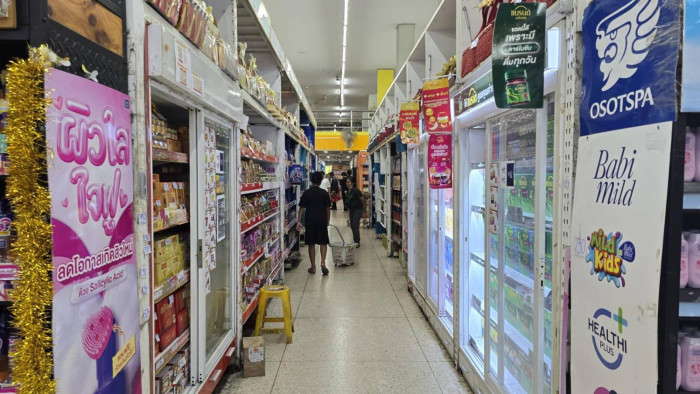
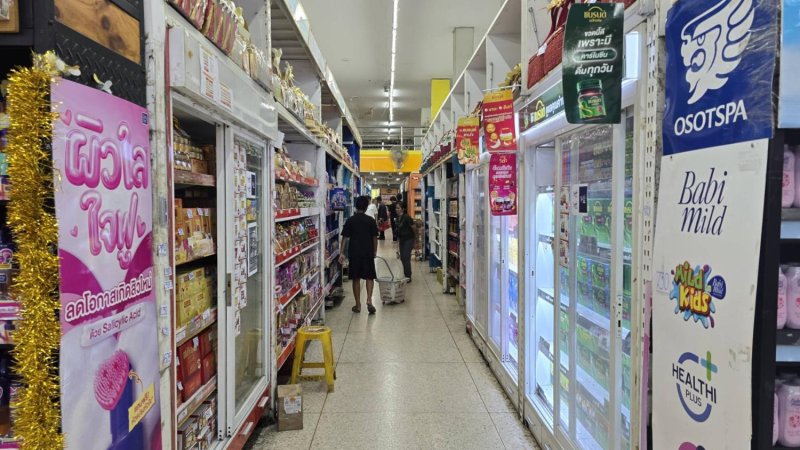
Shoppers browse goods on display at a supermarket in Udon Thani.
The outlook for the retail and wholesale sector looks grim, as consumer spending power is expected to decline in the coming months, alongside anticipated rising goods prices, according to the Thai Wholesale and Retail Trade Association.
After the Songkran festival, consumers are facing a bitter reality: persistently high energy costs, rising consumer goods prices influenced by the war in the Middle East, and upcoming back-to-school expenses for their children, said Somchai Pornrattanacharoen, honorary adviser to the Thai Wholesale and Retail Trade Association.
He believes that consumer goods are unlikely to become scarce. However, if the war drags on for another three months, manufacturers may be forced to change product packaging due to continued increases in plastic pellet prices.
He also observed that distributors have started reducing promotions for wholesalers. Previously, campaigns such as “buy 100 packs, get five packs free” were common. Now, the absence of such promotions has increased average product prices for wholesalers.
In the retail sector, he explained that when there is news of expected price increases for goods, small retailers typically buy more products from wholesalers to stock up at current prices.
But this time, he noticed that spending per bill remains unchanged. This reflects that mom-and-pop shop operators are aware of weakened consumer purchasing power and are therefore maintaining lean inventories, avoiding overstocking.
Moreover, he said consumer purchasing power in provinces that depend heavily on agriculture remains weak due to persistently low agricultural product prices.
He anticipates that provinces dependent on tourism will feel the economic impact after the Songkran festival, as most holiday travellers had booked their trips before the war in the Middle East began.
With ongoing uncertainty, the number of travellers booking trips in the coming months may decline, hurting businesses in those areas.
“Consumers are left in despair as their purchasing power weakens. The market is likely to become less vibrant in the next 2-3 months compared with last year, which was also not a strong year,” he said.
Mr Somchai expressed concerns over the Commerce Ministry’s initiative to introduce “Pum-Puang” mobile vehicles, warning that it could negatively impact local brick-and-mortar shops.
This project offers Blue Flag products and subsidises fuel prices for Pum-Puang operators, aiming to ease the cost of living for consumers in local and rural areas.
Rather than providing subsidies, he suggested that the government should focus on promoting smaller brands in the market, allowing market mechanisms to operate freely.
This approach could lead to increased sales of second-tier brands, which might pressure leading brands to keep their prices stable in this situation.