
A newly discovered long-necked dinosaur from southern Argentina is helping scientists explain how giant herbivores evolved across ancient continents. Called Bicharracosaurus dionidei, it shows a surprising mix of features from different dinosaur families. That unusual combination is what makes this find stand out.
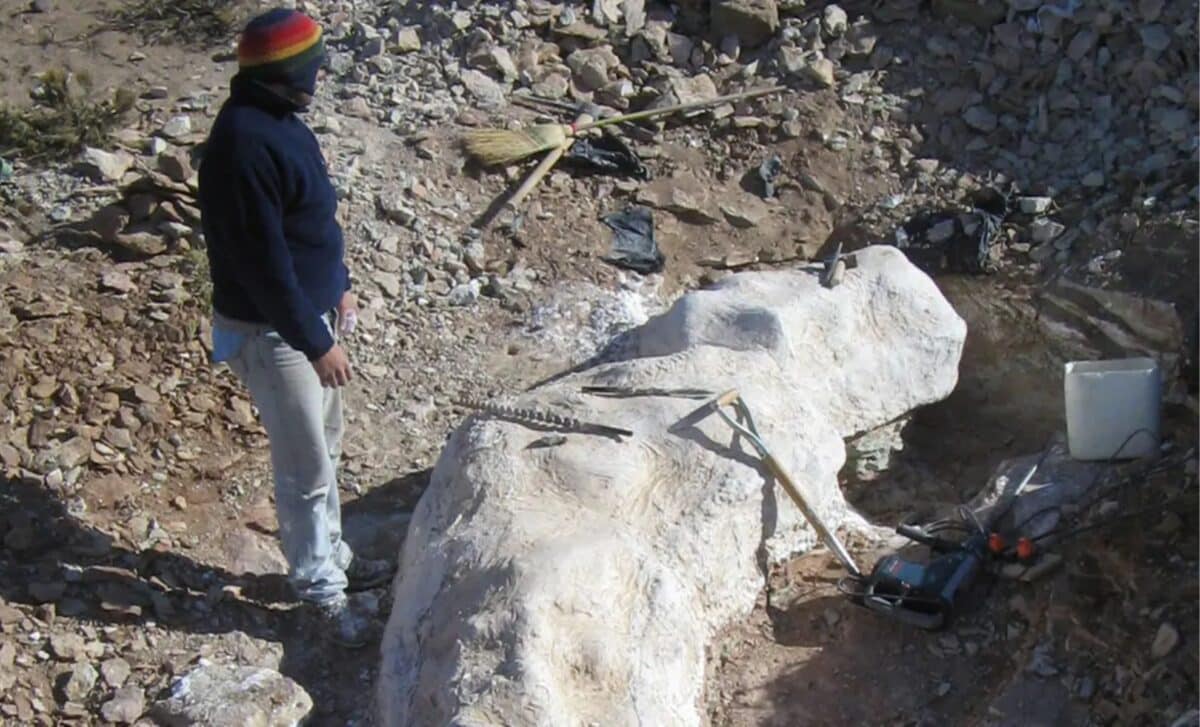
The fossil was found in the Chubut Province and dates back about 155 million years, during the Late Jurassic. Researchers uncovered more than 30 vertebrae, along with ribs and part of a pelvis. These remains belong to an adult animal estimated to be around 20 meters long, not the biggest sauropod, but still massive.
Dinosaurs like Diplodocus and Brachiosaurus are often used as the classic examples of long-necked giants. Most of what scientists know about them comes from fossils discovered in North America and other northern regions.
A Strange Mix Of Dinosaur Traits
What really caught researchers’ attention is the anatomy of Bicharracosaurus dionidei. According to the study, featured in PeerJ, some bones look a lot like those of Giraffatitan, a brachiosaurid found in Tanzania. That points toward one branch of the sauropod family tree.
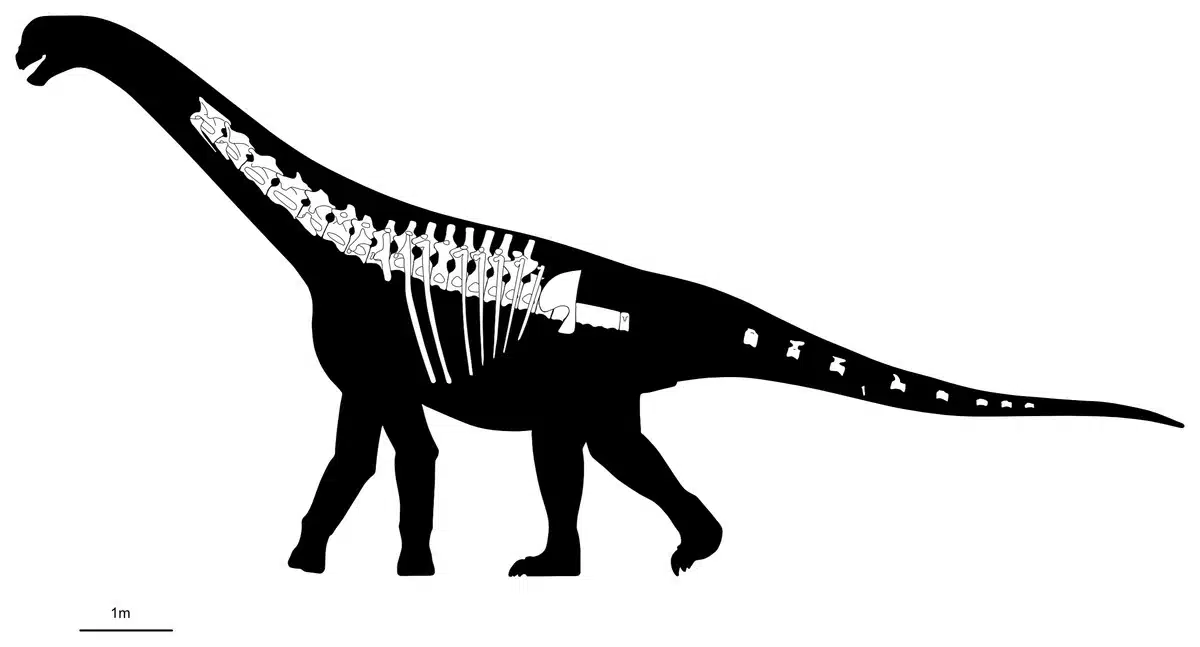 Artistic Reconstruction of Bicharracosaurus dionidei. Credit: PeerJ
But then there’s another side to it. Parts of the spine, especially the dorsal vertebrae, closely resemble those of Diplodocus and its relatives from North America. Seeing both sets of traits in one dinosaur is unusual and makes classification tricky.
As stated by Alexandra Reutter from LMU Munich, who led the research, the analysis places this dinosaur within the Brachiosauridae group.
“Our phylogenetic analyses of the skeleton indicate that Bicharracosaurus dionidei was related to the Brachiosauridae, which would make it the first Brachiosauridae from the Jurassic of South America,” she added.
If that holds up, it would be the first time a brachiosaurid has been identified from the Jurassic period in South America.
Patagonia Emerges As A Key Fossil Hotspot
The fossil comes from the Cañadón Calcáreo Formation in Patagonia, a place that’s becoming more and more important for paleontology. Oliver Rauhut of the Bavarian State Collections of Natural History said that finds from this region help scientists compare dinosaurs across different continents.
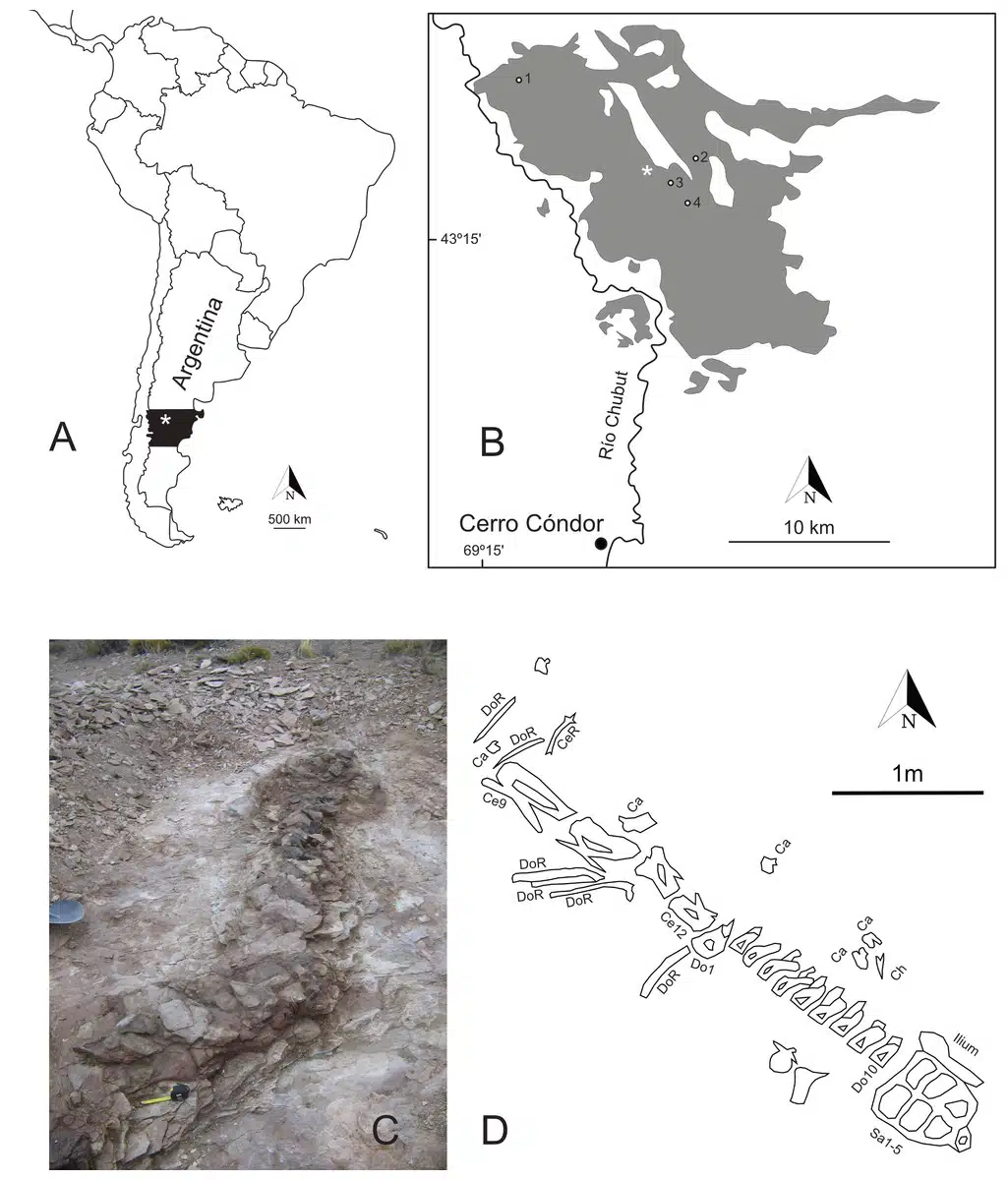 Location and fossil remains of Bicharracosaurus dionidei in Patagonia, Argentina. Credit: PeerJ
“Our knowledge of the evolution of sauropods from the Late Jurassic has so far been based almost entirely on numerous fossil findings from North America and other sites in the Northern Hemisphere.”
For a long time, there wasn’t much fossil evidence from the Southern Hemisphere. Tanzania was one of the few key locations. He also indicated that:
“The fossil site in the Argentine province of Chubut, from which Bicharracosaurus dionidei originates, provides us with important comparative material, allowing us to continuously supplement and reevaluate our understanding of the evolutionary history of these animals, particularly in the Southern Hemisphere.”
Rauhut explained that these fossils allow researchers to keep refining their understanding, especially when it comes to how sauropods spread across the globe.
A Discovery That Started With A Shepherd
The first remains of Bicharracosaurus dionidei were found by a local shepherd, Dionide Mesa, who discovered the bones of a giant animal about 155 million years old on his farm in Patagonia. The species name “dionidei “was chosen in his honor. The name bicharraco, used for the genus, is a casual Spanish word for “big animal,” which fits pretty well.
The fossil is now kept at the Museo Paleontológico Egidio Feruglio in Trelew. As explained by the researchers, finds like this show how even a single discovery can change the bigger picture.