
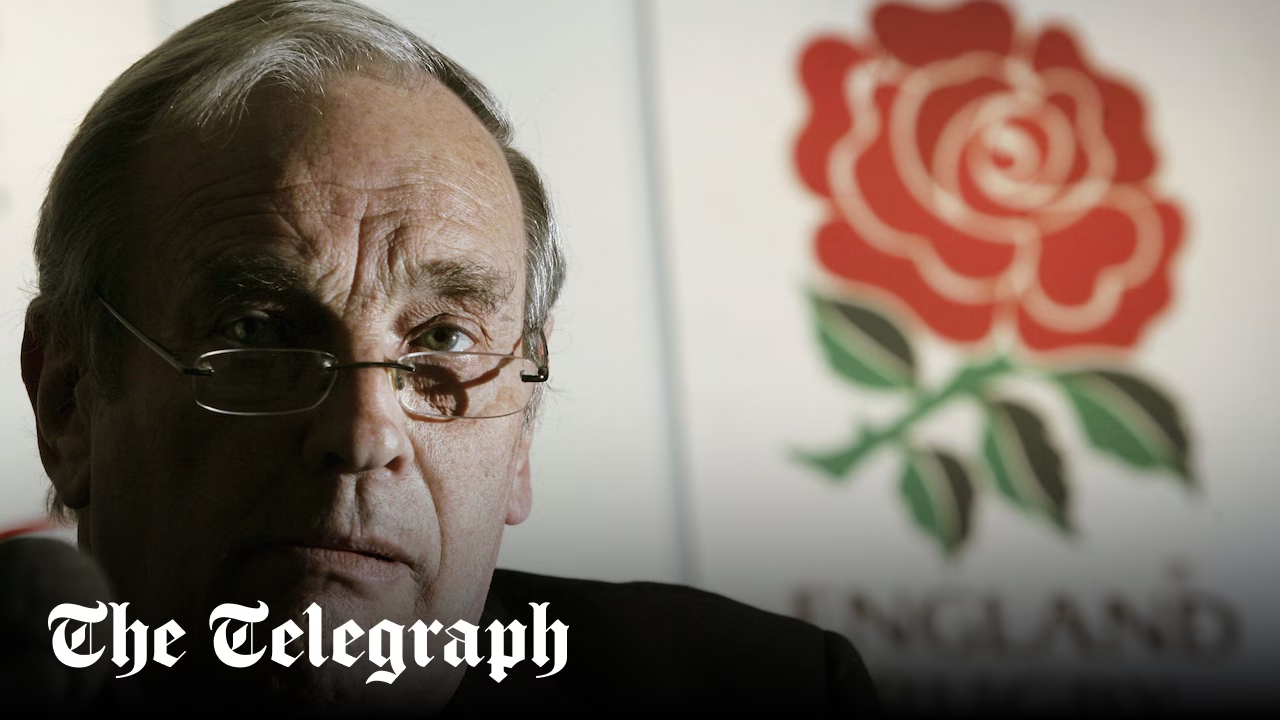
It was the kind of greeting that left a mark. I had first come across Thomas’s name when I was rugby correspondent at the Yorkshire Post newspaper a decade earlier and he was a rising champion of the grass-roots game. English rugby was still grappling with how to make professionalism work and the power struggles between club, country and the community game.
In those days, Thomas, who had played for Old Millhillians and captained the club in the early 1970s, was a passionate advocate of the rights of the community game and chair of the Reform Group, which was established at the end of the 1990s to protect the interests of amateur clubs after the game turned professional. By 2001, he had become the representative for Nottinghamshire, Lincolnshire and Derbyshire on the RFU council and within four years had shocked the establishment by winning the vote at a special general meeting to become chairman of the governing body following Graeme Cattermole’s resignation.
Jack Rowell, the former England head coach, had been the favourite to succeed Cattermole and was backed by the Premiership clubs and was the RFU council’s official nomination, but Thomas outflanked him by securing 403 votes to 290, his majority rooted in grass-roots support.
A new approach
A striking feature of his tenure was a sense of openness, perhaps a consequence of his political intuition. The RFU might have had a reputation for its stuffiness during the amateur era – before the appointment of Dudley Wood as secretary (the equivalent of the modern-day chief executive) the governing body’s phone number was ex-directory – but Thomas brought a fresh approach.
He meant what he said about giving him a call. He felt it was his duty to have good relationships with journalists to grow the game and explain decisions. By 2009, it was not uncommon for the RFU to hold regular press briefings, which would be attended by Thomas, his chief executive Francis Baron, the professional rugby director Rob Andrew and Andrew Scoular, the director of community rugby. There was no need for a big announcement for a press conference to be called. Journalists were invited to discuss the matters of the day, with the insight informing their reporting.
Born in 1944 and a lawyer by profession, Thomas proved to be adept at political machinations: he became a European Rugby Cup director; served on the Six Nations committee and also the International Rugby Board (now World Rugby) council.
One of his greatest achievements was helping to secure the rights to host the 2015 Rugby World Cup in England.
By then the grass-roots rebel had become the kingmaker, at times acting more like a chief executive than chairman of the board of directors. Thomas was a tour de force who wanted to make a difference himself.
‘Tremendous advocate for the community game’
His grass-roots credentials had been fundamental in negotiating the first Professional Game Agreement between the RFU and professional clubs in 2008 and his burning passion for a successful England team saw him champion the appointment of Johnson as England manager.
He also strongly supported the return of Sir Clive Woodward to the governing body as a performance director.
By 2011, his strong opinions at times got the better of him as the RFU fell into an internecine battle over governance and control that left the governing body in a dysfunctional state and included the dismissal of John Steele, the chief executive. Thomas was later asked to step down as chair but in a bizarre twist, was appointed the acting chief executive following Steele’s dismissal, finally achieving a position of executive power just before his remarkable, if at times controversial, tenure in rugby administration came to an end when he left the organisation later that year.
What is not in doubt however, was his passion for the game and the desire to stand up for the grass-roots game. Even in retirement on his 500-acre farm in Pembrokeshire, he retained a strong interest in the game, and as recently as two years ago signed a letter along with Cattermole and another former chairman, Brian Baister, calling for current chief executive Bill Sweeney to stand down amid the salary and bonus scandal.
Thomas is survived by his son Bryn, daughter-in-law Karen and granddaughter Erin.
Sir Bill Beaumont, former England captain, World Rugby chair and current RFU senior vice-president, said: “We are all very sad to hear that Martyn has died. He was a real character, an excellent negotiator and did a great deal for rugby union.
“A tremendous advocate for the community game, Martyn also helped secure improved relationships between the professional clubs and the Union. He will be very much missed, and our thoughts are with his son Bryn and his family and friends.”