
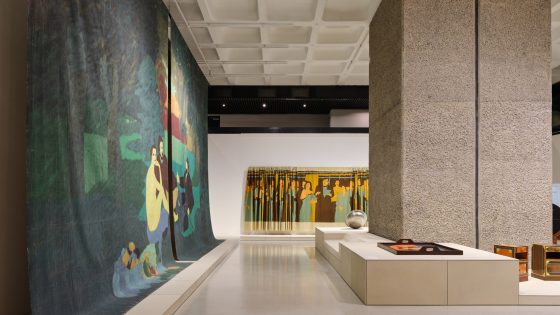
Beatriz González (1932-2026) possessed a gift for colour and composition, but what makes her work remarkable is the playfulness, wit and rage with which she upbraided Colombia’s corrupt politicians, and her affection and compassion for those at the sharp end of their violent regimes.
Six decades’ worth of her paintings, drawings, sculptures, furniture, textiles and monumental public installations can now be fully appreciated in González’ biggest European retrospective and first UK solo show at the Barbican Centre.
This sadly posthumous celebration (the artist died two months before the opening) is helped immeasurably by Unknown Works’ exhibition design. Its scale, subtlety and materiality provide a contemplative backdrop to offset González’s dazzling chromatic, thematic and material inventions.
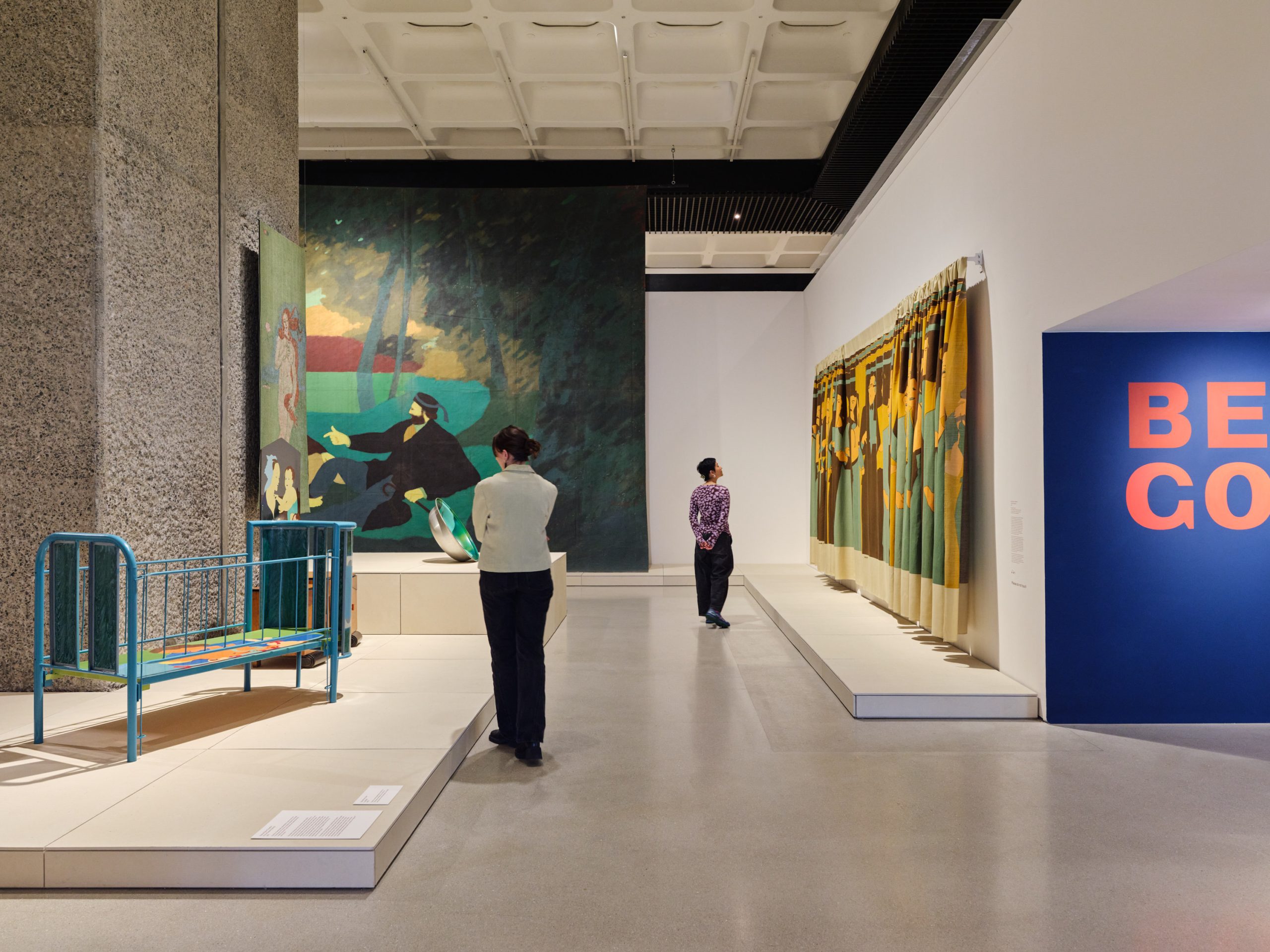
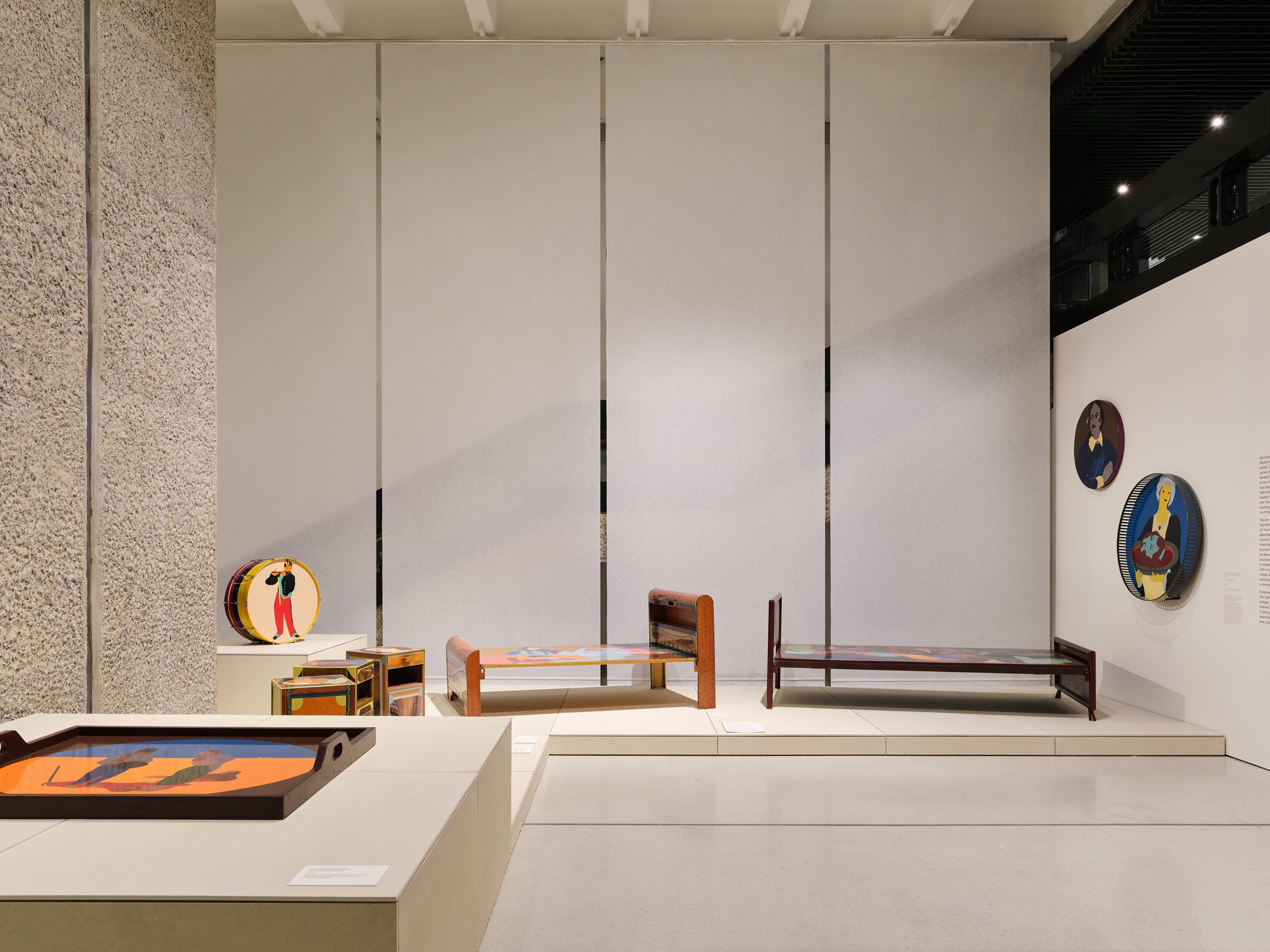
Unknown Works chose paper as the primary material, in homage to González’s love of found newspaper imagery and cheap print reproductions and their influence on her storytelling and graphic style. They experimented with a 100 per cent paper, recycled and recyclable panel product, called Honext, calling the resulting spatial and material narrative ‘paper-tecture’. It appears in huge, slender sheets, which drape from the Barbican’s pale, coffered ceiling to the floor. It frames the staircase as a glowing portal and elsewhere veils the scabbled concrete of the gallery walls. For seating, stacked Honext panels are compressed into elegant benches, sanded and varnished for a gently reflective surface.
González’s 150 artworks are arranged chronologically. Upstairs we start with the art that helped establish her name: seminal paintings by Johannes Vermeer and Diego Velázquez are translated into pulsating planes of colour and light, achieving new perspectives, new atmospheres. With Encajera foto inversée (Lacemaker Inverted Photo, 1964) she renders the figure of Vermeer’s Lacemaker into glowing blocks of saturated colour, emphasising the substance or even essence of the sitter, a panegyric to quiet, female domestic labour.
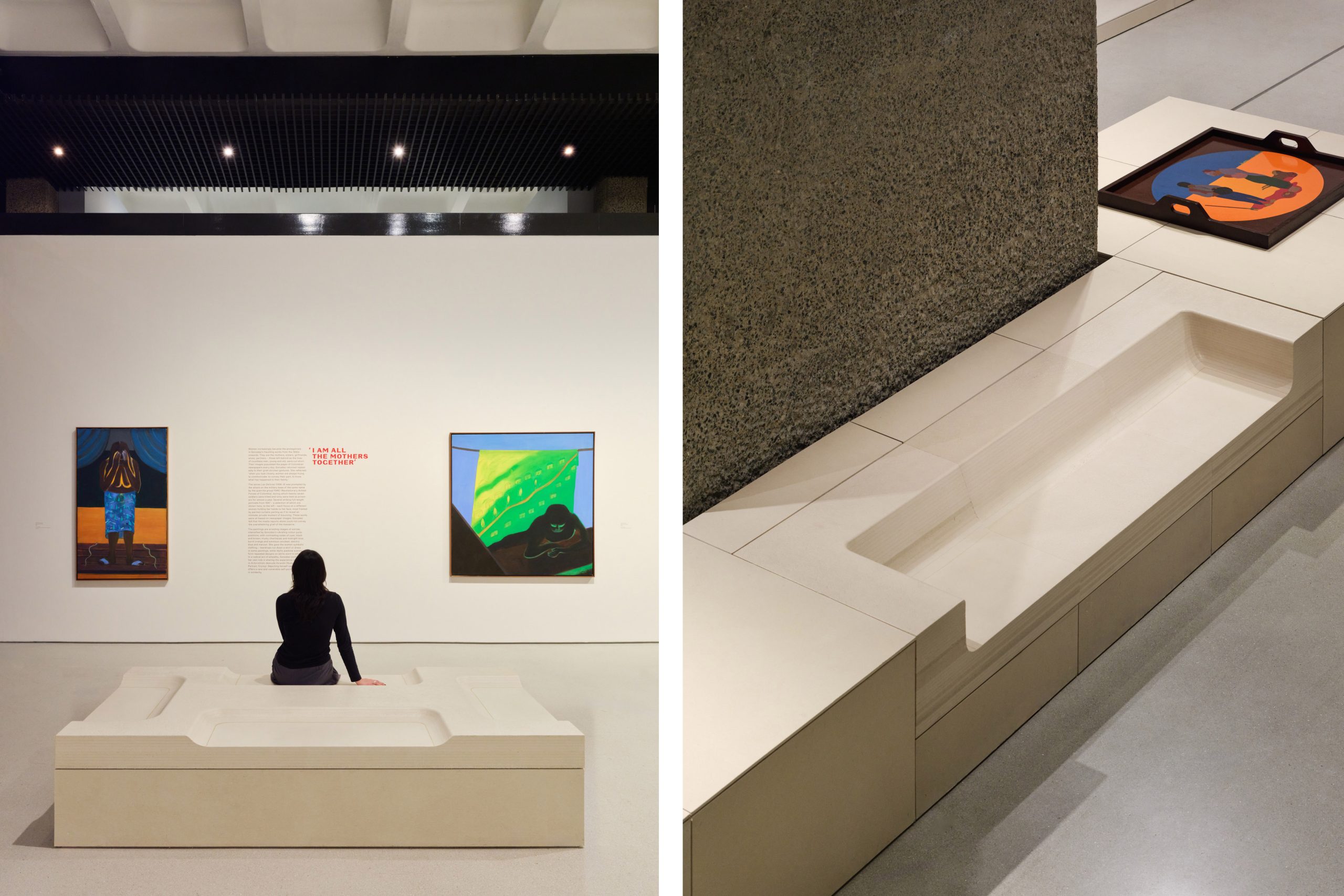
However, rejecting the conventional path of ‘a lady who paints’, González took to memorialising the everyday and the overlooked, from gruesome true crime stories printed in daily newspapers to the gurning and gladhanding of national and international figures.
But there is affection for her fellow Colombians, too, when she mirrors in prints, paintings and enamelwork on furniture the endlessly reproduced kitsch imagery – from adverts to celebrities or religious iconography – that proliferated on the streets and in their homes. Never did she accept the term ‘pop art’ for these works. They are more acerbic; note her seemingly innocuous portrait of Queen Elizabeth II, with the gleeful title: Goodbye Africa (dated 1968, as Britain’s grip on its colonial outposts was weakening).
Death and loss are dominant themes for this show, and González foregrounds violence against women in particular. One pivotal trio of paintings, Los suicidas del Sisga (The Sisga Suicides, 1965) was inspired by newspapers’ tasteless use of a romantic studio portrait to illustrate the double suicide by drowning of a young couple (the male partner apparently wished to sacrifice himself and his future wife to ‘preserve her purity’). Painted in flattened and somewhat sickly colours, these are presented in their own cellular space, against midnight blue walls.
Here, and at other strategic points, the architects make impactful use of colours taken from González’ signature palette. Further on, deep teal walls offset haunting textile works, each featuring the sprawled figure of a murdered woman on her bed – the image taken from newspaper photographs – lovingly arranged against salvaged floral carpets and rugs. Unknown Works founding director Theo Games Petrohilos says: ‘You need to mark these points of intimacy within the large gallery space, signifying those touch points that are significant.’
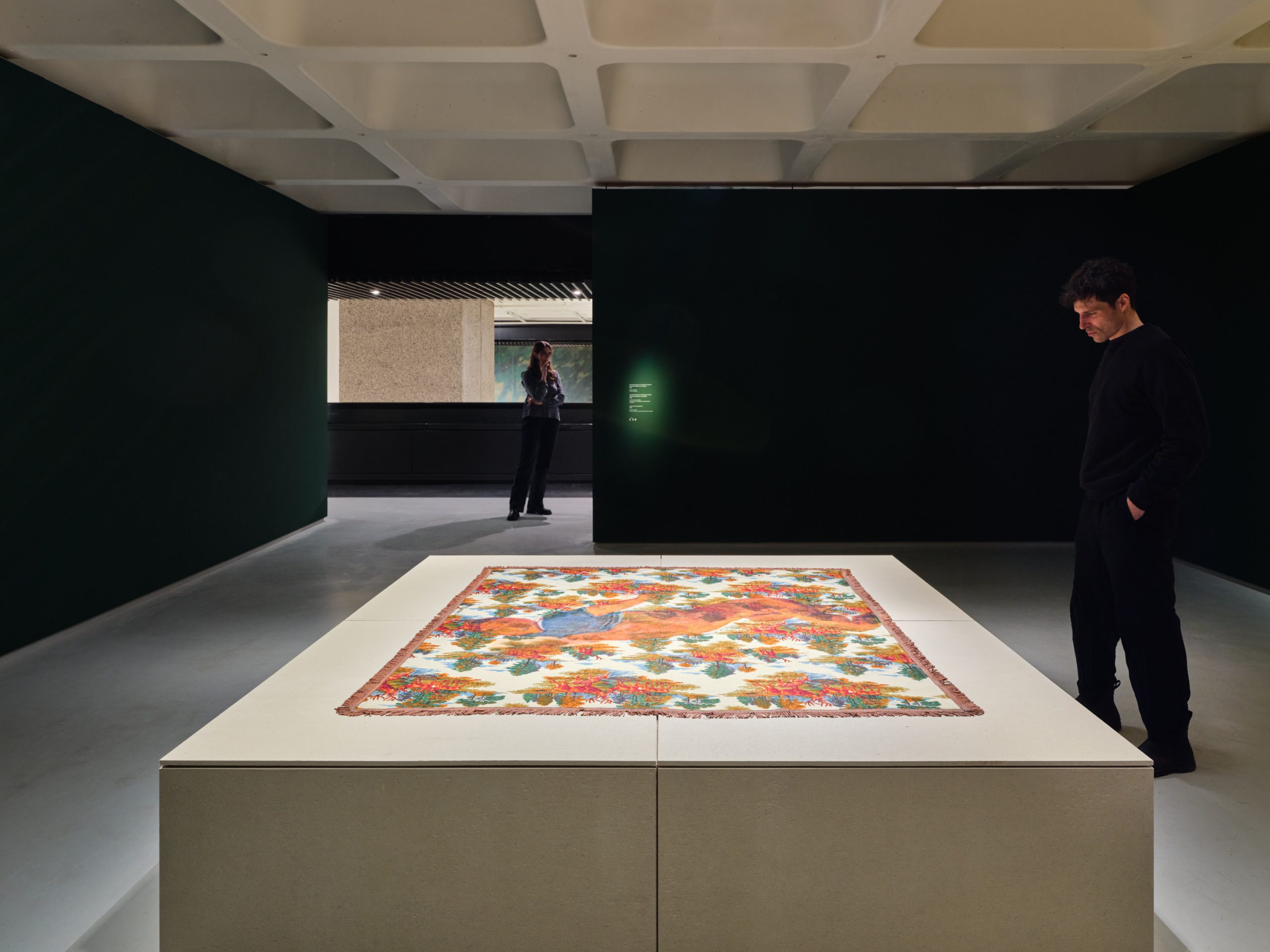
Early in her career, González started appropriating furniture as a canvas, triggered by a serendipitous trip to a salvage yard with her architect husband. Finding tin furniture a perfect canvas for bright enamel, she reproduces her favourite icons in unearthly tones, across beds, tables (one featuring a Leonardo-esque ‘last supper’) and, my personal favourite, a coat stand with a copy of the Mona Lisa where the mirror would normally be.
Further furniture works and sculptures are arranged like aspirational room sets downstairs, framed by monumental textile installations. The most impactful intervention lands just before the exit. A Posteriori (2022) comprises a room lined with wallpaper that replicates the Auras Anónimas (Anonymous Auras, 2007-9) action, when González plugged the 8,956 funerary niches of Bogotá’s Central Cemetery with images of cargueros – porters who carry the dead – to honour victims of conflict.
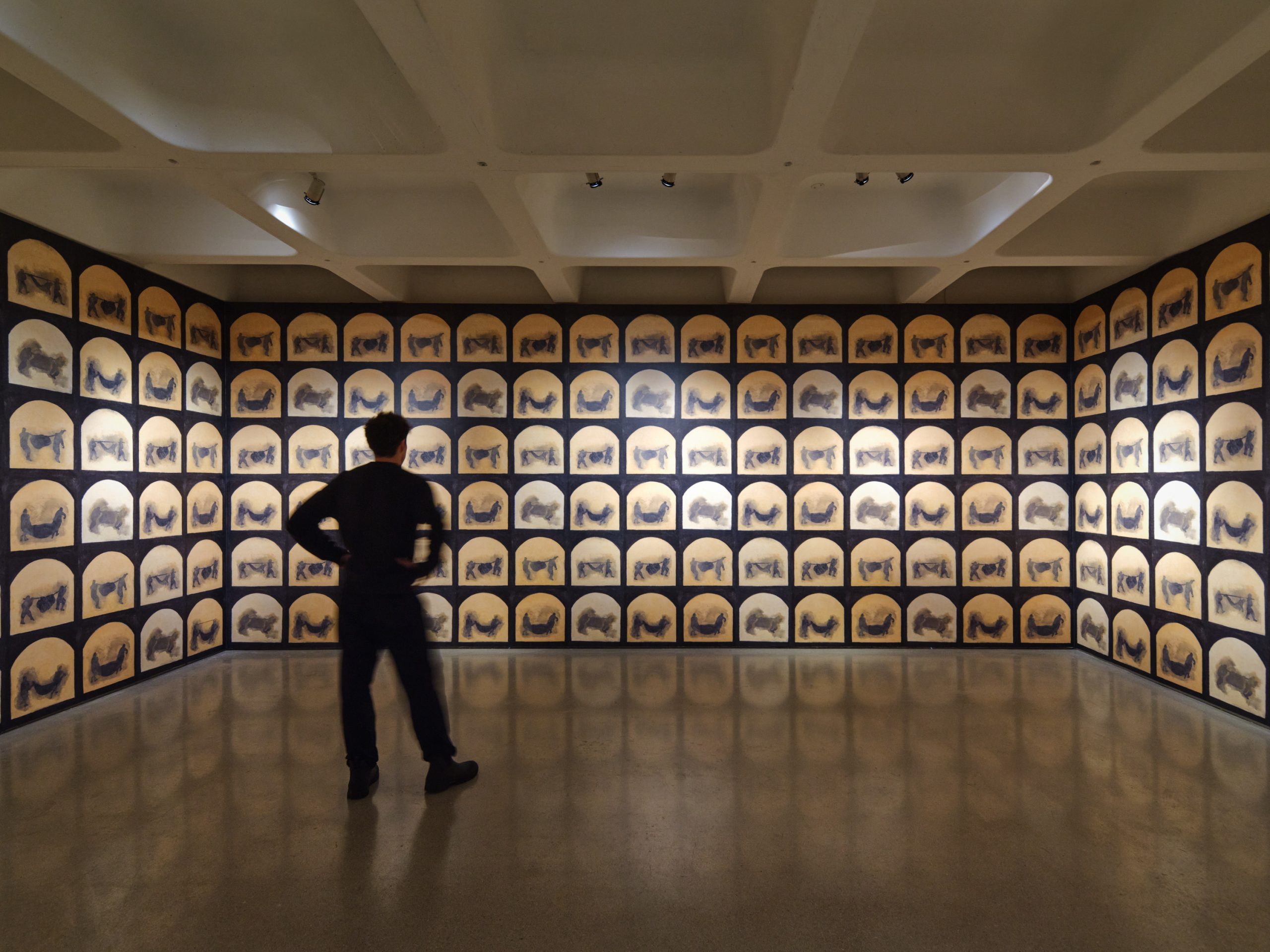
A wall quote from González states: ‘Representing violence is complex. I do it as a way to preserve memory.’ Thanks to her work and this presentation, it is achieved with clarity, depth and grace.
Beatriz González runs at the Barbican Art Gallery until 10 May 2026
Veronica Simpson is a freelance writer on design, art and architecture