
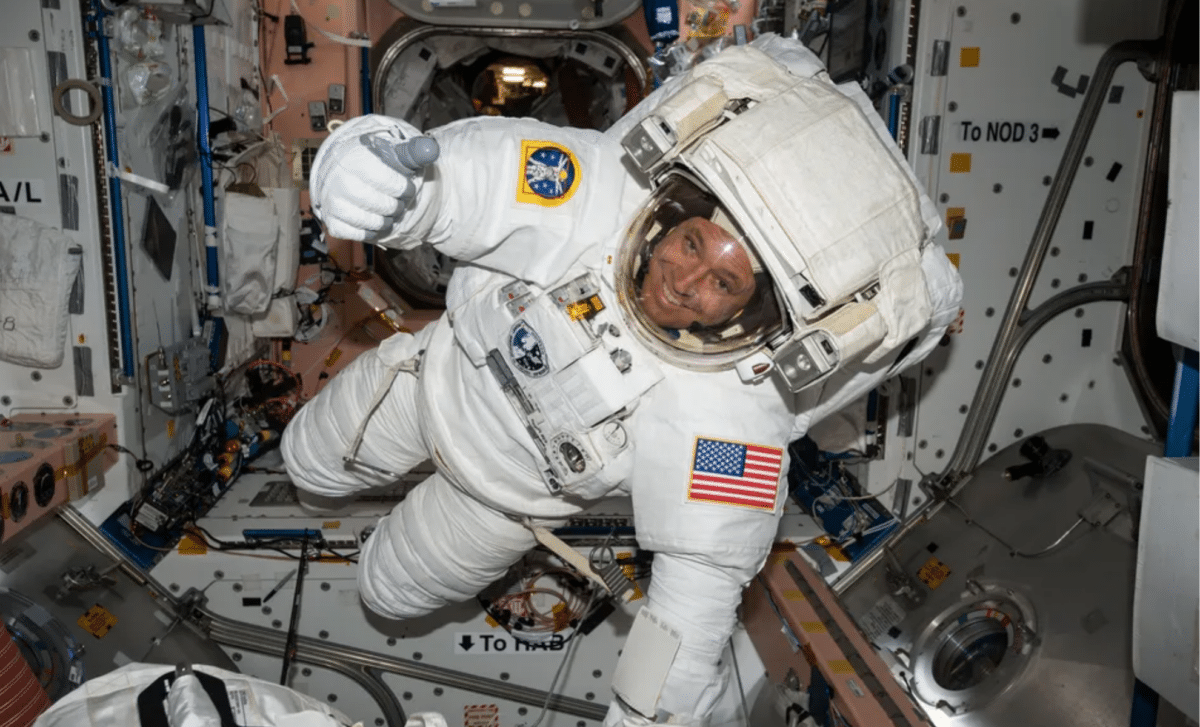
Scientists have discovered that astronauts’ grip strength is significantly affected by living in space, leading to potential safety risks that could have serious implications for future space exploration. The study sheds light on how prolonged exposure to microgravity causes the brain to misinterpret sensory feedback, making simple tasks like gripping objects far more difficult, both in space and after returning to Earth.
The Science Behind Grip in Space
Living without gravity may sound like an exciting opportunity to float freely through space, but the reality is far more complicated. In space, astronauts are not truly weightless, they experience microgravity, where the force of gravity is so weak it is barely perceptible. While this environment offers a unique set of opportunities, it also presents unexpected challenges, especially when it comes to simple, everyday activities like gripping objects.
A recent study led by Philippe Lefèvre, a professor of biomedical engineering at Université catholique de Louvain, and published on April, 20, in the Journal of Neuroscience, explored how astronauts’ brains adjust to this lack of gravity. The research revealed that astronauts often exert more force than needed when gripping objects while in space, as their brains are still conditioned to expect the presence of gravity. This unexpected adjustment not only affects their ability to perform tasks while aboard the International Space Station (ISS) but also causes problems when they return to Earth.
“What we observed was totally unexpected,” Lefèvre explained to Space.com. The study found that astronauts who had spent months in space needed significant time to readjust their grip strength after returning to Earth. The adjustment was not instantaneous, and it took months before astronauts could grip objects with the right force again, resulting in potential safety risks during critical procedures.
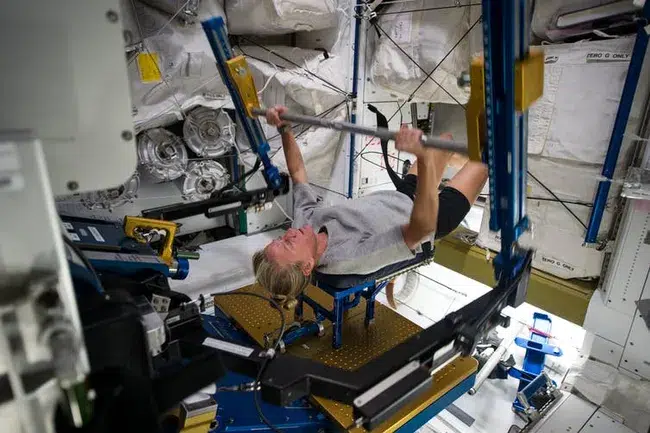 Image credit: NASA’s Marshall Space Flight Center Follow/ Flickr, CC BY-NC
The Dangers of Misinterpreting Grip Strength
Astronauts’ grip strength is not just a minor inconvenience, it has serious implications for both their safety and the success of their missions. When an astronaut grips an object too tightly or too loosely, the consequences can be catastrophic. A misplaced grip during a spacewalk or when handling delicate equipment could lead to accidents that not only jeopardize the astronaut’s safety but also damage expensive machinery or compromise scientific experiments.
Lefèvre emphasized the critical importance of proper grip in the confined and delicate environment of space:
“Even if the risk of slippage is low, the consequence of slippage would be really dramatic. If you move at high speed with a big object onboard the ISS, and you lose the grip, the object will keep going. It’s gonna hit something, and it could be dramatic in terms of safety.”
The study reveals that the brain needs time to adjust to these changes, and even a small error in judgment can result in irreversible consequences. Such adjustments are not immediately apparent to astronauts but can emerge when they are performing complex tasks, like repairing a malfunctioning part of the ISS or managing the intricate movements of robotic arms.
A Changing Brain in Microgravity
While astronauts are aware of the challenges posed by space travel, the implications of how microgravity alters brain function were less understood. The research team’s findings underline that living in space impacts not just muscle strength but also the brain’s ability to interpret sensory signals correctly. The study monitored astronauts during their time aboard the ISS, observing their grip force and movements as they interacted with various objects. The results were conclusive: the lack of gravity changed how astronauts’ brains processed feedback from their hands, making their grip excessively forceful in space and underpowered when they returned to Earth.
This adaptation process is a vital consideration for future missions, especially as humanity sets its sights on more ambitious goals, like sending astronauts to the Moon or Mars. The findings highlight the importance of developing new training protocols that will help astronauts better adjust to these challenges before, during, and after space missions.