
A look at what is happening with inflation in the UKpublished at 06:45 BST
06:45 BST
 Jennifer Meierhans
Business reporter
The UK inflation rate was 3% in February. If it rises to 3.3% as experts are forecasting, that would be its highest level since December.
Although that’s moving further above the Bank of England’s 2% target, it’s still well below the 11.1% high reached in October 2022 after Russia’s full-scale invasion of Ukraine – the highest rate for 40 years.
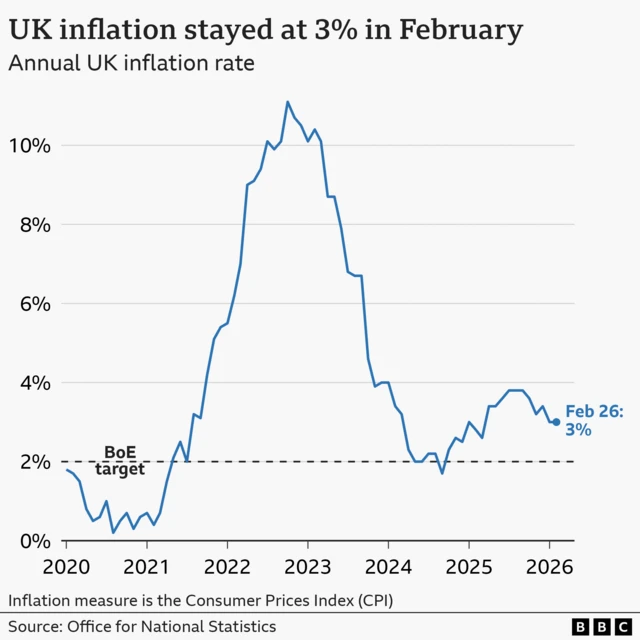
At the start of the year, the Bank of England predicted inflation would dip below its 2% target in April.
However, the US-Israel war with Iran has led to a sharp rise in oil and gas prices, while disruption to the Strait of Hormuz shipping corridor could also affect other areas.
Last month, the Bank of England indicated inflation is likely to rise to as high as 3.5% between July and September.
At a meeting of the International Monetary Fund in Washington last week, the Bank’s governor told the BBC the world was facing a “very big energy shock” that will push up prices.